
Universal menu

  • Global
  • Regions
    • Africa
    • Americas and the Caribbean
    • Arab States
    • Asia and the Pacific
    • Europe and Central Asia
  • Knowledge
  • Data
  • Training
  • Transparency
UN Women - For all women and girls

Main Navigation-HQ

  • Who we are
    • About us
      • About UN Women
      • Business model
      • Guiding documents
      • Worldwide presence
    • Leadership
      • Governance structure
      • Executive leadership
      • Executive Board
      • Accountability
    • Work with us
      • Employment
      • Procurement
      • Calls for proposals
      • Contact us
      • UN Women Strategic Plan 2026–2029
      • UN Women Strategic Plan 2026–2029 - social media image
        UN Women Strategic Plan 2026–2029
  • What we do
    • Focus areas
      • Ending violence against women
      • Peace and security
      • Humanitarian action
      • Leadership and governance
      • Economic empowerment
      • Innovation and technology
      • Women with disabilities
      • Youth
      • HIV and AIDS
    • How we work
      • 2030 Agenda for Sustainable Development
      • Commission on the Status of Women
      • Gender parity in the UN system
      • Intergovernmental support
      • Partnerships
      • Research and data
      • Training Centre
      • Trust funds
      • UN system coordination
      • Gender Equality Accelerators
      • Gender Equality Accelerators artwork
        Gender Equality Accelerators
  • News and stories
    • Latest
      • News
      • Articles and explainers
      • In focus
    • Media center
      • Press materials
      • Media contacts
      • Explainer: Why are women so exhausted? Care work and the mental load
      • Two adults stand at a table changing diapers on baby dolls, with laundry hanging on a clothesline behind them in a home setting.
        Explainer: Why are women so exhausted? Care work and the mental load
      • Press release: Aid cuts dismantle women’s organizations working in humanitarian crises
      • A young Ugandan woman sits with another local woman to talk
        Press release: Aid cuts dismantle women’s organizations working in humanitarian crises
  • Digital library
    • Resources
      • Publications
      • Annual reports
      • Gender snapshot
      • Progress of the world’s women
      • World survey on the role of women in development
    • GenderTerm
      • GenderTerm
      • Reprint permissions
      • UN Women Highlights 2025–2026
      • A smiling woman.
        UN Women Highlights 2025–2026
      • Gender snapshot 2026
      • A diverse group of people represented as simplified silhouettes, arranged against a dark blue background.
        Gender snapshot 2026
  • Get involved
    • How to get involved
      • For ALL Women and Girls
      • International Women's Day
      • 16 Days of Activism to End Violence against Women and Girls
      • UNiTE! Campaign to End Violence against Women
      • Generation Equality
      • He for She
Ask AI
https://84e5cfacd5c7e99f9825edf344450c.1b.environment.api.powerplatform.com/powervirtualagents/botsbyschema/crad4_websiteQA/directline/token?api-version=2022-03-01-preview
1
-
Ask your question here
AI website assistant

Hello, how can I assist you?

AI chatbot responses may be incorrect. Always verify important information.

Donate button menu

Donate

Breadcrumb

  1. Home
  2. News and stories
  3. Feature story

Website survey

We want to know how we can improve your experience on this website. Completing this survey takes less than 5 minutes.

TAKE THE SURVEY
Feature

UN Women assists rebuilding efforts after Caribbean hurricanes

26 August 2024
  • Share to Facebook
  • Share to Twitter
  • Share to LinkedIn
  • Share to E-mail

When Hurricane Beryl tore through the Caribbean in early summer, it left a trail of destroyed homes, unpassable roads, and ruined local infrastructure. As climate change raises global temperatures, hurricanes will likely become more intense in the region, as storms feed on warm waters at the ocean surface.

As nations begin to rebuild after Beryl and brace themselves for even more storms, UN Women has been on the ground and working to ensure that women are fully integrated into recovery efforts.

Image
A member of the UN Women’s deployment team is seen walking past a damaged building in Grenada.
A member of the UN Women’s deployment team is seen walking past a damaged building in Grenada. Photo credit: UN Women/ Shelly Dolabaille.

“I know we are strong and resilient people, very independent-minded, and I know in times of trouble, that is when we are most strong,” said Marslyn Lewis, the owner of Marslyn’s All-Natural Sea Moss Solutions, a local business in St. Vincent and the Grenadines that produces sea moss-based health and cosmetic products.

Hurricane Beryl’s destruction of sea moss farms in the Grenadines has severely impacted Lewis’ business, leaving her with no product to sell and no hope of income for at least six months, until new sea moss seedlings can mature. UN Women worked with Lewis to buy the remainder of her stock, for inclusion in aid packages delivered to those in need.

UN Women’s response to Hurricane Beryl in Grenada, Carriacou, St. Vincent, and the Grenadine islands—Union Island and Bequia—includes providing psychosocial support to impacted people, injecting cash into the local economy to empower women, ensuring protection of women and girls in shelters, and distributing essential hygiene and dignity items for women and girls through aid packages.

“Relying first on local and women-owned businesses has been a key strategy of UN Women’s response to disasters,” said Tonni Brodber, Representative of UN Women’s Caribbean Multi-Country Office. “This helps reinvigorate local economies and directly supports small and medium enterprise owners as they restore their livelihoods.”

Image
A member of UN Women’s team helps load items designated for the Share the Care Packs to be distributed in Grenada.
A member of UN Women’s team helps load items designated for the Share the Care Packs to be distributed in Grenada. Photo credit: UN Women/ Shelly Dolabaille

In Bequia, women lost businesses that were more than just jobs—they represented years’ worth of effort and sacrifice.

“Before the hurricane I was doing training in disaster management and resilience, and it still did not prepare me for Beryl,” said Ronita Ollivierre, owner of the local sea moss cultivator and supplier Ocean Remedies. “In a couple hours, wind just took the farm, the drying station, it is just gone. People might think it’s material things and you can get it back, but it took three years to get here, and how are you going to get it back?”

UN Women has been working closely with local authorities and community leaders to ensure that the Beryl response addresses the specific needs of women, who are often disproportionately affected by disasters. This approach stems from UN Women’s Build Back Equal (BBE) programme, funded by the government of Canada, which aims to not only restore what was lost but also to create more equitable and resilient communities in the process.

The BBE programme was implemented with the aim of contributing to women’s economic resilience in the Eastern Caribbean by taking a comprehensive approach to addressing the barriers that women face to economic empowerment and providing increased sustainable opportunities for women’s economic growth. With the impact of Beryl on many women-owned businesses, the programme aims to equip business owners with the skills and financing to grow their businesses through environmentally friendly and climate- and shock-resilient innovation.

As part of the BBE programme, UN Women is supporting the development of referral and coordination systems to address gender-based violence, and to ensure that they are maintained amid the crisis recovery efforts.

Nadina Williams, a government social worker on the island of Carriacou, worked closely with UN Women to provide relief, despite her own home being impacted by the hurricane. Williams and others engaged tirelessly to direct relief efforts and support shelters and childcare centres, ensuring that the needs of the most vulnerable were met. 

“The impact of UN Women with regards to us here on the sister isle is the attention to detail, the quickness, and the urgency in terms of how the team has responded,” said Williams. She specially commended UN Women for its coordination of the local BBE programme in Grenada.

Williams, who is also a representative of the BBE National Project’s Steering Committee, noted that recipients were “really thrilled even to get the smallest thing, such as a bottle of lotion,” in aid packages. “I know our women felt valued,” she added.

UN Women’s efforts to understand and respond to the gendered impacts of disasters are part of a long-standing commitment to ensuring that no one is left behind in the recovery process. The recent Small Island Developing States (SIDS) conference and Gender Equality Forum underscored the vulnerability of island nations to climate change and disasters, and the need for targeted interventions that address these unique challenges. 

In Beryl’s aftermath, the importance of this work has become even more evident, especially for entrepreneurs like Lewis, who attended the SIDS conference herself.

"Emotional support is very important at this point, because I have to be strong for not only myself but for my siblings and son,” Lewis said. 

“We just need to be there for each other and support each other through this,” she added. “It is no longer ‘me and mine and yours.’”

Topics

  • Humanitarian action
  • Crisis response and recovery
  • Latin America and the Caribbean
  • Grenada
  • Saint Vincent and the Grenadines

Related content

Image
UNWomen_Placeholder
Press briefing

Nine in 10 organizations say trauma persists among women and girls displaced from El Fasher a year after its fall

23 October 2026
Nine in 10 organizations say trauma persists among women and girls displaced from El Fasher a year after its fall
Image
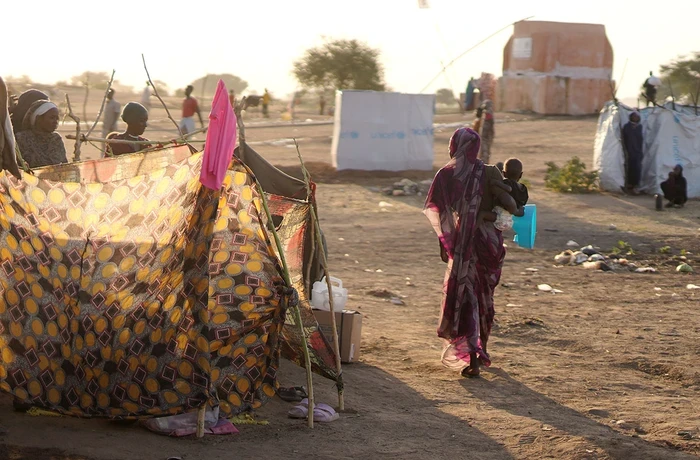
A woman holding a child, facing away from the camera, walks past makeshift tents
Feature

“I feel like I am a warrior”: Sudanese women fight for peace on the front lines of war

23 October 2026
“I feel like I am a warrior”: Sudanese women fight for peace on the front lines of war
Image
UNWomen_Placeholder
Press briefing

The scale of destruction and suffering after three years of war in Gaza can be measured in the lives of women and girls

9 October 2026
The scale of destruction and suffering after three years of war in Gaza can be measured in the lives of women and girls

Footer menu-HQ

  • News and stories
  • Resources
  • What we do
  • How we work
  • Where we are
  • Partnerships
  • Employment
  • Procurement
  • Contact us
  • Executive Board
  • Commission on the Status of Women

Donate button menu [Footer tablet]

  • Donate

Donate button menu [Footer]

  • Donate

Social media menu

  • Facebook
  • Twitter
  • LinkedIn
  • Flickr
  • YouTube
  • Instagram
UN Women - For all women and girls

Footer bottom [Menu]

  • Copyright
  • Information security
  • Privacy notice
  • Report wrongdoing
  • Terms of use
Share this page
  • Share to Facebook
  • Share to Twitter
  • Share to LinkedIn
  • Share to E-mail

Or copy link