“I feel like I am a warrior”: Sudanese women fight for peace on the front lines of war
Three frontline responders tell UN Women what women and girls in Sudan need to heal themselves and their communities.

War was so far from Tahani Al-Numeiri’s reality that when she first heard explosions in her hometown Khartoum, she assumed they were celebrations from a wedding nearby. But as the gunfire and bombs drew closer, she soon realized her entire world was about to change.
Since then, when the war broke out in April 2023, more than one in four people in Sudan have been forced to flee their homes, surviving dangerous journeys in horrific conditions without access to food, water, health care, and protection.
For some, fleeing was not an option as they found themselves trapped in besieged areas unable to leave. Al-Numeiri and her family were among them.
“We thought the area where I was would never be taken over and that nothing bad would ever happen to us, so my family and I sat there hearing fighting, but it had not reached us yet. Maybe two months into the war, we found ourselves under siege; we could not get out”, remembers Al-Numeiri, a journalist and activist.
Until then, Al-Numeiri’s experience of war was limited to what she had seen on screen. “I never imagined my life would turn out just like in the movie,” she says.
Women and girls are surviving – and reemerging as frontline responders
Al-Numeiri described to UN Women staff in Sudan how communication networks collapsed, banking services became inaccessible, and essential supplies disappeared. She and her family were left with almost nothing to eat but boiled wheat, cooked on a fire. When they ran out of fuel, they burned their furniture to keep the fire going.
The conditions took a devastating toll on Al-Numeiri’s health. Malnutrition, contaminated water and the lack of medical care left her critically ill.
“My body was swollen, my skin was peeling, scabs were coming off. I had a severe fever, and there was blood in my eyes. I could not even see anyone next to me. My family had given up. They said I was going to die.”
But her sister kept encouraging her: “You are strong, girl.”
She would survive.
“Sunset came, then night, and I found myself still alive in my room”, says Al-Numeiri. Shortly after Khartoum was retaken, and as she recovered, she began putting her energy and strength into supporting others in her community – people who, just like her, had lived under siege.
It started in the communal kitchen where she was collecting food for her family – just two spoons of lentils. The woman running the kitchen learned Al-Numeiri was a journalist and encouraged her to post online about the conditions families were living in. “I stood with her, and the first video I filmed went viral – it showed that families in this area are hungry and thirsty.”
Al-Numeiri began to work as a volunteer in the kitchen while documenting the impact of the war on women and children in Sudan. She showed the world what was happening and helped mobilize support for those struggling to survive.
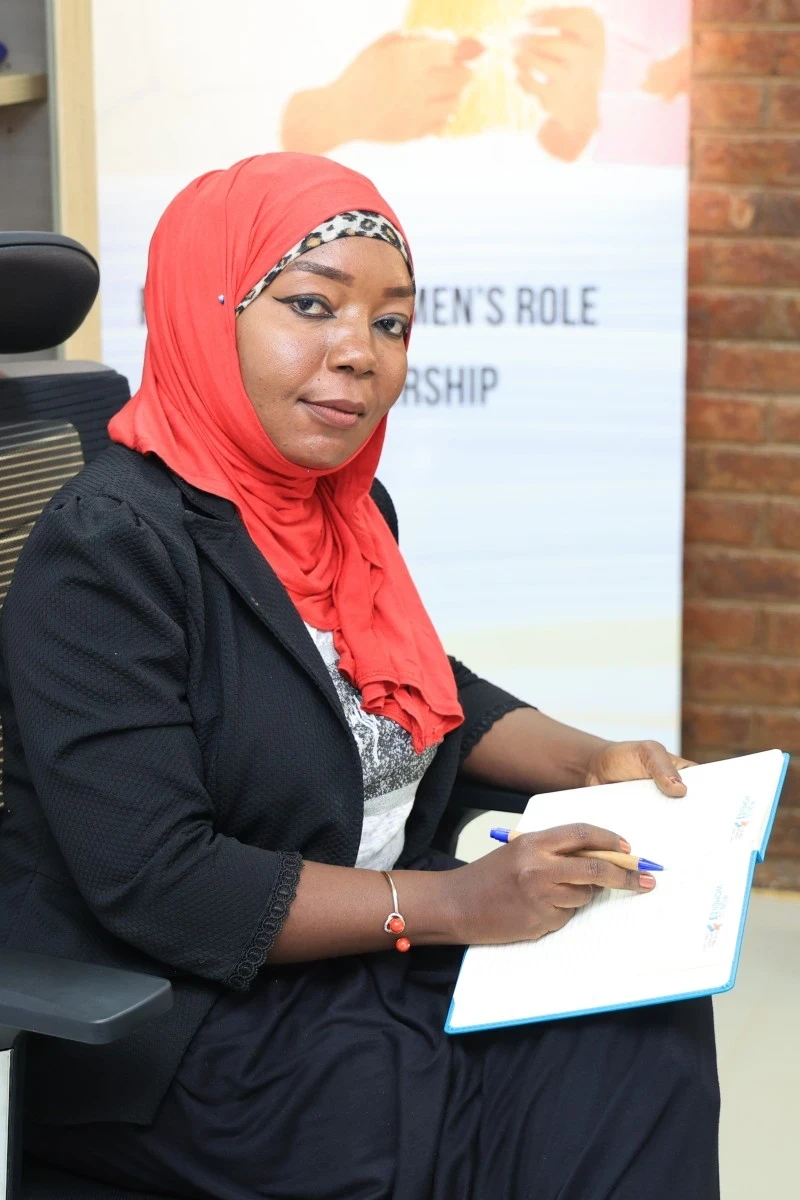
I feel like I am a warrior on the front lines.
Al-Numeiri is one of the many women in Sudan who have emerged from this war as peacebuilders, mediators and frontline responders. They have supported their communities when the institutions around them have been destroyed. They have healed, led, rebuilt security, and stood for peace. Their experiences represent the toll of war on women and their communities – and the extraordinary resilience of women who refuse to surrender hope.
Women and girls continue to suffer – while funding for those that can help remains limited
Hundreds of kilometers from Khartoum lives Amna Mohamed** in the besieged city of El Fasher, which was taken over by the Rapid Support Forces in October 2025. Mohamed stayed in the city to continue serving her community.
Mohamed is the President of a women-led organization in North Darfur. Supported by UN Women, the organization – not named here, for people’s safety – offers meals through communal kitchens, organizes activities that promote peaceful coexistence and social cohesion, and gives financial support, including loans, to help women start up and sustain businesses.
Before the war, Mohamed was already working on peacebuilding and women’s empowerment. Then shelling and violence took over.
“Women were the first to suffer. They lost their husbands, children, and homes, and were left unprotected. At that point, the situation became catastrophic for women.” – Amna Mohamed**
“They may beat or rape you, and sometimes they loot your belongings. Sometimes they demand that you leave your home; they may kill your husband or brothers right before your eyes, or they may take your daughters right in front of you and lead them away to unknown locations. This is the situation we witnessed in El Fasher during the war.”
While many people fled El Fasher, those who were caring for elderly relatives, persons with disabilities or other dependents were unable to travel. Others simply didn’t have the money to hire a donkey or other transportation to leave, as they had exhausted their savings, trying to survive food shortages and soaring prices.
With nowhere to go, Mohamed described how they endured bombardments, dug trenches in their homes for protection and struggled to access food, water and healthcare.
“Despite everything, we held firm amid the gunfire, rockets, and artillery shelling all around us, but in the end, we had nothing left to eat or drink, and there were no basic services for the people.” – Amna Mohamed**
In a UN Women survey of 50 women’s organizations, one year after the takeover of El Fasher
Mohamed explains how some women have returned to El Fasher. “Some people have started to return, but doing so is risky due to the lack of security; there are no security guarantees, and women who have returned have been raped.”
The conditions in El Fasher remain horrific.
“Hospitals are being rehabilitated, but many remain out of service. Some doctors and medications have arrived, but they are insufficient and limited. Most of them are emergency medications”, explains Mohamed.
It’s not just healthcare that is limited. The needs remain colossal.
“Women need ways to earn a living to buy food, drink, and other necessities, as well as clothing and household items. They also need containers to carry water because accessing drinking water is challenging; water sources are sometimes far away, making fetching water time-consuming. The girls also need sanitary pads, which help them maintain their dignity.”
“Our relationship with women is direct and close, and as women-led organizations, we are best positioned to serve them; we understand their needs. However, when it comes to funding, projects sometimes go to organizations led by men.” – Amna Mohamed**
There is no recovery without psychological healing
Back in Khartoum, thousands of women are also returning after years of displacement across Sudan and in neighbouring countries. At the UN Women-supported East Nile Women’s Empowerment Centre in Khartoum, women are beginning the long and complicated road to recovery as they start to rebuild their homes and communities.
Psychosocial support officer Israa Hamid Khalil is helping them. Alongside counselling and psychosocial care, women are offered training and livelihood support to earn an income and support their families.
“After they returned home, women came back with nothing at their hands, they lost everything”, explains Khalil. “Right now, our focus is on [them]. We are trying to alleviate the suffering that they have endured during the war and during their displacement from the Khartoum area and other regions to find safety and peace.”
Khalil told UN Women that women were dealing with trauma from the early stages of the war, and what happened during their displacement. Now home, they have found their houses looted, stripped of everything they owned, even the doors and windows.
“Women returned to the place where they had experienced those painful memories and traumas. They can’t just stay at home and keep reliving those things. We now address this challenge: How can we help them overcome this stage and begin their journey of psychological recovery?” – Israa Hamid Khalil
What Sudanese women are teaching us about peacebuilding
Women like Al-Numeiri, Mohamed, and Khalil show that peace is built in communities, neighbourhoods, and homes by women who bring people together, de-escalate tensions, and create opportunities for dialogue.
UN Women supports grassroots women’s networks in governance, dialogue, negotiation, conflict analysis, peacebuilding, leadership, and advocacy – equipping women with practical tools to mediate disputes and promote peace within their communities. In Kassala State, UN Women has trained 18 women representing 43 of these networks.
As we mark 26 years since the adoption of United Nations Security Council Resolution 1325, which laid the foundation for the Women, Peace and Security (WPS) agenda, the experiences of Sudanese women show the world that women are first responders, caregivers, humanitarians, advocates, peacebuilders, and central actors of peace and security.