
Universal menu

  • Global
  • Regions
    • Africa
    • Americas and the Caribbean
    • Arab States
    • Asia and the Pacific
    • Europe and Central Asia
  • Knowledge
  • Data
  • Training
  • Transparency
UN Women - For all women and girls

Main Navigation-HQ

  • Who we are
    • About us
      • About UN Women
      • Business model
      • Guiding documents
      • Worldwide presence
    • Leadership
      • Governance structure
      • Executive leadership
      • Executive Board
      • Accountability
    • Work with us
      • Employment
      • Procurement
      • Calls for proposals
      • Contact us
      • UN Women Strategic Plan 2026–2029
      • UN Women Strategic Plan 2026–2029 - social media image
        UN Women Strategic Plan 2026–2029
  • What we do
    • Focus areas
      • Ending violence against women
      • Peace and security
      • Humanitarian action
      • Leadership and governance
      • Economic empowerment
      • Innovation and technology
      • Women with disabilities
      • Youth
      • HIV and AIDS
    • How we work
      • 2030 Agenda for Sustainable Development
      • Commission on the Status of Women
      • Gender parity in the UN system
      • Intergovernmental support
      • Partnerships
      • Research and data
      • Training Centre
      • Trust funds
      • UN system coordination
      • Gender Equality Accelerators
      • Gender Equality Accelerators artwork
        Gender Equality Accelerators
  • News and stories
    • Latest
      • News
      • Articles and explainers
      • In focus
    • Media center
      • Press materials
      • Media contacts
      • Explainer: Why are women so exhausted? Care work and the mental load
      • Two adults stand at a table changing diapers on baby dolls, with laundry hanging on a clothesline behind them in a home setting.
        Explainer: Why are women so exhausted? Care work and the mental load
      • Press release: Aid cuts dismantle women’s organizations working in humanitarian crises
      • A young Ugandan woman sits with another local woman to talk
        Press release: Aid cuts dismantle women’s organizations working in humanitarian crises
  • Digital library
    • Resources
      • Publications
      • Annual reports
      • Gender snapshot
      • Progress of the world’s women
      • World survey on the role of women in development
    • GenderTerm
      • GenderTerm
      • Reprint permissions
      • UN Women Highlights 2025–2026
      • A smiling woman.
        UN Women Highlights 2025–2026
      • Gender snapshot 2026
      • A diverse group of people represented as simplified silhouettes, arranged against a dark blue background.
        Gender snapshot 2026
  • Get involved
    • How to get involved
      • For ALL Women and Girls
      • International Women's Day
      • 16 Days of Activism to End Violence against Women and Girls
      • UNiTE! Campaign to End Violence against Women
      • Generation Equality
      • He for She
Ask AI
https://84e5cfacd5c7e99f9825edf344450c.1b.environment.api.powerplatform.com/powervirtualagents/botsbyschema/crad4_websiteQA/directline/token?api-version=2022-03-01-preview
1
-
Ask your question here
AI website assistant

Hello, how can I assist you?

AI chatbot responses may be incorrect. Always verify important information.

Donate button menu

Donate

Breadcrumb

  1. Home
  2. News and stories
  3. Statement

Website survey

We want to know how we can improve your experience on this website. Completing this survey takes less than 5 minutes.

TAKE THE SURVEY
Statement

UN Women statement for World AIDS Day

Inequalities result in unequal progress for women

1 December 2021
  • Share to Facebook
  • Share to Twitter
  • Share to LinkedIn
  • Share to E-mail

This World AIDS Day, there is progress around the globe to celebrate, in access to HIV testing, life-saving treatment and care. We are seeing increased recognition of the role that gender norms play in the HIV response, leading to improved HIV prevention methods, targeted HIV policies and programmes, and access to comprehensive sexuality education for women and girls. There are, however, also strong alarm bells that this progress is increasingly unequal.

The world is broadly moving in the right direction. The trend is of reduced HIV infections among women and men, except in certain geographical areas and for certain age groups where urgently intensified and accelerated action is needed.

Last year a key barrier was breached. In 2020, for the first time, women aged 15 and older accounted for over 50 per cent of all new HIV infections globally. According to data from UNAIDS, women made up 65 per cent of new infections in sub-Saharan Africa and 52 per cent in the Caribbean. The number of new HIV infections is also climbing among women in Eastern Europe and Central Asia as well as in the Middle East and North Africa.

The crisis is at its worst among adolescent girls and young women who have the least power to control their own lives. In 2020, roughly 5,000 adolescent girls and young women aged 15-24 were facing new HIV infections every week. Adolescent girls living with HIV now outnumber adolescent boys living with HIV by two to one.

The COVID-19 pandemic has exacerbated the economic and social inequalities that drive such trends. Poverty and food insecurity, gender-based violence, stigma and discrimination, and child and forced marriage all raise the risk of HIV infection for women and girls and limit their access to services. Unavailability or reductions in routine HIV, sexual and reproductive health and social support services during this period have left women and girls more vulnerable, particularly during periods of lockdown and social isolation.

Informed by decades of research and by women’s own lived experiences, we know exactly what needs our urgent, concerted attention in order to reverse these trends and build stronger health systems that can withstand repeated and varied pandemics. This includes passing non-discriminatory laws and policies and ensuring adequate financing for gender equality. It also means deploying targeted, age-appropriate approaches that support women and girls, in all their diversity, with stigma-free services, along with enabling environments for women and girls to realize their rights and engage in decision-making processes at all levels of the HIV response.

With efforts that tackle power imbalances at the systemic level and undo discrimination and harmful norms and practices, together we can make substantive improvements towards gender equality.

On this important day, we pledge our commitment to ensure a more resilient and equitable future for all.
Topics

  • Health
  • HIV and AIDS

Related content

Image
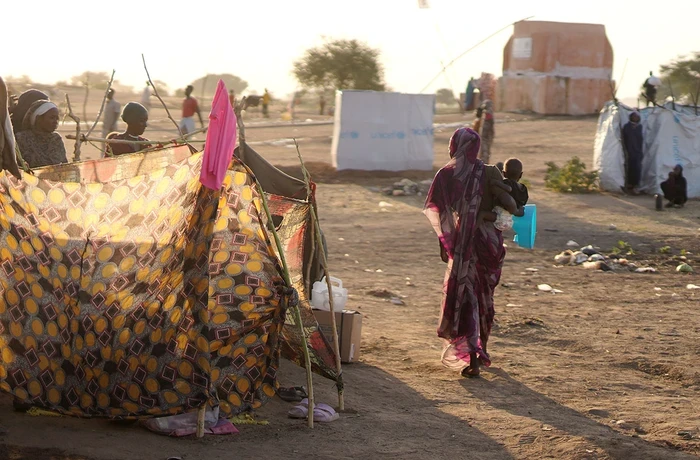
A woman holding a child, facing away from the camera, walks past makeshift tents
Feature

“I feel like I am a warrior”: Sudanese women fight for peace on the front lines of war

23 October 2026
“I feel like I am a warrior”: Sudanese women fight for peace on the front lines of war
Image
UNWomen_Placeholder
Press briefing

Nine in 10 organizations say trauma persists among women and girls displaced from El Fasher a year after its fall

23 October 2026
Nine in 10 organizations say trauma persists among women and girls displaced from El Fasher a year after its fall
Image
UNWomen_Placeholder
Press briefing

Women’s care work fuels an unaccounted death toll in the fastest-growing Ebola outbreak on record

18 September 2026
Women’s care work fuels an unaccounted death toll in the fastest-growing Ebola outbreak on record

Footer menu-HQ

  • News and stories
  • Resources
  • What we do
  • How we work
  • Where we are
  • Partnerships
  • Employment
  • Procurement
  • Contact us
  • Executive Board
  • Commission on the Status of Women

Donate button menu [Footer tablet]

  • Donate

Donate button menu [Footer]

  • Donate

Social media menu

  • Facebook
  • Twitter
  • LinkedIn
  • Flickr
  • YouTube
  • Instagram
UN Women - For all women and girls

Footer bottom [Menu]

  • Copyright
  • Information security
  • Privacy notice
  • Report wrongdoing
  • Terms of use
Share this page
  • Share to Facebook
  • Share to Twitter
  • Share to LinkedIn
  • Share to E-mail

Or copy link