Universal menu

  • Global
  • Regions
    • Africa
    • Americas and the Caribbean
    • Arab States
    • Asia and the Pacific
    • Europe and Central Asia
  • Knowledge
  • Data
  • Training
  • Transparency
UN Women - For all women and girls

Main Navigation-HQ

  • Who we are
    • About us
      • About UN Women
      • Business model
      • Guiding documents
      • Worldwide presence
    • Leadership
      • Governance structure
      • Executive leadership
      • Executive Board
      • Accountability
    • Work with us
      • Employment
      • Procurement
      • Calls for proposals
      • Contact us
      • UN Women Strategic Plan 2026–2029
      • UN Women Strategic Plan 2026–2029 - social media image
        UN Women Strategic Plan 2026–2029
  • What we do
    • Focus areas
      • Ending violence against women
      • Peace and security
      • Humanitarian action
      • Leadership and governance
      • Economic empowerment
      • Innovation and technology
      • Women with disabilities
      • Youth
      • HIV and AIDS
    • How we work
      • 2030 Agenda for Sustainable Development
      • Commission on the Status of Women
      • Gender parity in the UN system
      • Intergovernmental support
      • Partnerships
      • Research and data
      • Training Centre
      • Trust funds
      • UN system coordination
      • Gender Equality Accelerators
      • Gender Equality Accelerators artwork
        Gender Equality Accelerators
  • News and stories
    • Latest
      • News
      • Articles and explainers
      • In focus
    • Media center
      • Press materials
      • Media contacts
      • Explainer: Why are women so exhausted? Care work and the mental load
      • Two adults stand at a table changing diapers on baby dolls, with laundry hanging on a clothesline behind them in a home setting.
        Explainer: Why are women so exhausted? Care work and the mental load
      • Press release: Aid cuts dismantle women’s organizations working in humanitarian crises
      • A young Ugandan woman sits with another local woman to talk
        Press release: Aid cuts dismantle women’s organizations working in humanitarian crises
  • Digital library
    • Resources
      • Publications
      • Annual reports
      • Gender snapshot
      • Progress of the world’s women
      • World survey on the role of women in development
    • GenderTerm
      • GenderTerm
      • Reprint permissions
      • UN Women Highlights 2025–2026
      • A smiling woman.
        UN Women Highlights 2025–2026
      • Gender snapshot 2026
      • A diverse group of people represented as simplified silhouettes, arranged against a dark blue background.
        Gender snapshot 2026
  • Get involved
    • How to get involved
      • For ALL Women and Girls
      • International Women's Day
      • 16 Days of Activism to End Violence against Women and Girls
      • UNiTE! Campaign to End Violence against Women
      • Generation Equality
      • He for She
Ask AI
https://84e5cfacd5c7e99f9825edf344450c.1b.environment.api.powerplatform.com/powervirtualagents/botsbyschema/crad4_websiteQA/directline/token?api-version=2022-03-01-preview
1
-
Ask your question here
AI website assistant

Hello, how can I assist you?

AI chatbot responses may be incorrect. Always verify important information.

Donate button menu

Donate

Breadcrumb

  1. Home
  2. News and stories
  3. Speech

Website survey

We want to know how we can improve your experience on this website. Completing this survey takes less than 5 minutes.

TAKE THE SURVEY
Speech

Speech: Accelerating action for gender-responsive disaster risk reduction

Opening speech by UN Women Executive Director Sima Bahous to the Risk Reduction Hub, a series of meetings held on the margins of the High-Level Meeting on the Midterm Review of the Sendai Framework for Disaster Risk Reduction, on 17 May 2023.

17 May 2023
UN Women Executive Director Sima Bahous
  • Share to Facebook
  • Share to Twitter
  • Share to LinkedIn
  • Share to E-mail

[As delivered.]

I am honoured to welcome you all, on behalf of UN Women, UNDRR, and UNFPA, to this important and timely event.

We meet in support of accelerated implementation of the Sendai Framework, on the eve of the High-Level Meeting of the Framework’s Midterm Review. This is our opportunity to optimize the work of the next seven years so that we together achieve gender-responsive disaster risk reduction.

Image
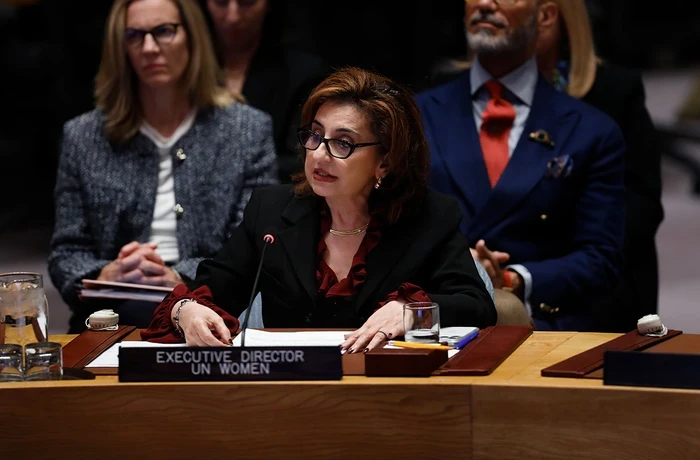
UN Women Executive Director Sima Bahous delivers remarks at the event, “Accelerating action for gender responsive disaster risk reduction”, held in Conference Room 6 at UN Headquarters on 17 May 2023. Organized by UNDRR, UNFPA, and UN Women, this event forms part of the Risk Reduction Hub events convened on the margins of the High-Level Meeting on the Midterm Review of the Sendai Framework. Photo: UN Women/Ryan Brown.

Time is not on our side, dear friends; we are already halfway to 2030. We face worsening climate impacts and unchecked environmental degradation.

Disasters are intensifying at an alarming rate. More extreme weather, combined with poor planning and adaptation measures, is exposing millions of people who do not have recourse to social protection, to loss of homes, lives, and livelihoods.

That exposure to harm is not uniform. As the Sendai Framework Midterm Review reports reveal, despite their capabilities, women and girls are being left out and left behind, caught up in a vicious cycle of impact and neglect.

Across the board, women are disproportionately affected both during and in the aftermath of disasters. We can see this everywhere we look, from their mortality rates to their halted education, their damaged health, experiences of violence, lost livelihoods, and malnutrition.

And yet, with so much to gain from appropriate solutions, women continue to be largely excluded from disaster risk reduction and resilience processes. The omission of women’s participation and leadership fundamentally threatens our collective resilience and ability to meet climate challenges.

Conversely, women’s perspectives and engagement at all levels leads to better resilience outcomes for communities and marginalized groups, strengthening risk reduction policies and mechanisms in the face of disasters. Research undertaken in 2019 across 91 countries demonstrates that electing women politicians helps enact ambitious climate policies.

The more women we have in positions of power, the more likely we are to have more ambitious and stringent climate change and disaster risk reduction policies, a stronger focus on quality of life, and better health and education outcomes for all.

One of the greatest strengths of the Sendai Framework from its inception is the recognition of the importance of local contexts and of communities shaping their own responses.

Women lift their families and communities after droughts, they lift them after floods, and they lift them after hurricanes, back to stability once again. Where crises converge, as we have seen in the Pacific and in the Lake Chad Basin region, women step up, particularly so when they have access to finance, knowledge, and political agency. Women are the true face of resilience. I am sure that you all agree with me.

The Midterm Review gives us a critical opportunity to leverage women’s agency and leadership for the more effective, gender-responsive implementation of the Sendai Framework.

A Gender Action Plan for the Sendai Framework will provide the much-needed roadmap for more coordinated action.

Let me also recall that Member States united to support the creation of a Gender Action Plan at last year’s session of the Commission on the Status of Women, the Global Platform on Disaster Risk Reduction in Bali, and the Asia-Pacific Ministerial Conference.

Now, UN Women, UNDRR, and UNFPA have joined forces to underline that disaster risk and gender inequality are interwoven challenges. We will only achieve our goals when we put women’s leadership at the heart of our work to strengthen our collective resilience.

As part of this partnership, UN Women stands ready to support Member States and all other stakeholders in scaling up gender-responsive disaster risk reduction.

Our Women’s Resilience to Disaster Programme, generously funded by Australia—thank you Australia—allows us to work with more than 400 women’s organizations specializing in climate and disaster resilience, in 61 countries and counting. It also allows us to amplify the voices of brilliant women leaders from Pacific small island developing states, such as Vasiti Soko, who is moderating this session. She is the Director of the National Disaster Management Office of Fiji. Welcome Vasiti.

Let us resolve to seize the momentum of the Midterm Review to make our disaster risk reduction efforts more equal, and to unleash the powerful potential of women’s leadership for resilience—and for a more sustainable and more prosperous world.

I thank you and wish you a very good session.
Topics

  • 2030 Agenda for Sustainable Development
  • Sustainable Development Goals (SDGs)
  • Climate change
  • Gender equality and women’s empowerment
  • Humanitarian action
  • Disaster risk reduction
  • Leadership and political participation
  • UN Women administration
  • Executive Director

Related content

Image
UN Under-Secretary-General and UN Women Executive Director Sima Bahous delivers remarks to the Security Council open debate on women and peace and security, UN headquarters, 27 October 2026. Photo: UN Women/Ryan Brown.
Speech

Speech: Do we have the courage to share power, the resolve to invest in women’s leadership, and the political will to turn our commitments into action?

27 October 2026
Speech: Do we have the courage to share power, the resolve to invest in women’s leadership, and the political will to turn our commitments into action?
Image
UNWomen_Placeholder
Press briefing

Nine in 10 organizations say trauma persists among women and girls displaced from El Fasher a year after its fall

23 October 2026
Nine in 10 organizations say trauma persists among women and girls displaced from El Fasher a year after its fall
Image
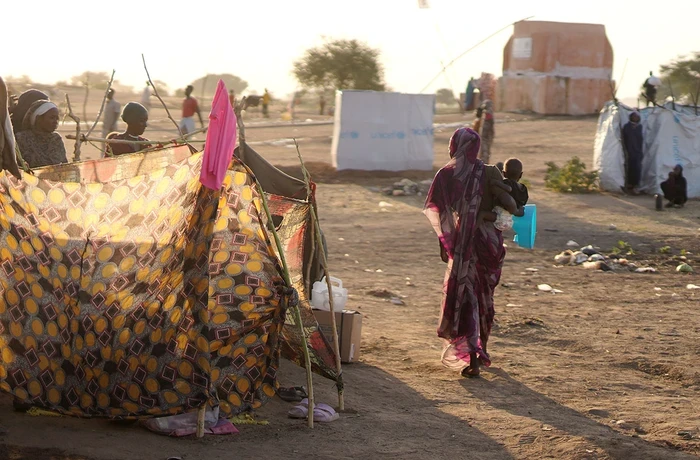
A woman holding a child, facing away from the camera, walks past makeshift tents
Feature

“I feel like I am a warrior”: Sudanese women fight for peace on the front lines of war

23 October 2026
“I feel like I am a warrior”: Sudanese women fight for peace on the front lines of war

Footer menu-HQ

  • News and stories
  • Resources
  • What we do
  • How we work
  • Where we are
  • Partnerships
  • Employment
  • Procurement
  • Contact us
  • Executive Board
  • Commission on the Status of Women

Donate button menu [Footer tablet]

  • Donate

Donate button menu [Footer]

  • Donate

Social media menu

  • Facebook
  • Twitter
  • LinkedIn
  • Flickr
  • YouTube
  • Instagram
UN Women - For all women and girls

Footer bottom [Menu]

  • Copyright
  • Information security
  • Privacy notice
  • Report wrongdoing
  • Terms of use
Share this page
  • Share to Facebook
  • Share to Twitter
  • Share to LinkedIn
  • Share to E-mail

Or copy link