Universal menu

  • Global
  • Regions
    • Africa
    • Americas and the Caribbean
    • Arab States
    • Asia and the Pacific
    • Europe and Central Asia
  • Knowledge
  • Data
  • Training
  • Transparency
UN Women - For all women and girls

Main Navigation-HQ

  • Who we are
    • About us
      • About UN Women
      • Business model
      • Guiding documents
      • Worldwide presence
    • Leadership
      • Governance structure
      • Executive leadership
      • Executive Board
      • Accountability
    • Work with us
      • Employment
      • Procurement
      • Calls for proposals
      • Contact us
      • UN Women Strategic Plan 2026–2029
      • UN Women Strategic Plan 2026–2029 - social media image
        UN Women Strategic Plan 2026–2029
  • What we do
    • Focus areas
      • Ending violence against women
      • Peace and security
      • Humanitarian action
      • Leadership and governance
      • Economic empowerment
      • Innovation and technology
      • Women with disabilities
      • Youth
      • HIV and AIDS
    • How we work
      • 2030 Agenda for Sustainable Development
      • Commission on the Status of Women
      • Gender parity in the UN system
      • Intergovernmental support
      • Partnerships
      • Research and data
      • Training Centre
      • Trust funds
      • UN system coordination
      • Gender Equality Accelerators
      • Gender Equality Accelerators artwork
        Gender Equality Accelerators
  • News and stories
    • Latest
      • News
      • Articles and explainers
      • In focus
    • Media center
      • Press materials
      • Media contacts
      • Explainer: Why are women so exhausted? Care work and the mental load
      • Two adults stand at a table changing diapers on baby dolls, with laundry hanging on a clothesline behind them in a home setting.
        Explainer: Why are women so exhausted? Care work and the mental load
      • Press release: Aid cuts dismantle women’s organizations working in humanitarian crises
      • A young Ugandan woman sits with another local woman to talk
        Press release: Aid cuts dismantle women’s organizations working in humanitarian crises
  • Digital library
    • Resources
      • Publications
      • Annual reports
      • Gender snapshot
      • Progress of the world’s women
      • World survey on the role of women in development
    • GenderTerm
      • GenderTerm
      • Reprint permissions
      • UN Women Highlights 2025–2026
      • A smiling woman.
        UN Women Highlights 2025–2026
      • Gender snapshot 2026
      • A diverse group of people represented as simplified silhouettes, arranged against a dark blue background.
        Gender snapshot 2026
  • Get involved
    • How to get involved
      • For ALL Women and Girls
      • International Women's Day
      • 16 Days of Activism to End Violence against Women and Girls
      • UNiTE! Campaign to End Violence against Women
      • Generation Equality
      • He for She
Ask AI
https://84e5cfacd5c7e99f9825edf344450c.1b.environment.api.powerplatform.com/powervirtualagents/botsbyschema/crad4_websiteQA/directline/token?api-version=2022-03-01-preview
1
-
Ask your question here
AI website assistant

Hello, how can I assist you?

AI chatbot responses may be incorrect. Always verify important information.

Donate button menu

Donate

Breadcrumb

  1. Home
  2. News and stories
  3. Speech

Website survey

We want to know how we can improve your experience on this website. Completing this survey takes less than 5 minutes.

TAKE THE SURVEY
Speech

Speech: To combat climate shocks, protect women’s rights and strengthen their resilience and leadership

Remarks by UN Women Executive Director Sima Bahous at the side event, “Climate Shocks Exacerbating Humanitarian Crisis, Insecurity and Gender Inequality”, at the 66th session of the Commission on the Status of Women, on 21 March 2022.

21 March 2022
UN Women Executive Director Sima Bahous
  • Share to Facebook
  • Share to Twitter
  • Share to LinkedIn
  • Share to E-mail

[As delivered.]

I want to acknowledge that we are meeting on the International Day for the Elimination of Racial Discrimination. Today we focus particular attention on women and girls of minority backgrounds from around the world, amplifying their voices and visibility, promoting their rights and recognizing them as indispensable agents of change.

Women and girls in crisis situations are particularly exposed to risks and the impacts of climate shocks. Today, 80 per cent of people displaced by conflict, persecution and violence are from countries at the frontlines of the climate emergency. When women lack the resources and freedom to move, they may also become trapped in high climate risk areas.

The Sahel region is plagued by recurrent hydro-meteorological disasters, including flooding and drought. They aggravate food insecurity, increase tensions and fuel humanitarian crises. The situation has further deteriorated due to the COVID-19 pandemic. Over 24 million people in the Sahel are currently in need of life-saving assistance and protection, including 4.5 million displaced individuals. Even though the crisis is critical for all concerned communities, women and girls are disproportionally affected and have different levels of resilience and capacity to cope and recover.

In Northeast Nigeria, severe climate variability continues to negatively affect agricultural production, and insecurity has significantly constrained access to farmlands. Female-headed households who depend on farming to provide for their families often suffer the most. With limited permissible areas for farming, women who go to open fields for farming activities expose themselves to the risk of being raped, abducted or killed.

Climate change is also driving violent extremism, as more than 70 per cent of the population who depend on farming have lost their livelihoods. Without an income, young people especially become more vulnerable to being recruited by Boko Haram.

This is coupled with the shrinking of Lake Chad, which has directly impacted fish production and degraded pasturelands. It is forcing pastoralists to move southwards, deepening the deadly competition for land and water resources among farmers and herders, and increasing insecurity for women. 

Turning to Afghanistan, we see that conflict, economic fallout and gender inequality are further intensified by climate crises, drought and famine. Afghanistan’s two-year long drought, its worst in decades, is exacerbated by climate change. The dry spell has hit 25 of the country’s 34 provinces, and the last wheat harvest is estimated to be down 20 per cent from the year before.

Currently 23 million people — around half of the population — are identified as acutely food insecure, with 8.7 million at risk of starvation. And the situation is expected to worsen. 2.4 million people are in need of humanitarian assistance. This has created a humanitarian catastrophe marked by gender-specific restrictions that directly impact the ability of women and girls to realize their rights.

In addition to exacerbating immediate human needs, the climate crisis threatens many development gains made in Afghanistan over the last decade. For example, with forest coverage being decimated, little land is available for farming, while environmental degradation and poor management of natural resources have left a legacy of pollution and public health issues. Water scarcity could increase community-level conflict, while tensions over international waters could escalate regional tensions.

Since the Taliban took over, Afghan women have already been disproportionately bearing the brunt of the unfolding economic and human rights crisis. Estimates shows that five per cent of GDP is being lost under the current restrictions on women’s rights to work, including women farmers’ dwindling access to land and movement. Failing to protect the rights of women and girls will have dire socio-economic consequences for years to come.

In response to this vicious cycle of crises, climate shocks and gender inequality, UN Women is working in partnership with women’s organizations in over 50 countries to strengthen the resilience of women and girls affected by conflicts and climate crises, and to ensure their participation in addressing humanitarian access.

New entry points are also emerging for engaging women in conflict prevention and peacebuilding, and as climate champions. We are pleased to see that the Intergovernmental Panel on Climate Change, the IPCC, in its latest report emphasized that risks to peace are reduced by supporting people in climate-sensitive economic activities and advancing women’s empowerment.

Protecting women’s rights and strengthening women’s resilience and leadership, through targeted action and gender-responsive policies, plans and strategies, remains central to advancing climate security, disaster risk reduction, peacebuilding, conflict prevention and the prevention of violent extremism.

I urge all Member States to commit to putting women and girls at the centre of decision-making on climate, environmental and disaster risk policies and programmes in this Commission on the Status of Women, and beyond. I very much look forward to our discussions on how we can do this together.

Thank you.
Topics

  • Climate change
  • Humanitarian action
  • Executive Director

Related content

Image
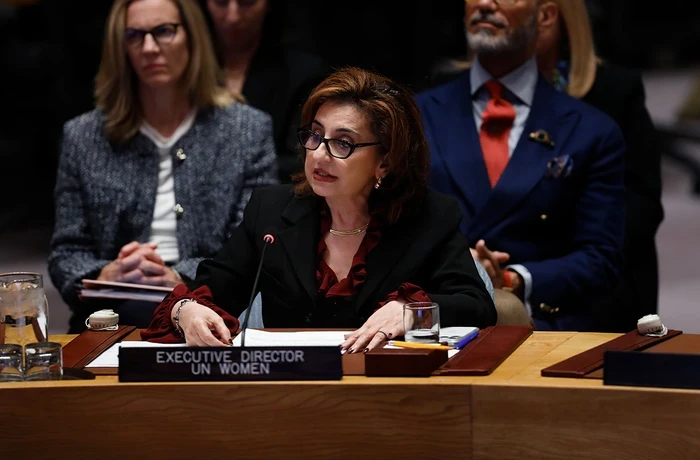
UN Under-Secretary-General and UN Women Executive Director Sima Bahous delivers remarks to the Security Council open debate on women and peace and security, UN headquarters, 27 October 2026. Photo: UN Women/Ryan Brown.
Speech

Speech: Do we have the courage to share power, the resolve to invest in women’s leadership, and the political will to turn our commitments into action?

27 October 2026
Speech: Do we have the courage to share power, the resolve to invest in women’s leadership, and the political will to turn our commitments into action?
Image
UNWomen_Placeholder
Press briefing

Nine in 10 organizations say trauma persists among women and girls displaced from El Fasher a year after its fall

23 October 2026
Nine in 10 organizations say trauma persists among women and girls displaced from El Fasher a year after its fall
Image
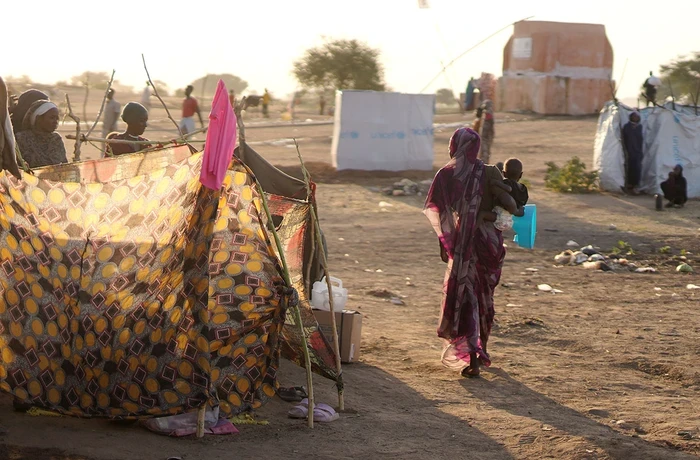
A woman holding a child, facing away from the camera, walks past makeshift tents
Feature

“I feel like I am a warrior”: Sudanese women fight for peace on the front lines of war

23 October 2026
“I feel like I am a warrior”: Sudanese women fight for peace on the front lines of war

Footer menu-HQ

  • News and stories
  • Resources
  • What we do
  • How we work
  • Where we are
  • Partnerships
  • Employment
  • Procurement
  • Contact us
  • Executive Board
  • Commission on the Status of Women

Donate button menu [Footer tablet]

  • Donate

Donate button menu [Footer]

  • Donate

Social media menu

  • Facebook
  • Twitter
  • LinkedIn
  • Flickr
  • YouTube
  • Instagram
UN Women - For all women and girls

Footer bottom [Menu]

  • Copyright
  • Information security
  • Privacy notice
  • Report wrongdoing
  • Terms of use
Share this page
  • Share to Facebook
  • Share to Twitter
  • Share to LinkedIn
  • Share to E-mail

Or copy link