Universal menu

  • Global
  • Regions
    • Africa
    • Americas and the Caribbean
    • Arab States
    • Asia and the Pacific
    • Europe and Central Asia
  • Knowledge
  • Data
  • Training
  • Transparency
UN Women - For all women and girls

Main Navigation-HQ

  • Who we are
    • About us
      • About UN Women
      • Business model
      • Guiding documents
      • Worldwide presence
    • Leadership
      • Governance structure
      • Executive leadership
      • Executive Board
      • Accountability
    • Work with us
      • Employment
      • Procurement
      • Calls for proposals
      • Contact us
      • UN Women Strategic Plan 2026–2029
      • UN Women Strategic Plan 2026–2029 - social media image
        UN Women Strategic Plan 2026–2029
  • What we do
    • Focus areas
      • Ending violence against women
      • Peace and security
      • Humanitarian action
      • Leadership and governance
      • Economic empowerment
      • Innovation and technology
      • Women with disabilities
      • Youth
      • HIV and AIDS
    • How we work
      • 2030 Agenda for Sustainable Development
      • Commission on the Status of Women
      • Gender parity in the UN system
      • Intergovernmental support
      • Partnerships
      • Research and data
      • Training Centre
      • Trust funds
      • UN system coordination
      • Gender Equality Accelerators
      • Gender Equality Accelerators artwork
        Gender Equality Accelerators
  • News and stories
    • Latest
      • News
      • Articles and explainers
      • In focus
    • Media center
      • Press materials
      • Media contacts
      • Explainer: Why are women so exhausted? Care work and the mental load
      • Two adults stand at a table changing diapers on baby dolls, with laundry hanging on a clothesline behind them in a home setting.
        Explainer: Why are women so exhausted? Care work and the mental load
      • Press release: Aid cuts dismantle women’s organizations working in humanitarian crises
      • A young Ugandan woman sits with another local woman to talk
        Press release: Aid cuts dismantle women’s organizations working in humanitarian crises
  • Digital library
    • Resources
      • Publications
      • Annual reports
      • Gender snapshot
      • Progress of the world’s women
      • World survey on the role of women in development
    • GenderTerm
      • GenderTerm
      • Reprint permissions
      • UN Women Highlights 2025–2026
      • A smiling woman.
        UN Women Highlights 2025–2026
      • Gender snapshot 2026
      • A diverse group of people represented as simplified silhouettes, arranged against a dark blue background.
        Gender snapshot 2026
  • Get involved
    • How to get involved
      • For ALL Women and Girls
      • International Women's Day
      • 16 Days of Activism to End Violence against Women and Girls
      • UNiTE! Campaign to End Violence against Women
      • Generation Equality
      • He for She
Ask AI
https://84e5cfacd5c7e99f9825edf344450c.1b.environment.api.powerplatform.com/powervirtualagents/botsbyschema/crad4_websiteQA/directline/token?api-version=2022-03-01-preview
1
-
Ask your question here
AI website assistant

Hello, how can I assist you?

AI chatbot responses may be incorrect. Always verify important information.

Donate button menu

Donate

Breadcrumb

  1. Home
  2. News and stories
  3. Press briefing

Website survey

We want to know how we can improve your experience on this website. Completing this survey takes less than 5 minutes.

TAKE THE SURVEY
Press briefing

Press briefing by UN Women on the humanitarian needs of women and girls in Sudan after two years of war

When women lead, when women are heard, humanitarian needs are met.

15 April 2025
  • Share to Facebook
  • Share to Twitter
  • Share to LinkedIn
  • Share to E-mail

Remarks by Anna Mutavati, UN Women Regional Director for East and Southern Africa and Salvator Nkurunziza, UN Women Country Representative in Sudan, speaking at the Palais des Nations, in Geneva, from Port Sudan.

Image
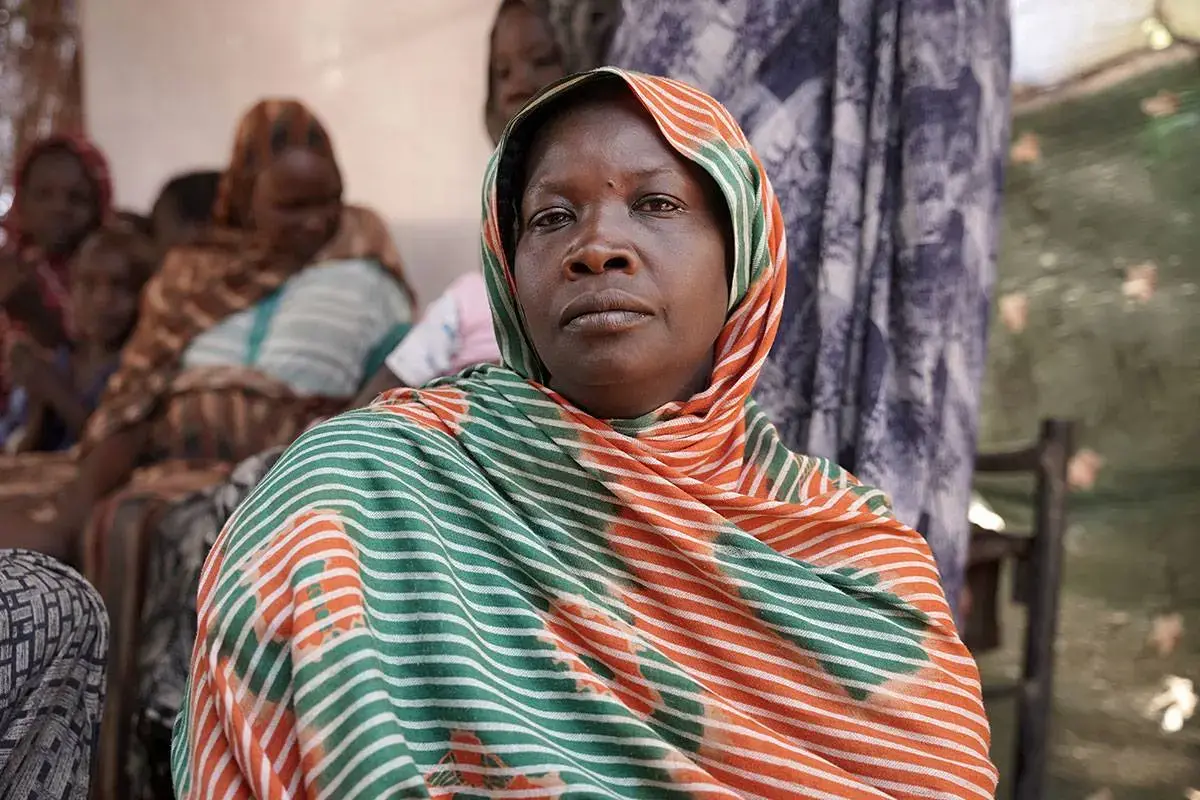
Rabha, a beneficiary of UN Women's humanitarian assistance at Saada and Salaam gathering site in Port Sudan. Through women-led organizations across the country, UN Women gives various forms of humanitarian support to the women and girls of Sudan including psychosocial, provision of dignity kits and sensitization on their rights. Photo: UN Women/Ekram Hamad Fadlalla

Remarks by Anna Mutavati, UN Women Regional Director for East and Southern Africa:

I speak to you from Port Sudan, on the day we mark the second year of the horrific war in Sudan.

I am here to express solidarity with the women of Sudan who are bearing the brunt of one of the world’s worst humanitarian emergencies, to listen to their concerns, and to reassure them that they are not alone.

Just a few days ago, 400 civilians lost their lives in the attack in Darfur. We condemn, in the strongest terms, this unwarranted attack on civilians which goes against international humanitarian law.

Thousands of civilians who are trapped in the Darfur region have no access to crucial lifesaving services including food and healthcare. We call for humanitarian access and the protection of humanitarian aid workers who are providing lifesaving support to civilians in the region. 

The war’s toll is devastating:

  • 288 per cent increase in demand for lifesaving support following rape and sexual violence.
  • Women’s bodies have become battlegrounds in this conflict, with sexual violence and rape being systematically used as a weapon of war.
  • Yet these numbers don’t capture the pain and fear I hear in the stories of women I have met in displacement camps and protection centres in Port Sudan.

Every woman fled her home with nothing, escaping violence and personal tragedies. I have heard their accounts of horror, the sexual abuse they suffered, and the constant need to move from one place to another, with nowhere safe to go. Lack of food, medical care, and drinking water has become the norm, while their children have lost access to education and live now in constant fear.

The testimonies of women survivors of sexual violence will remain with me forever. How their bodies became battlegrounds, as there are strong indications of gender-based violence being used as a weapon of war.

I visited, two days ago, an internally displaced persons site here in Port Sudan—Saada and Salam Gathering Site (which means “Happiness and Peace”). It is a school turned into a displacement camp for those who escaped from Khartoum and other areas under attack in the past two years. Eighty-eight families live there, with only three latrines for women and two for men, and no access to drinking water or healthcare. A woman told us how she gave birth alone on the floor of her tent.

Sudanese women’s organizations are at the frontline of the response. Many have been pillars of Sudanese civil society for decades, promoting women’s rights, education, and leadership in political decision-making.

We cannot abandon them now. Now is when they need us most.

  • Women demand a place at the table to shape the peace and future of their country.
  • They demand justice and accountability for the violations they have suffered.
  • They demand an end to the war and sustainable long-term peace to return.
  • They demand a chance for their children to dream and pursue those dreams like the rest of the children.
  • They demand that we do not keep quiet about the sexual violence that they are enduring, as the perpetrators would want them to.
  • They demand that we use our spaces and voices to help them tell the story of the gross human rights violations that they are experiencing.
  • They demand that we spotlight the underfunding of local women’s organizations that are helping women bear the brunt of this conflict with very little funding.
  • They demand that we act now and not wait another day longer.

Remarks by Salvator Nkurunziza, UN Women Country Representative in Sudan:

All the work that UN Women does in Sudan is with, for, and through women’s organizations. They are at the forefront of our response to gender-based violence, access to humanitarian services, and building livelihoods for women’s economic empowerment.

UN Women is—and will remain—here, staying and delivering, standing with these organizations, giving them a voice in humanitarian assistance, demanding lasting peace, and championing a leading role for women and girls in shaping the future of this country.

Empowering local women’s organizations is essential to everything UN Women does in Sudan.

In our humanitarian action, these organizations help identify urgent needs in displacement camps, support survivors of gender-based violence, and provide psychosocial care and livelihoods training. They work within their own communities to support those who need it most—including women with disabilities, pregnant women, and women-led households. They are resilient, continuing their work and mobilizing communities to stop this war despite unimaginable challenges.

These women-led organizations urgently need long-term support, well beyond short-term emergency funding. Yet they receive under 2 per cent of humanitarian assistance in Sudan.

Supporting women in Sudan must be at the heart of the humanitarian response. When women lead, when women are heard, humanitarian needs are met. When they are included in assessments and decision-making, we multiply the impact of our collective efforts. We cannot abandon the women of Sudan now.

More on the Sudan war

Sudan’s civil war is having a devastating impact on women and girls. As gender-based violence surges and essential services collapse, this In Focus breaks down how the conflict is affecting women and girls, and what UN Women is doing to support them.

Read more
Image
Nassim, 28 years and a mother of five children at the Tambasi centre for displaced families in El Fasher, North Darfur. Photo: UNICEF/UNI569483/Mohamed Zakaria

Topics

  • Conflict, war
  • Africa
  • Sudan

Related content

Image
UNWomen_Placeholder
Press briefing

The UN Secretary General’s report on Women, Peace, and Security

26 October 2026
The UN Secretary General’s report on Women, Peace, and Security
Image
UNWomen_Placeholder
Press release

Women and girls’ death toll in armed conflict doubles since 2021

26 October 2026
Women and girls’ death toll in armed conflict doubles since 2021
Image
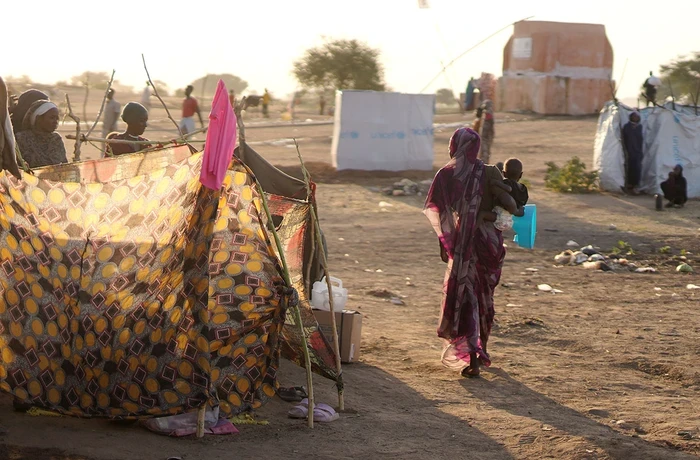
A woman holding a child, facing away from the camera, walks past makeshift tents
Feature

“I feel like I am a warrior”: Sudanese women fight for peace on the front lines of war

23 October 2026
“I feel like I am a warrior”: Sudanese women fight for peace on the front lines of war

Footer menu-HQ

  • News and stories
  • Resources
  • What we do
  • How we work
  • Where we are
  • Partnerships
  • Employment
  • Procurement
  • Contact us
  • Executive Board
  • Commission on the Status of Women

Donate button menu [Footer tablet]

  • Donate

Donate button menu [Footer]

  • Donate

Social media menu

  • Facebook
  • Twitter
  • LinkedIn
  • Flickr
  • YouTube
  • Instagram
UN Women - For all women and girls

Footer bottom [Menu]

  • Copyright
  • Information security
  • Privacy notice
  • Report wrongdoing
  • Terms of use
Share this page
  • Share to Facebook
  • Share to Twitter
  • Share to LinkedIn
  • Share to E-mail

Or copy link