
Universal menu

  • Global
  • Regions
    • Africa
    • Americas and the Caribbean
    • Arab States
    • Asia and the Pacific
    • Europe and Central Asia
  • Knowledge
  • Data
  • Training
  • Transparency
UN Women - For all women and girls

Main Navigation-HQ

  • Who we are
    • About us
      • About UN Women
      • Business model
      • Guiding documents
      • Worldwide presence
    • Leadership
      • Governance structure
      • Executive leadership
      • Executive Board
      • Accountability
    • Work with us
      • Employment
      • Procurement
      • Calls for proposals
      • Contact us
      • UN Women Strategic Plan 2026–2029
      • UN Women Strategic Plan 2026–2029 - social media image
        UN Women Strategic Plan 2026–2029
  • What we do
    • Focus areas
      • Ending violence against women
      • Peace and security
      • Humanitarian action
      • Leadership and governance
      • Economic empowerment
      • Innovation and technology
      • Women with disabilities
      • Youth
      • HIV and AIDS
    • How we work
      • 2030 Agenda for Sustainable Development
      • Commission on the Status of Women
      • Gender parity in the UN system
      • Intergovernmental support
      • Partnerships
      • Research and data
      • Training Centre
      • Trust funds
      • UN system coordination
      • Gender Equality Accelerators
      • Gender Equality Accelerators artwork
        Gender Equality Accelerators
  • News and stories
    • Latest
      • News
      • Articles and explainers
      • In focus
    • Media center
      • Press materials
      • Media contacts
      • Explainer: Why are women so exhausted? Care work and the mental load
      • Two adults stand at a table changing diapers on baby dolls, with laundry hanging on a clothesline behind them in a home setting.
        Explainer: Why are women so exhausted? Care work and the mental load
      • Press release: Aid cuts dismantle women’s organizations working in humanitarian crises
      • A young Ugandan woman sits with another local woman to talk
        Press release: Aid cuts dismantle women’s organizations working in humanitarian crises
  • Digital library
    • Resources
      • Publications
      • Annual reports
      • Gender snapshot
      • Progress of the world’s women
      • World survey on the role of women in development
    • GenderTerm
      • GenderTerm
      • Reprint permissions
      • UN Women Highlights 2025–2026
      • A smiling woman.
        UN Women Highlights 2025–2026
      • Gender snapshot 2026
      • A diverse group of people represented as simplified silhouettes, arranged against a dark blue background.
        Gender snapshot 2026
  • Get involved
    • How to get involved
      • For ALL Women and Girls
      • International Women's Day
      • 16 Days of Activism to End Violence against Women and Girls
      • UNiTE! Campaign to End Violence against Women
      • Generation Equality
      • He for She
Ask AI
https://84e5cfacd5c7e99f9825edf344450c.1b.environment.api.powerplatform.com/powervirtualagents/botsbyschema/crad4_websiteQA/directline/token?api-version=2022-03-01-preview
1
-
Ask your question here
AI website assistant

Hello, how can I assist you?

AI chatbot responses may be incorrect. Always verify important information.

Donate button menu

Donate

Breadcrumb

  1. Home
  2. News and stories
  3. News

Website survey

We want to know how we can improve your experience on this website. Completing this survey takes less than 5 minutes.

TAKE THE SURVEY
News

Civil society steps in to heal women’s post-earthquake trauma in Türkiye

27 February 2023
  • Share to Facebook
  • Share to Twitter
  • Share to LinkedIn
  • Share to E-mail

Following the earthquake that hit Türkiye and Syria on 6 February KAMER, a partner civil society organization of UN Women Türkiye, is among the many civil society organizations that are working tirelessly to support survivors. KAMER has been identifying and helping meet the needs of women, girls and their families from the beginning. While trying to attend to their immediate needs in Diyarbakır, KAMER has also been providing psychological support to women and girls who have lost their homes and loved ones and are struggling with the potent mental after-effects of the disaster.

Image
Women and girls in the earthquake zones are living in tents. Photo: Nilüfer Baş/UN Women

On 6 February 2023, twin earthquakes struck 11 provinces in Türkiye, killing more than 43,000 people and injuring many others. Civil society organizations, volunteers and public institutions, particularly those already in the region, deployed immediately to the cities to support survivors of the disaster, in which hundreds of thousands of people lost their homes and loved ones.

The Women’s Center Foundation (KAMER), a women’s organization founded in 2005 in Diyarbakır—one of the provinces hit by the earthquakes—has been working tirelessly over the last couple of weeks. KAMER has managed to quickly reach thousands of people in need in earthquake zones through its extensive network and 21 branches in southeast Türkiye. 

Nebahat Akkoç, Chairperson of KAMER, says they are distributing aid packages daily, which contain sanitary pads, underwear, diapers and other essential items for women and girls. “Due to social norms, women in the region are embarrassed to ask for hygiene products, such as pads and underwear. Many women and girls are calling us to ask for such needs because we are a women’s organization, so they know they can talk about their needs more freely. We also collaborate with public institutions and inform them about the needs and requests women are approaching us with. As a women’s organization, we are in the field, and we advocate for the rights of all women and girls,” says Akkoç.

Through UN Women’s support, the foundation has been implementing the “We Are Here, Too” project for the past 14 months. Akkoç says they have now redirected this funding to support to women in grief and despair and struggling with trauma caused by the earthquake. 

“There is a very urgent need for psychological support in the region,” explains Akkoç. “Women and girls have lost their loved ones and homes. Suddenly, their lives have dramatically changed. Our support will hopefully help women to recover from their traumas. But much more is needed.” 

Through its multilingual and online psychological consultancy network, the foundation is providing psychological support to women survivors of the earthquake who were already suffering multi-dimensional poverty as a result of being deprived of educational rights, having low levels of income, lacking access to equal opportunities, and facing communication problems due to language barriers. 

“Natural disasters can negatively affect an individual’s physical, social, emotional and spiritual well-being. Psychological support is very important for earthquake survivors who struggle to cope with their trauma. But the healing process is long-term,” says Sevil Bremer, a psychologist and psychotherapist who, alongside a team of 10 psychologists, has been supporting women from day one as part of KAMER’s response. Bremer, who also supervises the psychologists, adds: “We started psychological support with psychologists who are also survivors of the earthquake. We identified their professional needs, useful psychological tools and methods.” 

“Women survivors of earthquakes are affected differently because of the daily problems they experience due to existing inequalities,” Bremer says. “Therefore, thinking about the different needs of women and girls is vital for an effective response and recovery.” 
Originally published on UN Women's regional site for Europe and Central Asia

The “We are Here, Too” project is run under UN Women’s “Strong Civic Space for Gender Equality” project funded by the European Union.

To support UN Women’s efforts in the earthquake zone in Türkiye and Syria and to help women, girls and families in urgent need, please donate here.


Topics

  • Humanitarian action
  • Crisis response and recovery
  • Europe and Central Asia
  • Türkiye

Related content

Image
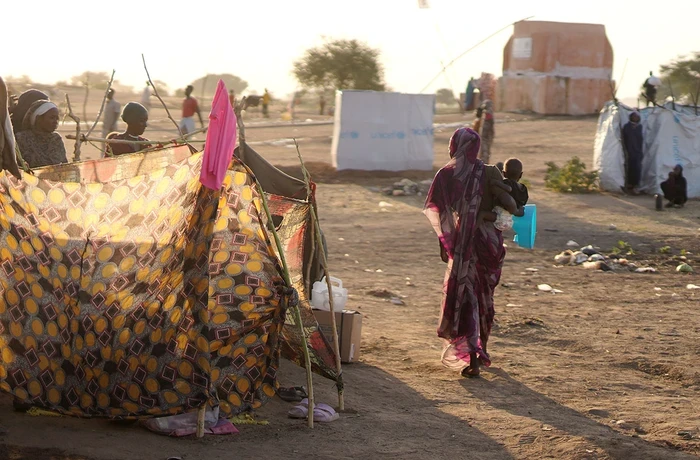
A woman holding a child, facing away from the camera, walks past makeshift tents
Feature

“I feel like I am a warrior”: Sudanese women fight for peace on the front lines of war

23 October 2026
“I feel like I am a warrior”: Sudanese women fight for peace on the front lines of war
Image
UNWomen_Placeholder
Press briefing

Nine in 10 organizations say trauma persists among women and girls displaced from El Fasher a year after its fall

23 October 2026
Nine in 10 organizations say trauma persists among women and girls displaced from El Fasher a year after its fall
Image
A group of mostly women squeeze together for a big group photo around a table
Feature

Stronger together: How care workers in Georgia are organizing for their rights

15 October 2026
Stronger together: How care workers in Georgia are organizing for their rights

Footer menu-HQ

  • News and stories
  • Resources
  • What we do
  • How we work
  • Where we are
  • Partnerships
  • Employment
  • Procurement
  • Contact us
  • Executive Board
  • Commission on the Status of Women

Donate button menu [Footer tablet]

  • Donate

Donate button menu [Footer]

  • Donate

Social media menu

  • Facebook
  • Twitter
  • LinkedIn
  • Flickr
  • YouTube
  • Instagram
UN Women - For all women and girls

Footer bottom [Menu]

  • Copyright
  • Information security
  • Privacy notice
  • Report wrongdoing
  • Terms of use
Share this page
  • Share to Facebook
  • Share to Twitter
  • Share to LinkedIn
  • Share to E-mail

Or copy link
