
Universal menu

  • Global
  • Regions
    • Africa
    • Americas and the Caribbean
    • Arab States
    • Asia and the Pacific
    • Europe and Central Asia
  • Knowledge
  • Data
  • Training
  • Transparency
UN Women - For all women and girls

Main Navigation-HQ

  • Who we are
    • About us
      • About UN Women
      • Business model
      • Guiding documents
      • Worldwide presence
    • Leadership
      • Governance structure
      • Executive leadership
      • Executive Board
      • Accountability
    • Work with us
      • Employment
      • Procurement
      • Calls for proposals
      • Contact us
      • UN Women Strategic Plan 2026–2029
      • UN Women Strategic Plan 2026–2029 - social media image
        UN Women Strategic Plan 2026–2029
  • What we do
    • Focus areas
      • Ending violence against women
      • Peace and security
      • Humanitarian action
      • Leadership and governance
      • Economic empowerment
      • Innovation and technology
      • Women with disabilities
      • Youth
      • HIV and AIDS
    • How we work
      • 2030 Agenda for Sustainable Development
      • Commission on the Status of Women
      • Gender parity in the UN system
      • Intergovernmental support
      • Partnerships
      • Research and data
      • Training Centre
      • Trust funds
      • UN system coordination
      • Gender Equality Accelerators
      • Gender Equality Accelerators artwork
        Gender Equality Accelerators
  • News and stories
    • Latest
      • News
      • Articles and explainers
      • In focus
    • Media center
      • Press materials
      • Media contacts
      • Explainer: Why are women so exhausted? Care work and the mental load
      • Two adults stand at a table changing diapers on baby dolls, with laundry hanging on a clothesline behind them in a home setting.
        Explainer: Why are women so exhausted? Care work and the mental load
      • Press release: Aid cuts dismantle women’s organizations working in humanitarian crises
      • A young Ugandan woman sits with another local woman to talk
        Press release: Aid cuts dismantle women’s organizations working in humanitarian crises
  • Digital library
    • Resources
      • Publications
      • Annual reports
      • Gender snapshot
      • Progress of the world’s women
      • World survey on the role of women in development
    • GenderTerm
      • GenderTerm
      • Reprint permissions
      • UN Women Highlights 2025–2026
      • A smiling woman.
        UN Women Highlights 2025–2026
      • Gender snapshot 2026
      • A diverse group of people represented as simplified silhouettes, arranged against a dark blue background.
        Gender snapshot 2026
  • Get involved
    • How to get involved
      • For ALL Women and Girls
      • International Women's Day
      • 16 Days of Activism to End Violence against Women and Girls
      • UNiTE! Campaign to End Violence against Women
      • Generation Equality
      • He for She
Ask AI
https://84e5cfacd5c7e99f9825edf344450c.1b.environment.api.powerplatform.com/powervirtualagents/botsbyschema/crad4_websiteQA/directline/token?api-version=2022-03-01-preview
1
-
Ask your question here
AI website assistant

Hello, how can I assist you?

AI chatbot responses may be incorrect. Always verify important information.

Donate button menu

Donate

Breadcrumb

  1. Home
  2. News and stories
  3. News

Website survey

We want to know how we can improve your experience on this website. Completing this survey takes less than 5 minutes.

TAKE THE SURVEY
News

Afghanistan: Top UN delegation tells Taliban to end confinement, deprivation, abuse of women’s rights

21 January 2023
  • Share to Facebook
  • Share to Twitter
  • Share to LinkedIn
  • Share to E-mail

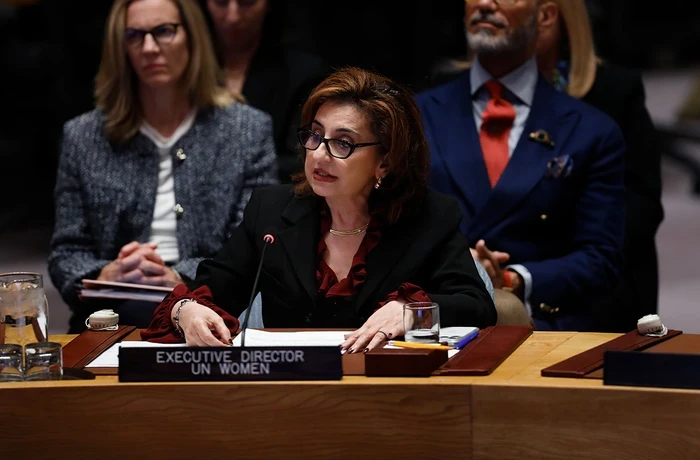
Deputy Secretary-General, Amina Mohammed, the Executive Director of UN Women, Sima Bahous, and the Assistant Secretary-General for UN political, peacebuilding and peace operations, Khaled Khiari, spend four days on a fact-finding mission in Afghanistan, to engage with Taliban leaders, and “underscore UN solidarity with the Afghan people”, according to a press release issued to correspondents on Friday. 

Call to reverse course

In meetings with de facto authorities in Kabul and Kandahar, “the delegation directly conveyed the alarm over the recent decree banning women from working for national and international non-governmental organizations, a move that undermines the work of numerous organizations helping millions of vulnerable Afghans.”

The latest clampdown on working women followed edicts from the fundamentalist Taliban to close universities to female students, until further notice, and preventing girls from attending secondary school.

Excluded from public life

Women and girls have also been ordered to stop using parks, gyms, public bath houses, and banned from most areas of the workforce, together with other restrictions on their freedom of movement, in line with the authorities’ interpretation of Sharia law.

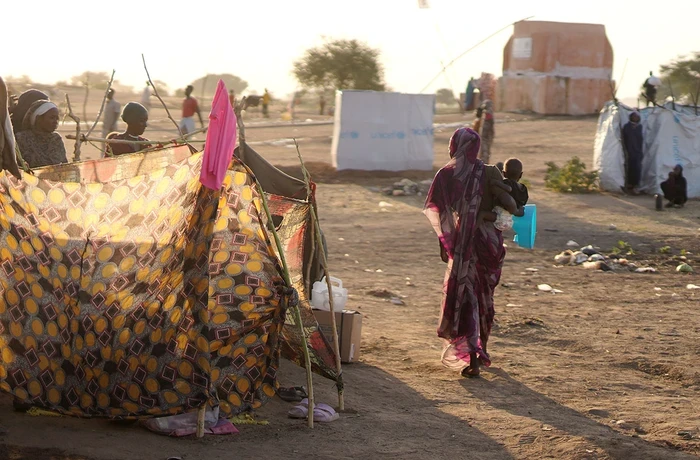
The ban on local women working in the crucial aid sector came into force last month, prompting many aid agencies to suspend operations, as they were unable to reach many families in need, without the support of female staff.

In response, Taliban rulers did announce some exemptions, that would allow women health workers to go about their lifesaving work.

All Afghans suffer due to restrictions: Mohammed

“My message was very clear”, said the UN deputy chief. “While we recognize the important exemptions made, these restrictions present Afghan women and girls with a future that confines them in their own homes, violating their rights and depriving the communities of their services”.

“Our collective ambition is for a prosperous Afghanistan that is at peace with itself and its neighbours, and on a path to sustainable development. But right now, Afghanistan is isolating itself, in the midst of a terrible humanitarian crisis and one of the most vulnerable nations on earth to climate change,” she added. “We must do everything we can to bridge this gap.” 

During their mission, Ms Mohammed and Ms Bahous met with affected communities, humanitarian workers, civil society and other key actors, in Kabul, the Taliban heartland of Kandahar, and Herat. 

‘Extraordinary resilience’: Bahous

“We have witnessed extraordinary resilience. Afghan women left us no doubt of their courage and refusal to be erased from public life. They will continue to advocate and fight for their rights, and we are duty bound to support them in doing so,” UN Women’s top executive Ms. Bahous said. 

“What is happening in Afghanistan is a grave women's right crisis and a wakeup call for the international community.

“It shows how quickly decades of progress on women´s rights can be reversed in a matter of days. UN Women stands with all Afghan women and girls and will continue to amplify their voices to regain all their rights."

UN commitment

The United Nations and its partners, including national and international non-governmental organizations, are helping more than 25 million Afghans who depend on humanitarian aid to survive, and remain committed to staying and delivering. 

“While the recent exemptions to the ban introduced by the de facto authorities are opening spaces for humanitarians to continue - and in some cases resume - operations, these remain limited to few sectors and activities”, said the UN statement on Friday. 

Need for ‘effective delivery’

“The effective delivery of humanitarian assistance is predicated on principles that require full, safe and unhindered access for all aid workers, including women”, Ms Mohammed said. 

The visit to Afghanistan followed a series of high-level consultations on Afghanistan across the Gulf and Asia, the UN reported.

The delegation met with the leadership of the Organization of Islamic Cooperation (OIC), the Islamic Development Bank, groups of Afghan women in the Turkish and Pakistani capitals of Ankara and the Islamabad, and a group of Ambassadors and Special Envoys to Afghanistan, based in Doha. 

“The delegation convened with government leaders from the region and religious leaders to advocate for the crucial role and full participation of women and rally support for the Afghan people”, the statement added.

Urgent push for support

Throughout the visits, the UN’s crucial role as a bridge builder towards “finding lasting solutions” was emphasized, “as well as the urgency to deliver lifesaving support and maintain effective engagement, led by the United Nations Assistance Mission in Afghanistan (UNAMA).”

The top UN delegation called for efforts to be intensified to reflect the urgency of the crisis facing Afghan women and girls, “and stressed the importance of a unified response by the international community.” 

The UN reported that a proposal to hold an international conference on women and girls in the Muslim World, during March this year, “was also considered and agreed in principle.”
Originally published on news.un.org

Topics

  • Human rights
  • Humanitarian action
  • Executive Director
  • Asia and the Pacific
  • Afghanistan

Related content

Image
UN Under-Secretary-General and UN Women Executive Director Sima Bahous delivers remarks to the Security Council open debate on women and peace and security, UN headquarters, 27 October 2026. Photo: UN Women/Ryan Brown.
Speech

Speech: Do we have the courage to share power, the resolve to invest in women’s leadership, and the political will to turn our commitments into action?

27 October 2026
Speech: Do we have the courage to share power, the resolve to invest in women’s leadership, and the political will to turn our commitments into action?
Image
A woman holding a child, facing away from the camera, walks past makeshift tents
Feature

“I feel like I am a warrior”: Sudanese women fight for peace on the front lines of war

23 October 2026
“I feel like I am a warrior”: Sudanese women fight for peace on the front lines of war
Image
UNWomen_Placeholder
Press briefing

Nine in 10 organizations say trauma persists among women and girls displaced from El Fasher a year after its fall

23 October 2026
Nine in 10 organizations say trauma persists among women and girls displaced from El Fasher a year after its fall

Footer menu-HQ

  • News and stories
  • Resources
  • What we do
  • How we work
  • Where we are
  • Partnerships
  • Employment
  • Procurement
  • Contact us
  • Executive Board
  • Commission on the Status of Women

Donate button menu [Footer tablet]

  • Donate

Donate button menu [Footer]

  • Donate

Social media menu

  • Facebook
  • Twitter
  • LinkedIn
  • Flickr
  • YouTube
  • Instagram
UN Women - For all women and girls

Footer bottom [Menu]

  • Copyright
  • Information security
  • Privacy notice
  • Report wrongdoing
  • Terms of use
Share this page
  • Share to Facebook
  • Share to Twitter
  • Share to LinkedIn
  • Share to E-mail

Or copy link
