From World Champion to leading the way for female track coaches in the Paris 2024 Olympics – Interview with Janeth Jepkosgei
Janeth Jepkosgei became the first female Kenyan middle-distance runner to win gold over 800 metres in the World Championships held in Osaka, Japan in 2007. She was one of the most popular Kenyan athletes during her prime and also won the 2010 Diamond League in Shanghai, China. Jepkosgei retired in 2015 after suffering a leg injury, however, her illustrious career didn’t stop there.
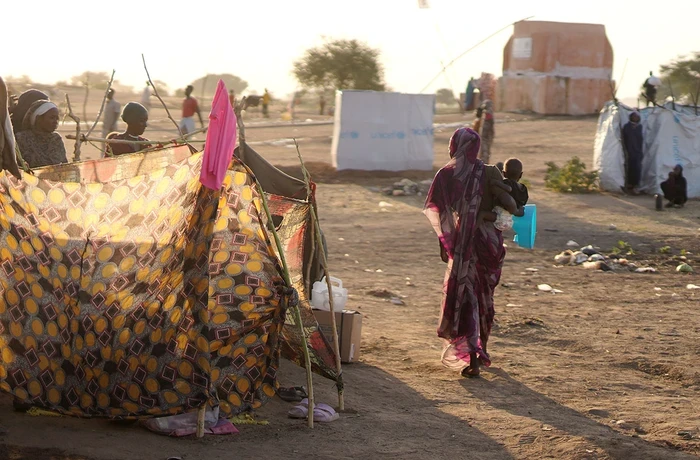
Jepkosgei is leading refugee athletes in the Paris 2024 Olympics with one of her trainees from Kakuma Perina Nakang participating in the 800 meters women’s race. After Paris, she will lead the World Athletics U20 team to Peru for the World Athletics U20 Championships, Lima 24, in August. For over two years now, she has been the team’s head coach based at Kakuma, a resettlement camp located in Kenya, which hosts more than 700,000 registered refugees and asylum-seekers from more than 20 countries.

The one-time world champion, an Olympics silver medalist, a Diamond League Final winner and World Championships silver medalist discusses with UN Women her transition from running to coaching, a rare move for female athletes in Kenya, and why there’s need for more female coaches in sports.
Coaching young women refugees for the Paris 2024 Olympics and breaking stereotypes
I'm the head coach of the Kakuma Refugee Team. It's not easy for women to come up and be accepted [as a coach] in the society. When I first started coaching, it was quite a challenge. We didn’t have other female coaches and there were whispers: ‘how can a woman coach?’ No one was happy about it.
Coaching athletes is a male dominated field in Kenya, but I'm happy that I’m breaking the gender barriers.
At the refugee camp, people come from different backgrounds. Initially I faced opposition from mothers who refused to allow their daughters to participate in athletics. Some claimed that if girls participated in athletics, they would not have babies. Others didn’t like the idea of their daughters being outside training and exercising because culturally it was a taboo. I used myself as an example and told them, see, I am a mother and athlete for almost 18 years, and I have a baby. Being an athlete does not prevent any woman from having as many children as they want.
More girls have now joined the team. This is why we need more female coaches to mentor girls and young women in sports.
Progress in women's leadership in sport and why we need more female coaches
When I was an athlete, I never met a woman coach. I was coached by men. It was a male dominated world. Women were only used as chaperones – they took care of the welfare of the athletes.
There has been a lot of progress in [women’s participation and leadership] in sport since then. We have more women coaches now and I’m looking forward to a time when we will have gender parity in coaching, especially in Africa, where I can now name a few women coaches.
Where I come from, female athletes face many challenges. Most of the complaints we receive are about male coaches taking advantage of young female athletes. We have seen several such cases discussed in the media. With a female coach, young girls feel more secure training and participating in athletics.
Girls feel more comfortable opening up and communicating their issues to female coaches than our male counterparts. For example, about issues such as sexual harassment and gender-based violence perpetrated by their partners. And as women, we understand their issues better and can support them. When they win a game and get prize money, their partners want to take control and then there is domestic violence. We have had cases where female athletes have been killed in domestic violence in Kenya.
I am calling upon my peers, former female athletes, to assist and mentor the new generation, because we went through some of these challenges, and we don't have to let the future generation of women go through the same.
A word from the experienced former world champion Janeth Jepkosgei reflecting on a #GenderEqualOlympics. She is currently a coach of the #Kenya Team at the #Olympics . As she passionately nurtures female athletes, it's inspiring to witness women's equal representation in sports. pic.twitter.com/tXBrY83fWa
— UN Women Africa (@unwomenafrica) July 29, 2024
Equal pay and maternity benefits for women in sport
There are many challenges that women in sport all over the world face. One of the issues is that women get paid less than men in sport. To make matters worse, sponsors withdraw contracts or partnerships when athletes take maternity break.
Most of the sponsors in this part of the world just cut off female athletes when they become mothers. Just like in employment contracts, athletes should be entitled to maternity leave without cutting short their sponsorship contracts and they should be given all the support they need as they get back to shape after childbirth. Many women work very hard to regain their physical energy and to get back to the ideal athletic weight after childbirth.
This happened during my time and now as a coach, I’m here to advocate for change.
Paris 2024 Olympics and gender equality
I’m very happy to be here and to see the many women participating. Last year I was in Budapest, and I thought there was such a great progress in women’s representation in all sports, but I’m almost sure that we have 50/50 gender representation here and I’m expecting to see more medals going to women this year.