
Universal menu

  • Global
  • Regions
    • Africa
    • Americas and the Caribbean
    • Arab States
    • Asia and the Pacific
    • Europe and Central Asia
  • Knowledge
  • Data
  • Training
  • Transparency
UN Women - For all women and girls

Main Navigation-HQ

  • Who we are
    • About us
      • About UN Women
      • Business model
      • Guiding documents
      • Worldwide presence
    • Leadership
      • Governance structure
      • Executive leadership
      • Executive Board
      • Accountability
    • Work with us
      • Employment
      • Procurement
      • Calls for proposals
      • Contact us
      • UN Women Strategic Plan 2026–2029
      • UN Women Strategic Plan 2026–2029 - social media image
        UN Women Strategic Plan 2026–2029
  • What we do
    • Focus areas
      • Ending violence against women
      • Peace and security
      • Humanitarian action
      • Leadership and governance
      • Economic empowerment
      • Innovation and technology
      • Women with disabilities
      • Youth
      • HIV and AIDS
    • How we work
      • 2030 Agenda for Sustainable Development
      • Commission on the Status of Women
      • Gender parity in the UN system
      • Intergovernmental support
      • Partnerships
      • Research and data
      • Training Centre
      • Trust funds
      • UN system coordination
      • Gender Equality Accelerators
      • Gender Equality Accelerators artwork
        Gender Equality Accelerators
  • News and stories
    • Latest
      • News
      • Articles and explainers
      • In focus
    • Media center
      • Press materials
      • Media contacts
      • Explainer: Why are women so exhausted? Care work and the mental load
      • Two adults stand at a table changing diapers on baby dolls, with laundry hanging on a clothesline behind them in a home setting.
        Explainer: Why are women so exhausted? Care work and the mental load
      • Press release: Aid cuts dismantle women’s organizations working in humanitarian crises
      • A young Ugandan woman sits with another local woman to talk
        Press release: Aid cuts dismantle women’s organizations working in humanitarian crises
  • Digital library
    • Resources
      • Publications
      • Annual reports
      • Gender snapshot
      • Progress of the world’s women
      • World survey on the role of women in development
    • GenderTerm
      • GenderTerm
      • Reprint permissions
      • UN Women Highlights 2025–2026
      • A smiling woman.
        UN Women Highlights 2025–2026
      • Gender snapshot 2026
      • A diverse group of people represented as simplified silhouettes, arranged against a dark blue background.
        Gender snapshot 2026
  • Get involved
    • How to get involved
      • For ALL Women and Girls
      • International Women's Day
      • 16 Days of Activism to End Violence against Women and Girls
      • UNiTE! Campaign to End Violence against Women
      • Generation Equality
      • He for She
Ask AI
https://84e5cfacd5c7e99f9825edf344450c.1b.environment.api.powerplatform.com/powervirtualagents/botsbyschema/crad4_websiteQA/directline/token?api-version=2022-03-01-preview
1
-
Ask your question here
AI website assistant

Hello, how can I assist you?

AI chatbot responses may be incorrect. Always verify important information.

Donate button menu

Donate

Breadcrumb

  1. Home
  2. News and stories
  3. Interview

Website survey

We want to know how we can improve your experience on this website. Completing this survey takes less than 5 minutes.

TAKE THE SURVEY

Interview: “You can’t have climate justice without gender equality”

1 March 2022
  • Share to Facebook
  • Share to Twitter
  • Share to LinkedIn
  • Share to E-mail

Vanessa Nakate, 25, is a Ugandan climate change activist and founder of the Africa-based Rise Up Movement. Nakate speaks out on the climate crisis and its intersection with gender and race, especially in how it disproportionately affects women and girls in Africa. Nakate shares that gender equality is a powerful tool in tackling the climate crisis.

Image
Vanessa Nakate. Photo courtesy of Vanessa Nakate

How did you get involved in climate activism?

I remember learning about climate change in school, as I read more, I observed that the impact of climate change was already unfolding in Uganda. For example, the floods in the western part of the country, landslides in the east as well as the droughts. The climate crisis was already affecting so many people in Uganda, and yet there was not much awareness. I decided I had to do something, inspired by Greta Thunberg’s climate strikes, I started striking every Friday with my first strike in January 2019. It has now been three years of activism; in these three years I helped mobilize climate strikes in Uganda.

The message is getting wider, but it has always been the same message. The work we are doing as activists in Uganda is to create awareness to demand for climate justice to highlight the loss and damage happening in Uganda and across Africa, demanding for a fairer and healthier future for us.

This journey in activism led me to write my book “A Bigger Picture” which touches on how and why I began this activism and tells the story of different activists in Africa and beyond. I believe every activist has a story to tell with a solution, and every solution has a life to change. In the book I speak on the intersections of climate change with other issues, we cannot have climate justice without gender equality, climate change is disproportionately affecting so many women and girls.

We can't have climate justice without poverty eradication, we can’t have climate justice without achieving zero hunger. We can’t have climate justice without gender equality.

What actions are most needed to advance gender equality in the context of climate action?

Educating girls and women’s empowerment, I would say. Project Drawdown ranks educating girls as number 5 of the most impactful solutions to tackle the climate crisis. Under this education, we include women’s empowerment. Women and girls are disproportionately affected by climate change, so they need to be equipped with skills for the future they are walking into. when we educate more girls and empower more women, this is a solution that reduces already existing inequalities that so many girls and women face, this is a solution that will give climate resilience to women and girls.

The other thing to note is that places where girls are most likely not able to finish school, are the same places that are heavily impacted by the climate crisis. It is important that more funding is given for girls’ education and women’s empowerment – to give us all a lifeline.

Why is women’s leadership in this field important, and what will the world look like if women are not represented in climate action decision making?

When you see a sports match, you can’t play with just half of the team. When you play with half the team, you most likely will lose.

Women’s leadership is important because we need women in spaces where decisions on their wellbeing is discussed, especially decisions about the future of our planet. It is a basic right for women to be in leadership spaces.

For women of African descent, how important is it for our voices to be heard in this conversation?

One of the injustices of this crisis is that those who are impacted the most are those who are least responsible. For example, historically Africa as a continent is responsible for less than 4 per cent of the global emissions and yet so many Africans are suffering impacts of the climate crisis.

It’s important to listen to every experience of every activist and every woman speaking up. I may be in Uganda and have a clear understanding of what’s happening on the ground, but I might not have the full knowledge of what is happening in Kenya, for example. We might all have the same vision but there are distinctions in our experiences and our stories, and it is that difference that matters.

Identify a problem or a challenge in your community/society and then think of ways to address the challenge. Addressing some of these challenges or doing something, doesn’t need us to have as many resources when starting out. All I had when I started my activism (in January 2019) were some pencils and markers and something to write on. For every young person out there, who would like to do something, know that you don't need many resources to start all you need is the will to start. Use the readily available resources that you have, even social media can be a very powerful tool in addressing challenges in our communities.

If you want to do something – there is so much power in your voice. No one is too small to make a difference and no action is too small to transform the world.

Topics

  • 2030 Agenda for Sustainable Development
  • Climate change
  • Youth
  • Africa
  • Uganda

Related content

Image
UNWomen_Placeholder
Press briefing

Nine in 10 organizations say trauma persists among women and girls displaced from El Fasher a year after its fall

23 October 2026
Nine in 10 organizations say trauma persists among women and girls displaced from El Fasher a year after its fall
Image
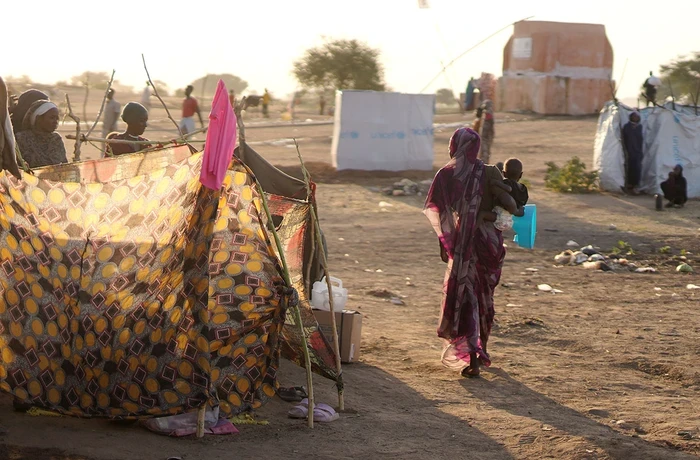
A woman holding a child, facing away from the camera, walks past makeshift tents
Feature

“I feel like I am a warrior”: Sudanese women fight for peace on the front lines of war

23 October 2026
“I feel like I am a warrior”: Sudanese women fight for peace on the front lines of war
Image
Photo collage of women
Statement

UN Women statement for the International Day of Rural Women, 15 October 2026

13 October 2026
UN Women statement for the International Day of Rural Women, 15 October 2026

Footer menu-HQ

  • News and stories
  • Resources
  • What we do
  • How we work
  • Where we are
  • Partnerships
  • Employment
  • Procurement
  • Contact us
  • Executive Board
  • Commission on the Status of Women

Donate button menu [Footer tablet]

  • Donate

Donate button menu [Footer]

  • Donate

Social media menu

  • Facebook
  • Twitter
  • LinkedIn
  • Flickr
  • YouTube
  • Instagram
UN Women - For all women and girls

Footer bottom [Menu]

  • Copyright
  • Information security
  • Privacy notice
  • Report wrongdoing
  • Terms of use
Share this page
  • Share to Facebook
  • Share to Twitter
  • Share to LinkedIn
  • Share to E-mail

Or copy link