
Universal menu

  • Global
  • Regions
    • Africa
    • Americas and the Caribbean
    • Arab States
    • Asia and the Pacific
    • Europe and Central Asia
  • Knowledge
  • Data
  • Training
  • Transparency
UN Women - For all women and girls

Main Navigation-HQ

  • Who we are
    • About us
      • About UN Women
      • Business model
      • Guiding documents
      • Worldwide presence
    • Leadership
      • Governance structure
      • Executive leadership
      • Executive Board
      • Accountability
    • Work with us
      • Employment
      • Procurement
      • Calls for proposals
      • Contact us
      • UN Women Strategic Plan 2026–2029
      • UN Women Strategic Plan 2026–2029 - social media image
        UN Women Strategic Plan 2026–2029
  • What we do
    • Focus areas
      • Ending violence against women
      • Peace and security
      • Humanitarian action
      • Leadership and governance
      • Economic empowerment
      • Innovation and technology
      • Women with disabilities
      • Youth
      • HIV and AIDS
    • How we work
      • 2030 Agenda for Sustainable Development
      • Commission on the Status of Women
      • Gender parity in the UN system
      • Intergovernmental support
      • Partnerships
      • Research and data
      • Training Centre
      • Trust funds
      • UN system coordination
      • Gender Equality Accelerators
      • Gender Equality Accelerators artwork
        Gender Equality Accelerators
  • News and stories
    • Latest
      • News
      • Articles and explainers
      • In focus
    • Media center
      • Press materials
      • Media contacts
      • Explainer: Why are women so exhausted? Care work and the mental load
      • Two adults stand at a table changing diapers on baby dolls, with laundry hanging on a clothesline behind them in a home setting.
        Explainer: Why are women so exhausted? Care work and the mental load
      • Press release: Aid cuts dismantle women’s organizations working in humanitarian crises
      • A young Ugandan woman sits with another local woman to talk
        Press release: Aid cuts dismantle women’s organizations working in humanitarian crises
  • Digital library
    • Resources
      • Publications
      • Annual reports
      • Gender snapshot
      • Progress of the world’s women
      • World survey on the role of women in development
    • GenderTerm
      • GenderTerm
      • Reprint permissions
      • UN Women Highlights 2025–2026
      • A smiling woman.
        UN Women Highlights 2025–2026
      • Gender snapshot 2026
      • A diverse group of people represented as simplified silhouettes, arranged against a dark blue background.
        Gender snapshot 2026
  • Get involved
    • How to get involved
      • For ALL Women and Girls
      • International Women's Day
      • 16 Days of Activism to End Violence against Women and Girls
      • UNiTE! Campaign to End Violence against Women
      • Generation Equality
      • He for She
Ask AI
https://84e5cfacd5c7e99f9825edf344450c.1b.environment.api.powerplatform.com/powervirtualagents/botsbyschema/crad4_websiteQA/directline/token?api-version=2022-03-01-preview
1
-
Ask your question here
AI website assistant

Hello, how can I assist you?

AI chatbot responses may be incorrect. Always verify important information.

Donate button menu

Donate

Breadcrumb

  1. Home
  2. News and stories
  3. In the words of ...

Website survey

We want to know how we can improve your experience on this website. Completing this survey takes less than 5 minutes.

TAKE THE SURVEY
In the words of ...

In the words of Sevgim Parıltı: “Your choice can make a difference. Just like me, helping as a chef at the forefront of the crisis response.”

7 March 2023
  • Share to Facebook
  • Share to Twitter
  • Share to LinkedIn
  • Share to E-mail

Sevgim Parıltı is a professional chef and the owner of a restaurant in Ankara, the capital of Türkiye. Following the 6 February earthquakes that struck 11 cities in the country’s southeastern region, Parilti made the decision to travel to İskenderun, one of the most affected cities, to cook for and serve the survivors.

Image
Chef Sevgim Parıltı coordinated a network of chefs from around Türkiye to cook and provide meals for those affected by the earthquakes. Photo: UN Women/Sena Şar

I was born and raised in Kars, a small city in eastern Türkiye. Despite textile work being a family occupation, my dream was to become a chef. But due to financial difficulties, I could not afford to study gastronomy, which would have required an expensive move to a big city like Istanbul. I tried studying business in Kars but dropped out of school because I didn’t feel that I belonged.

I worked for some years in the textile industry while still dreaming about becoming a chef. When I shared this dream with people, I heard comments such as “How will you become a chef as a woman? being a chef requires strength and endurance.” But I knew I had what it took. So, I saved money, packed my bags, and moved to Ankara to enroll in a culinary arts course. While studying, I worked in restaurants in Ankara, and continued working there after completing the course. Then I started my own business. It has been three years since I opened my restaurant.

I woke up on 6 February to the news that our country was hit by devastating earthquakes. I started thinking about what I could do to help and decided to put my cooking skills to use. I coordinated a network of chefs; we gathered what we had at hand and went to the region. I handled the logistical planning and legal permits and found donors who provided kitchen utensils and ingredients.

With a team of 17 chefs, we arrived in İskenderun four days after the earthquakes. Many people in the region helped us by offering all their resources to help. We distributed 1,500 meals on the first day; 3,000 on the second day; and 6,000 on the third day. Over 10 days, we served 110,000 meals. We aim to sustain this effort for as long as it takes.

It was not easy being there. I tried to focus on cooking and coordination to keep myself together. Many women approached me, some living by themselves, some with no one else to reach out to, some with newborn babies, asking for diapers and baby food, others looking for sanitary pads. They made me realize how gender stereotypes remain present in times of crisis, and how women’s specific needs are often overlooked . Being there as a woman, at the forefront of the response, was critical to understand and support the needs of women and girls. Once I was discriminated against for my decision to become a chef. But women should be able to work everywhere, their voices should be heard, and they should benefit equally from services.

Now, I want to support the girls who survived the earthquake in pursuing their dreams. I want to remind them that they can be anything they want, free from any gender roles, just like me. If you put your mind to it, nothing is impossible. Nothing should stop you from going after your aspirations. Your choice can make a difference, just like me helping as a chef at the forefront of the crisis response.

Originally published on UN Women's regional site for Europe and Central Asia

Topics

  • Humanitarian action
  • Crisis response and recovery
  • Europe and Central Asia
  • Türkiye

Related content

Image
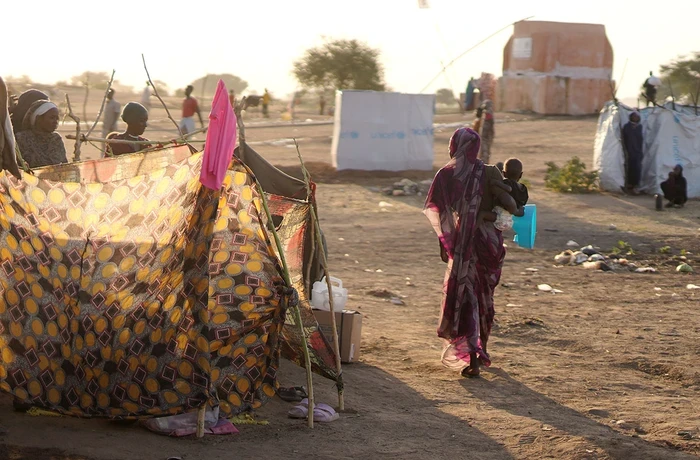
A woman holding a child, facing away from the camera, walks past makeshift tents
Feature

“I feel like I am a warrior”: Sudanese women fight for peace on the front lines of war

23 October 2026
“I feel like I am a warrior”: Sudanese women fight for peace on the front lines of war
Image
UNWomen_Placeholder
Press briefing

Nine in 10 organizations say trauma persists among women and girls displaced from El Fasher a year after its fall

23 October 2026
Nine in 10 organizations say trauma persists among women and girls displaced from El Fasher a year after its fall
Image
A group of mostly women squeeze together for a big group photo around a table
Feature

Stronger together: How care workers in Georgia are organizing for their rights

15 October 2026
Stronger together: How care workers in Georgia are organizing for their rights

Footer menu-HQ

  • News and stories
  • Resources
  • What we do
  • How we work
  • Where we are
  • Partnerships
  • Employment
  • Procurement
  • Contact us
  • Executive Board
  • Commission on the Status of Women

Donate button menu [Footer tablet]

  • Donate

Donate button menu [Footer]

  • Donate

Social media menu

  • Facebook
  • Twitter
  • LinkedIn
  • Flickr
  • YouTube
  • Instagram
UN Women - For all women and girls

Footer bottom [Menu]

  • Copyright
  • Information security
  • Privacy notice
  • Report wrongdoing
  • Terms of use
Share this page
  • Share to Facebook
  • Share to Twitter
  • Share to LinkedIn
  • Share to E-mail

Or copy link