
Universal menu

  • Global
  • Regions
    • Africa
    • Americas and the Caribbean
    • Arab States
    • Asia and the Pacific
    • Europe and Central Asia
  • Knowledge
  • Data
  • Training
  • Transparency
UN Women - For all women and girls

Main Navigation-HQ

  • Who we are
    • About us
      • About UN Women
      • Business model
      • Guiding documents
      • Worldwide presence
    • Leadership
      • Governance structure
      • Executive leadership
      • Executive Board
      • Accountability
    • Work with us
      • Employment
      • Procurement
      • Calls for proposals
      • Contact us
      • UN Women Strategic Plan 2026–2029
      • UN Women Strategic Plan 2026–2029 - social media image
        UN Women Strategic Plan 2026–2029
  • What we do
    • Focus areas
      • Ending violence against women
      • Peace and security
      • Humanitarian action
      • Leadership and governance
      • Economic empowerment
      • Innovation and technology
      • Women with disabilities
      • Youth
      • HIV and AIDS
    • How we work
      • 2030 Agenda for Sustainable Development
      • Commission on the Status of Women
      • Gender parity in the UN system
      • Intergovernmental support
      • Partnerships
      • Research and data
      • Training Centre
      • Trust funds
      • UN system coordination
      • Gender Equality Accelerators
      • Gender Equality Accelerators artwork
        Gender Equality Accelerators
  • News and stories
    • Latest
      • News
      • Articles and explainers
      • In focus
    • Media center
      • Press materials
      • Media contacts
      • Explainer: Why are women so exhausted? Care work and the mental load
      • Two adults stand at a table changing diapers on baby dolls, with laundry hanging on a clothesline behind them in a home setting.
        Explainer: Why are women so exhausted? Care work and the mental load
      • Press release: Aid cuts dismantle women’s organizations working in humanitarian crises
      • A young Ugandan woman sits with another local woman to talk
        Press release: Aid cuts dismantle women’s organizations working in humanitarian crises
  • Digital library
    • Resources
      • Publications
      • Annual reports
      • Gender snapshot
      • Progress of the world’s women
      • World survey on the role of women in development
    • GenderTerm
      • GenderTerm
      • Reprint permissions
      • UN Women Highlights 2025–2026
      • A smiling woman.
        UN Women Highlights 2025–2026
      • Gender snapshot 2026
      • A diverse group of people represented as simplified silhouettes, arranged against a dark blue background.
        Gender snapshot 2026
  • Get involved
    • How to get involved
      • For ALL Women and Girls
      • International Women's Day
      • 16 Days of Activism to End Violence against Women and Girls
      • UNiTE! Campaign to End Violence against Women
      • Generation Equality
      • He for She
Ask AI
https://84e5cfacd5c7e99f9825edf344450c.1b.environment.api.powerplatform.com/powervirtualagents/botsbyschema/crad4_websiteQA/directline/token?api-version=2022-03-01-preview
1
-
Ask your question here
AI website assistant

Hello, how can I assist you?

AI chatbot responses may be incorrect. Always verify important information.

Donate button menu

Donate

Breadcrumb

  1. Home
  2. News and stories
  3. From where I stand

Website survey

We want to know how we can improve your experience on this website. Completing this survey takes less than 5 minutes.

TAKE THE SURVEY
From where I stand

From where I stand: “I see positive change through the power of women’s organizations and adolescent peer groups in our community.”

17 June 2022
  • Share to Facebook
  • Share to Twitter
  • Share to LinkedIn
  • Share to E-mail

Originally published on UN Women's regional website for Africa

Ariet Ojulu is the Head of the Women, Children, and Youth Affairs Office in Itang Woreda, Ethiopia, a district neighboring three refugee camps hosting refugees predominantly from South Sudan. 

Image
Ariet Ojulu, the head of the Women, Children, and Youth Affairs Office in Itang Woreda, Ethiopia, is actively engaged in a UN Women Programme (POWER) that focuses on removing barriers that prevent women and girls from demanding their sexual, reproductive, maternal, newborn, child and adolescent health (SRMNCAH) rights and accessing services.
Ariet Ojulu, the head of the Women, Children, and Youth Affairs Office in Itang Woreda, Ethiopia, is actively engaged in a UN Women Programme (POWER) that focuses on removing barriers that prevent women and girls from demanding their sexual, reproductive, maternal, newborn, child and adolescent health (SRMNCAH) rights and accessing services. Illustration: UN Women/Michael Lusaba

I see positive change through the power of women’s organizations and adolescent peer groups in our community. More girls are standing up against their families to stay in school. For example, the other day a girl came to my office and told me that she lost her parents and now her grandfather wanted to force her to marry a man old enough to be her father, but she wanted to stay in school. I contacted her grandfather and her husband-to-be informing them that the girl was underage and it would be a crime to marry her. When they refused to listen and intimidated the girl, I informed law enforcement who transferred her to a boarding school to continue her education. 

As a female government official working for gender equality, I often face negative attitudes from the community. However, this will not stop me from speaking out on women’s rights because it is part of my core values. In my district we face recurrent conflicts, abduction of children and sexual and reproductive health challenges. I worry about increased new HIV infections, unwanted pregnancies and unsafe abortion causing severe health complications or even death. The solutions to these issues warrant more than medical resources. Even with limited financial and human resources, I experienced how communities can alleviate some of these problems. In parallel to strengthening community structures, my office supports law enforcement agents to ensure protection of the rights of women and girls. 

By participating in community dialogues, I have a better understanding of the issues women, adolescents and children face, which makes me a better advocate for their rights. For example, by listening to the community members, we understood that pregnant women were requested to pay for using the ambulance service. I informed the Head of the Health Bureau and we decided to provide the service free of charge. I am now happy to say that almost all pregnant women are using the ambulance service to reach the health center to give birth.

I am proud to be a women’s rights activist working together with the women’s organizations in our community for gender equality.” 


Ariet Ojulu is the Head of the Women, Children, and Youth Affairs Office in Itang Woreda, Ethiopia. Her work and advocacy relate closely to the Sustainable Development Goals, particularly SDG 5 on gender equality and SDG 3 on good health and well-being. She is actively engaged in UN Women’s Programme on Women’s Empowerment in Sexual, Reproductive, Maternal, Newborn, Child, and Adolescent Health rights in humanitarian settings in the Horn of Africa Region (POWER), which is supported by the Austrian Development Agency. The programme focuses on removing the barriers that prevent women, adolescents, and girls from accessing their rights to and seeking services for sexual, reproductive, maternal, newborn, child and adolescent health.

Topics

  • Sustainable Development Goals (SDGs)
  • Child marriage
  • Gender equality and women’s empowerment
  • Sexual and reproductive health and rights
  • Women’s rights
  • Humanitarian action
  • Youth
  • Africa
  • Ethiopia

Related content

Image
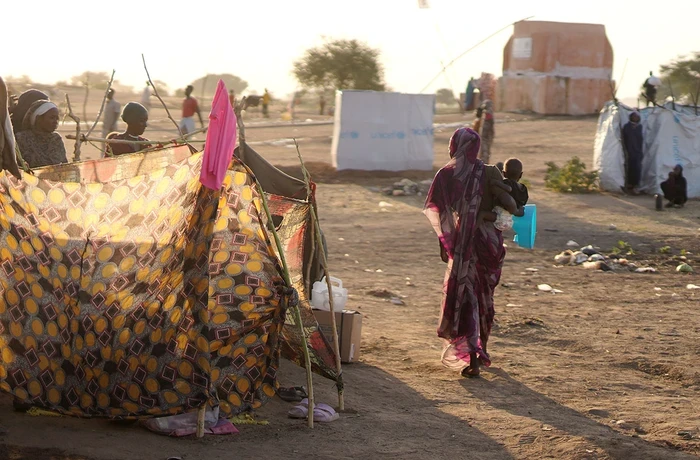
A woman holding a child, facing away from the camera, walks past makeshift tents
Feature

“I feel like I am a warrior”: Sudanese women fight for peace on the front lines of war

23 October 2026
“I feel like I am a warrior”: Sudanese women fight for peace on the front lines of war
Image
UNWomen_Placeholder
Press briefing

Nine in 10 organizations say trauma persists among women and girls displaced from El Fasher a year after its fall

23 October 2026
Nine in 10 organizations say trauma persists among women and girls displaced from El Fasher a year after its fall
Image
UNWomen_Placeholder
Statement

UN Women statement for the International Day of the Girl 2026

11 October 2026
UN Women statement for the International Day of the Girl 2026

Footer menu-HQ

  • News and stories
  • Resources
  • What we do
  • How we work
  • Where we are
  • Partnerships
  • Employment
  • Procurement
  • Contact us
  • Executive Board
  • Commission on the Status of Women

Donate button menu [Footer tablet]

  • Donate

Donate button menu [Footer]

  • Donate

Social media menu

  • Facebook
  • Twitter
  • LinkedIn
  • Flickr
  • YouTube
  • Instagram
UN Women - For all women and girls

Footer bottom [Menu]

  • Copyright
  • Information security
  • Privacy notice
  • Report wrongdoing
  • Terms of use
Share this page
  • Share to Facebook
  • Share to Twitter
  • Share to LinkedIn
  • Share to E-mail

Or copy link