
Universal menu

  • Global
  • Regions
    • Africa
    • Americas and the Caribbean
    • Arab States
    • Asia and the Pacific
    • Europe and Central Asia
  • Knowledge
  • Data
  • Training
  • Transparency
UN Women - For all women and girls

Main Navigation-HQ

  • Who we are
    • About us
      • About UN Women
      • Business model
      • Guiding documents
      • Worldwide presence
    • Leadership
      • Governance structure
      • Executive leadership
      • Executive Board
      • Accountability
    • Work with us
      • Employment
      • Procurement
      • Calls for proposals
      • Contact us
      • UN Women Strategic Plan 2026–2029
      • UN Women Strategic Plan 2026–2029 - social media image
        UN Women Strategic Plan 2026–2029
  • What we do
    • Focus areas
      • Ending violence against women
      • Peace and security
      • Humanitarian action
      • Leadership and governance
      • Economic empowerment
      • Innovation and technology
      • Women with disabilities
      • Youth
      • HIV and AIDS
    • How we work
      • 2030 Agenda for Sustainable Development
      • Commission on the Status of Women
      • Gender parity in the UN system
      • Intergovernmental support
      • Partnerships
      • Research and data
      • Training Centre
      • Trust funds
      • UN system coordination
      • Gender Equality Accelerators
      • Gender Equality Accelerators artwork
        Gender Equality Accelerators
  • News and stories
    • Latest
      • News
      • Articles and explainers
      • In focus
    • Media center
      • Press materials
      • Media contacts
      • Explainer: Why are women so exhausted? Care work and the mental load
      • Two adults stand at a table changing diapers on baby dolls, with laundry hanging on a clothesline behind them in a home setting.
        Explainer: Why are women so exhausted? Care work and the mental load
      • Press release: Aid cuts dismantle women’s organizations working in humanitarian crises
      • A young Ugandan woman sits with another local woman to talk
        Press release: Aid cuts dismantle women’s organizations working in humanitarian crises
  • Digital library
    • Resources
      • Publications
      • Annual reports
      • Gender snapshot
      • Progress of the world’s women
      • World survey on the role of women in development
    • GenderTerm
      • GenderTerm
      • Reprint permissions
      • UN Women Highlights 2025–2026
      • A smiling woman.
        UN Women Highlights 2025–2026
      • Gender snapshot 2026
      • A diverse group of people represented as simplified silhouettes, arranged against a dark blue background.
        Gender snapshot 2026
  • Get involved
    • How to get involved
      • For ALL Women and Girls
      • International Women's Day
      • 16 Days of Activism to End Violence against Women and Girls
      • UNiTE! Campaign to End Violence against Women
      • Generation Equality
      • He for She
Ask AI
https://84e5cfacd5c7e99f9825edf344450c.1b.environment.api.powerplatform.com/powervirtualagents/botsbyschema/crad4_websiteQA/directline/token?api-version=2022-03-01-preview
1
-
Ask your question here
AI website assistant

Hello, how can I assist you?

AI chatbot responses may be incorrect. Always verify important information.

Donate button menu

Donate

Breadcrumb

  1. Home
  2. News and stories
  3. From where I stand

Website survey

We want to know how we can improve your experience on this website. Completing this survey takes less than 5 minutes.

TAKE THE SURVEY
From where I stand

From where I stand: "Gender equality is essential for us to be able to mitigate climate change."
8 February 2022
  • Share to Facebook
  • Share to Twitter
  • Share to LinkedIn
  • Share to E-mail
Image
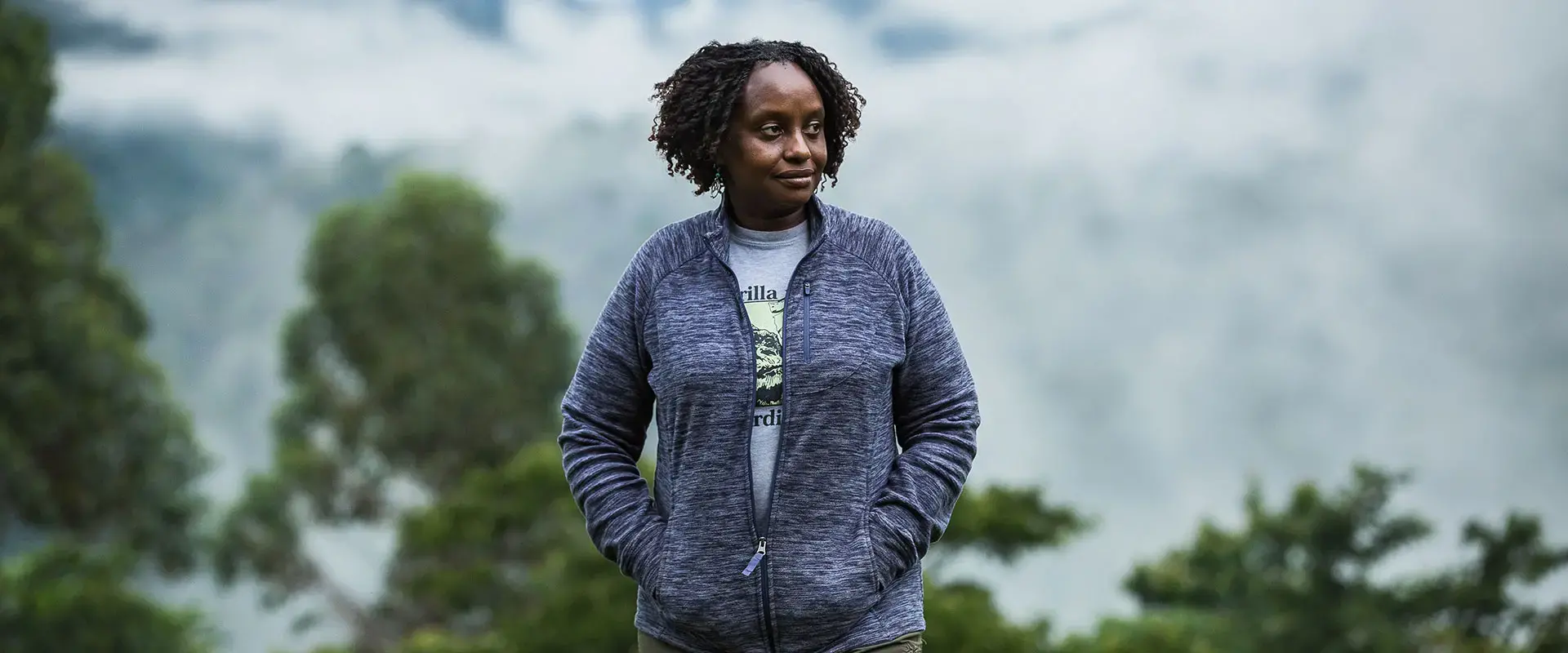
Portrait of Dr. Gladys Kalema-Zikusoka, UNEP Champion of the Earth 2021.  Photo: UNEP/Kibuuka Mukisa
Portrait of Dr. Gladys Kalema-Zikusoka, UNEP Champion of the Earth 2021. Photo: UNEP/Kibuuka Mukisa

Dr. Gladys Kalema-Zikusoka, Uganda’s first wildlife veterinarian, is Founder and CEO of the Conservation Through Public Health NGO and 2021 United Nations Environment Programme (UNEP) Champion of the Earth in Science and Innovation

icon

I first got engaged in conservation and the environment by setting up a high school wildlife club. I’d always wanted to be a vet because I liked animals and I grew up with lots of pets at home and I hated to see them suffering. 

When I went to vet school in the United Kingdom, they allowed us to study an animal of your choice so I chose the chimpanzee … Then I worked with gorillas. Later, I got the opportunity to become the first vet for the Uganda Wildlife Authority – the government agency that manages the wildlife. At the time, there were no female rangers at all. But now, 25 years later, 20 per cent of the rangers are women. The wildlife vets in Africa and around the world were also almost all men, and most of the conservation NGOs were run by men. 

We started our NGO in 2003 because people were making the gorillas sick and we realized we needed to improve human health, so we started engaging local leaders – half men, half women. We promoted community-based family planning in communities living around the park, to make sure they have manageable families so they don’t have to go into the forest to poach when their children are sick – they believe that bush meat is the only way to make their child better. When I looked at the women aged 15 and up, many were married off, so we decided to do couple peer-education, engaging women and men equally. We got the women more involved in conservation and natural resource management and the men more involved in health care and family planning. 

Family planning was a solution because people were having more children than they wanted to. It was affecting women’s health, increasing poverty and preventing children from going to school. If they had 10 children, maybe half could go to school and they would prioritize the boys. And with more mouths to feed, they would go into the forest to collect firewood or to poach. … For women, [family planning] gave them more control over their lives, over their bodies. For men, it meant better balancing of the family budget. It became a win-win situation. 

We also support women farmers by paying them better prices for their coffee, which the NGO sells to fund gorilla conservation. When we started, there were few women farmers, mostly widows. Having more female role models helps to break barriers, in whatever field it is. The only way that we can mitigate climate change is by engaging men and women and having just as many female as male leaders in conservation. If you don’t, you’re missing half of the puzzle and won’t be able to face things holistically and in a long-term way. Gender equality is essential for us to be able to mitigate climate change.

[As a female scientist], I’ve faced quite a number of challenges but some of the biggest were that people just don’t think that women and girls can do the same things as boys, like living in remote locations with few amenities or working with wild animals. People would express their concerns behind my back. I’m glad I didn’t know that earlier or it might have discouraged me. I just kept pushing on. … As a female leader, you need to take on leadership and be taken seriously. We need to work twice as hard as men. By the time we’re confident, it’s usually because we’re as good as or even better than men at something. Women have to be more confident in themselves.”

Veterinary scientist Dr. Gladys Kalema Zikusoka, 52, founded the Conservation Through Public Health NGO in 2003 and was appointed UNEP Champion of the Earth in Science and Innovation in 2021. Her work is directly related to many of the Sustainable Development Goals (SDGs), including SDG 3 on good health and well-being, in particular its target on ensuring access to family planning; SDG 13 on climate action, especially its target on improving education, awareness-raising and capacity on climate change mitigation; and SDG 15 on protecting, restoring and promoting the sustainable use of terrestrial ecosystems particularly its targets on sustainable forest management and action to end poaching.

The UN Environment Programme’s Champions of the Earth and the Young Champions of the Earth honour individuals, groups and organizations whose actions have a transformative impact on the environment.  The annual Champions of the Earth award is the UN’s highest environmental honour. It recognizes outstanding leaders from government, civil society and the private sector.

Topics

  • Gender stereotypes
  • Innovation and technology
  • Science and technology for development
  • Africa
  • Uganda

Related content

Image
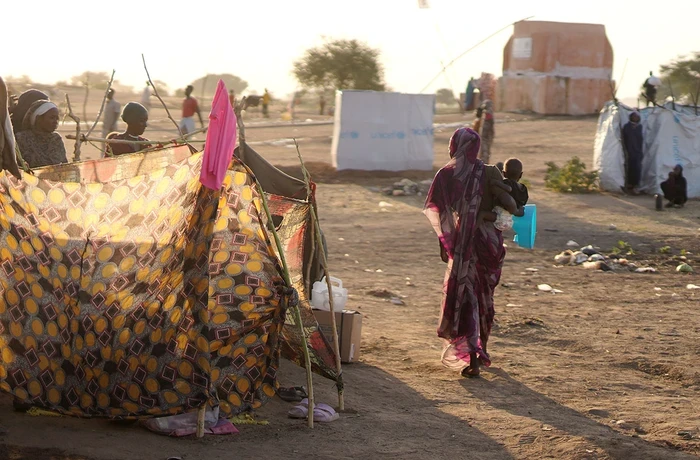
A woman holding a child, facing away from the camera, walks past makeshift tents
Feature

“I feel like I am a warrior”: Sudanese women fight for peace on the front lines of war

23 October 2026
“I feel like I am a warrior”: Sudanese women fight for peace on the front lines of war
Image
UNWomen_Placeholder
Press briefing

Nine in 10 organizations say trauma persists among women and girls displaced from El Fasher a year after its fall

23 October 2026
Nine in 10 organizations say trauma persists among women and girls displaced from El Fasher a year after its fall
Image
UNWomen_Placeholder
Press briefing

Middle East escalation threatens food security for an additional 11.7 million women and girls by the end of 2026

2 October 2026
Middle East escalation threatens food security for an additional 11.7 million women and girls by the end of 2026

Footer menu-HQ

  • News and stories
  • Resources
  • What we do
  • How we work
  • Where we are
  • Partnerships
  • Employment
  • Procurement
  • Contact us
  • Executive Board
  • Commission on the Status of Women

Donate button menu [Footer tablet]

  • Donate

Donate button menu [Footer]

  • Donate

Social media menu

  • Facebook
  • Twitter
  • LinkedIn
  • Flickr
  • YouTube
  • Instagram
UN Women - For all women and girls

Footer bottom [Menu]

  • Copyright
  • Information security
  • Privacy notice
  • Report wrongdoing
  • Terms of use
Share this page
  • Share to Facebook
  • Share to Twitter
  • Share to LinkedIn
  • Share to E-mail

Or copy link