
Universal menu

  • Global
  • Regions
    • Africa
    • Americas and the Caribbean
    • Arab States
    • Asia and the Pacific
    • Europe and Central Asia
  • Knowledge
  • Data
  • Training
  • Transparency
UN Women - For all women and girls

Main Navigation-HQ

  • Who we are
    • About us
      • About UN Women
      • Business model
      • Guiding documents
      • Worldwide presence
    • Leadership
      • Governance structure
      • Executive leadership
      • Executive Board
      • Accountability
    • Work with us
      • Employment
      • Procurement
      • Calls for proposals
      • Contact us
      • UN Women Strategic Plan 2026–2029
      • UN Women Strategic Plan 2026–2029 - social media image
        UN Women Strategic Plan 2026–2029
  • What we do
    • Focus areas
      • Ending violence against women
      • Peace and security
      • Humanitarian action
      • Leadership and governance
      • Economic empowerment
      • Innovation and technology
      • Women with disabilities
      • Youth
      • HIV and AIDS
    • How we work
      • 2030 Agenda for Sustainable Development
      • Commission on the Status of Women
      • Gender parity in the UN system
      • Intergovernmental support
      • Partnerships
      • Research and data
      • Training Centre
      • Trust funds
      • UN system coordination
      • Gender Equality Accelerators
      • Gender Equality Accelerators artwork
        Gender Equality Accelerators
  • News and stories
    • Latest
      • News
      • Articles and explainers
      • In focus
    • Media center
      • Press materials
      • Media contacts
      • Explainer: Why are women so exhausted? Care work and the mental load
      • Two adults stand at a table changing diapers on baby dolls, with laundry hanging on a clothesline behind them in a home setting.
        Explainer: Why are women so exhausted? Care work and the mental load
      • Press release: Aid cuts dismantle women’s organizations working in humanitarian crises
      • A young Ugandan woman sits with another local woman to talk
        Press release: Aid cuts dismantle women’s organizations working in humanitarian crises
  • Digital library
    • Resources
      • Publications
      • Annual reports
      • Gender snapshot
      • Progress of the world’s women
      • World survey on the role of women in development
    • GenderTerm
      • GenderTerm
      • Reprint permissions
      • UN Women Highlights 2025–2026
      • A smiling woman.
        UN Women Highlights 2025–2026
      • Gender snapshot 2026
      • A diverse group of people represented as simplified silhouettes, arranged against a dark blue background.
        Gender snapshot 2026
  • Get involved
    • How to get involved
      • For ALL Women and Girls
      • International Women's Day
      • 16 Days of Activism to End Violence against Women and Girls
      • UNiTE! Campaign to End Violence against Women
      • Generation Equality
      • He for She
Ask AI
https://84e5cfacd5c7e99f9825edf344450c.1b.environment.api.powerplatform.com/powervirtualagents/botsbyschema/crad4_websiteQA/directline/token?api-version=2022-03-01-preview
1
-
Ask your question here
AI website assistant

Hello, how can I assist you?

AI chatbot responses may be incorrect. Always verify important information.

Donate button menu

Donate

Breadcrumb

  1. Home
  2. News and stories
  3. Feature story

Website survey

We want to know how we can improve your experience on this website. Completing this survey takes less than 5 minutes.

TAKE THE SURVEY
Feature

Inside Liberia’s campaign to end female genital mutilation (FGM)

The Born Perfect Bus Tour is bringing communities, survivors, and traditional leaders together to challenge female genital mutilation (FGM) in Liberia.

10 August 2026
  • Share to Facebook
  • Share to Twitter
  • Share to LinkedIn
  • Share to E-mail
Next stop on the Born Perfect Bus Tour: The end of the line for female genital mutilation (FGM) in Liberia. Photo: UN Women/Edmond Cephas

Basic Hero Banner

Across towns and villages in Liberia, a brightly branded bus has been stopping in markets, town halls, and community gathering spaces – not to transport passengers, but to drive critical conversations.

The Born Perfect Bus Tour is a community-driven initiative to end female genital mutilation (FGM). Travelling through Totota and Palala in Bong County, with outreach in Margibi, Cape Mount, Bomi, and Gbarpolu Counties, the bus reached more than 3,000 people in communities where the issue has often remained difficult to discuss openly.

The goal: open dialogue among women, men, youth, and traditional leaders; shift mindsets; and strengthen political commitment to finally end FGM.

“Besides listening to the radio, this was the very first time in my life hearing about the dangers of FGM”, said Daniel E. Kollie, a traditional leader and clerk for the Konawolala Administrative District in Bong County.

“The harmful part of our tradition… this was not something that I had heard conversations about in my community before.”

The Born Perfect Bus’s pilot tour, launched earlier this year, was supported by UN Women and the Embassy of Ireland in Liberia. The mobile outreach model was led by medica Liberia and the Community Healthcare Initiative (CHI), in collaboration with the Global Media Campaign to End FGM and the National Campaigners Against Harmful Traditional Practices.

Image
Women dance and sing together as part of Liberia's Born Perfect bus tour
Along the tour, artists challenged harmful norms through performance art, survivors shared their experiences, youth leaders asked questions, and traditional authorities reflected on cultural practices. Photo: UN Women / Edmond Cephas

How the Born Perfect Bus Tour is changing conversations about FGM

At each stop, the bus transformed public spaces with music, storytelling, and even comedy.

The initiative prioritizes respect, dignity, and cultural sensitivity. Activities ensured emotional safety, with voluntary survivor participation supported by trained psychosocial staff. Structured dialogues encouraged communities to reflect collectively on gender norms, traditions, and the protection of girls’ rights.

Kollie, the traditional leader, described how the presence of the Paramount Chief, the highest-ranking member of the traditional government, “made the message [about the dangers of FGM] stick” with his community.

Even before the bus arrived in each community, campaign teams consulted traditional leaders, women’s groups, youth representatives, religious leaders, and local authorities. These efforts built trust, addressed concerns, and ensured community ownership.

Why is female genital mutilation practised?

According to UN Women research and surveys in Bong County, the main influences that sustain the practice of FGM include:

  • Culture and tradition: 63 per cent
  • Social acceptance: 40 per cent
  • Marriageability: 31 per cent
  • Religion and health-related reasons: under 7 per cent

These findings show that its perceived social consequences – such as exclusion or reputational harm – that often push families to submit their girls to dangerous mutilation.

Image
People, including traditional male leaders, engage in a conversation about the harms of female genital mutilation
During the tour, structured dialogues were held with more than 100 traditional and religious leaders, including female practitioners of FGM, known as Zoes, and Muslim leaders. Photo: UN Women/Edmond Cephas

Ending FGM: What communities in Liberia told us

When asked what it will take to end FGM, young survivor Janet Wokpeh described the need for more awareness, especially among older generations, as well as more educational opportunities for youth outside of the bush schools – a theme that emerges throughout interviews. 

What is a bush school in Liberia?

A traditional bush school is a community-based institution where children and adolescents receive cultural education and participate in rites of passage into adulthood. 

Often organized by traditional societies, such as the Sande for girls and the Poro for boys, these schools provide instruction on cultural values and life skills. In some communities, these initiation rites have included practices such as female genital mutilation (FGM).

“I am a survivor”, said Wokpeh. “I hope that the people present during the campaign were able to hear my story and are working to end FGM so that we can go back to school. It’s not easy.”

Moses Nahn, a youth president in the Konawolala District, described his little sisters and brothers as his motivation to travel to the bus stop and to bring what he learned – and unlearned – back with him: “I said [to my community], the information you all heard that [people] want to take away our tradition is wrong. It’s only the harmful practices they want us to stop.”

“I really want FGM to come to an end”, said Nahn. “We have to come up with an initiative that will stop people from going to the bush school. People need to go to trade school and learn [useful skills].” He added that more opportunities for mothers – including economic empowerment through farming – could bring more of them on board, too.

Image
People sit together inside the Born Perfect bus.
The campaign underscored how large public events, combined with smaller, face-to-face engagements, could be effective in addressing taboo issues. Photo: UN Women/Edmond Cephas

Early results show changing attitudes about FGM in Liberia

Attendees like Kollie described being energized by the campaign, especially its educational messages that were easy to understand and adopt: “This caravan should go all over”, he said. “It needs to go [around] the country and not just stop with us.”

An impact assessment completed two months after the bus tour, in March 2026, found:

  • increased discussion about FGM among families and in community spaces and religious centres, particularly mosques
  • growing support for suspending the practice of FGM in bush schools
  • a significant drop in the number of people who support sending girls – including their own daughters – to bush schools

In Gbarpolu County, traditional leaders publicly expressed support for ending FGM and stated that bush operations had stopped. In Bong and Cape Mount counties, leaders have committed to continued dialogue and engagement.
 

Of the participants from Gbarpolu County:

73% 73%

said they learned something new

said they learned something new

83% 83%

reported a shift in attitudes

reported a shift in attitudes

89% 89%

said the initiative had a positive impact on their community

said the initiative had a positive impact on their community

Image
A crowd listens to a woman speak about the harms of female genital mutilation (FGM)
As Liberia continues its efforts to end FGM, the Born Perfect Bus Tour offers a compelling model for scale – combining mobile outreach, community dialogue, and sustained engagement. Photo: UN Women/Edmond Cephas

From community action to national efforts to end FGM in Liberia

The Born Perfect Bus Tour concluded with a stop at Liberia’s National Legislature, where insights gathered across communities were presented directly to policymakers. Events like these help bridge the gap between community realities and legislative action by bringing together lawmakers, traditional leaders, civil society actors, development partners, and campaign partners.

“UN Women considers supporting the Government to end FGM as one of our top priorities in Liberia. The Born Perfect Bus Tour is one way to give women the power they need to end it.” – Former UN Women Liberia Country Representative Comfort Lamptey

“I have been part of this community for over 20 years, and I haven’t seen the FGM issue discussed this way”, said community member Ma Watta Kanneh after participating in the campaign. “For me, I see this as progress, and with more awareness, I believe it will lead to changes in the communities.”

Topics

  • Education
  • Ending violence against women and girls
  • Anti-violence interventions
  • Girls
  • Africa
  • Liberia

Related content

Image
UNWomen_Placeholder
Press briefing

Nine in 10 organizations say trauma persists among women and girls displaced from El Fasher a year after its fall

23 October 2026
Nine in 10 organizations say trauma persists among women and girls displaced from El Fasher a year after its fall
Image
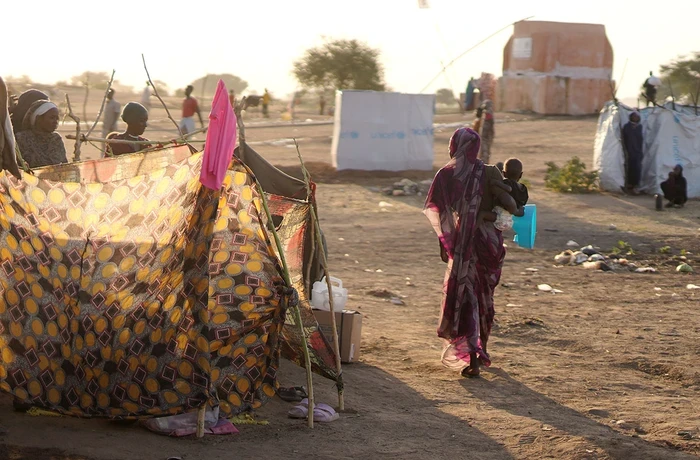
A woman holding a child, facing away from the camera, walks past makeshift tents
Feature

“I feel like I am a warrior”: Sudanese women fight for peace on the front lines of war

23 October 2026
“I feel like I am a warrior”: Sudanese women fight for peace on the front lines of war
Image
UNWomen_Placeholder
Statement

UN Women statement for the International Day of the Girl 2026

11 October 2026
UN Women statement for the International Day of the Girl 2026

Footer menu-HQ

  • News and stories
  • Resources
  • What we do
  • How we work
  • Where we are
  • Partnerships
  • Employment
  • Procurement
  • Contact us
  • Executive Board
  • Commission on the Status of Women

Donate button menu [Footer tablet]

  • Donate

Donate button menu [Footer]

  • Donate

Social media menu

  • Facebook
  • Twitter
  • LinkedIn
  • Flickr
  • YouTube
  • Instagram
UN Women - For all women and girls

Footer bottom [Menu]

  • Copyright
  • Information security
  • Privacy notice
  • Report wrongdoing
  • Terms of use
Share this page
  • Share to Facebook
  • Share to Twitter
  • Share to LinkedIn
  • Share to E-mail

Or copy link