
Universal menu

  • Global
  • Regions
    • Africa
    • Americas and the Caribbean
    • Arab States
    • Asia and the Pacific
    • Europe and Central Asia
  • Knowledge
  • Data
  • Training
  • Transparency
UN Women - For all women and girls

Main Navigation-HQ

  • Who we are
    • About us
      • About UN Women
      • Business model
      • Guiding documents
      • Worldwide presence
    • Leadership
      • Governance structure
      • Executive leadership
      • Executive Board
      • Accountability
    • Work with us
      • Employment
      • Procurement
      • Calls for proposals
      • Contact us
      • UN Women Strategic Plan 2026–2029
      • UN Women Strategic Plan 2026–2029 - social media image
        UN Women Strategic Plan 2026–2029
  • What we do
    • Focus areas
      • Ending violence against women
      • Peace and security
      • Humanitarian action
      • Leadership and governance
      • Economic empowerment
      • Innovation and technology
      • Women with disabilities
      • Youth
      • HIV and AIDS
    • How we work
      • 2030 Agenda for Sustainable Development
      • Commission on the Status of Women
      • Gender parity in the UN system
      • Intergovernmental support
      • Partnerships
      • Research and data
      • Training Centre
      • Trust funds
      • UN system coordination
      • Gender Equality Accelerators
      • Gender Equality Accelerators artwork
        Gender Equality Accelerators
  • News and stories
    • Latest
      • News
      • Articles and explainers
      • In focus
    • Media center
      • Press materials
      • Media contacts
      • Explainer: Why are women so exhausted? Care work and the mental load
      • Two adults stand at a table changing diapers on baby dolls, with laundry hanging on a clothesline behind them in a home setting.
        Explainer: Why are women so exhausted? Care work and the mental load
      • Press release: Aid cuts dismantle women’s organizations working in humanitarian crises
      • A young Ugandan woman sits with another local woman to talk
        Press release: Aid cuts dismantle women’s organizations working in humanitarian crises
  • Digital library
    • Resources
      • Publications
      • Annual reports
      • Gender snapshot
      • Progress of the world’s women
      • World survey on the role of women in development
    • GenderTerm
      • GenderTerm
      • Reprint permissions
      • UN Women Highlights 2025–2026
      • A smiling woman.
        UN Women Highlights 2025–2026
      • Gender snapshot 2026
      • A diverse group of people represented as simplified silhouettes, arranged against a dark blue background.
        Gender snapshot 2026
  • Get involved
    • How to get involved
      • For ALL Women and Girls
      • International Women's Day
      • 16 Days of Activism to End Violence against Women and Girls
      • UNiTE! Campaign to End Violence against Women
      • Generation Equality
      • He for She
Ask AI
https://84e5cfacd5c7e99f9825edf344450c.1b.environment.api.powerplatform.com/powervirtualagents/botsbyschema/crad4_websiteQA/directline/token?api-version=2022-03-01-preview
1
-
Ask your question here
AI website assistant

Hello, how can I assist you?

AI chatbot responses may be incorrect. Always verify important information.

Donate button menu

Donate

Breadcrumb

  1. Home
  2. News and stories
  3. Feature story

Website survey

We want to know how we can improve your experience on this website. Completing this survey takes less than 5 minutes.

TAKE THE SURVEY
Feature

Haitian women and girls empowered by UN Women amid humanitarian crisis

6 March 2024
  • Share to Facebook
  • Share to Twitter
  • Share to LinkedIn
  • Share to E-mail

Civil unrest has led to a profound humanitarian crisis in Haiti, with more than 300,000 people displaced from their homes—including an estimated 170,000 children. Such displacement puts women and girls’ rights, economic prospects, and even their lives at risk. 

Throughout this crisis, women’s groups have worked to remain active in Haiti, and UN Women is working with partner organizations to provide economic, psychological, and other forms of support to women and girls in the country.

Image
In the heart of Port-au-Prince, the capital of Haiti, escalating violence has become a grim reality, leading to the mass displacement of women and children.
In the heart of Port-au-Prince, the capital of Haiti, escalating violence has become a grim reality, leading to the mass displacement of women and children. Photo: UNICEF/Harold Joseph

One such project operates in Cité Soleil, in the metropolitan area of the capital city of Port-au-Prince. There, UN Women has partnered with Rapha International and local groups since late 2022, with funding from the UN Peacebuilding Fund, to provide emergency support to women survivors of sexual and gender-based violence, including counselling, medical assistance, relocation, and economic funding.

The programme also rolled out a secure web-based reporting system to allow victims of gender-based violence to connect with service providers securely and anonymously, seeking medical care, psychosocial services, rehousing, and economic support.

More than 2,000 people have used that system since its launch, which has led to 230 women and girls receiving food and hygiene kits while they fled from gang violence. Separately, a community-based referral programme has resulted in nearly 1,000 women and girls receiving aid, providing direct psychosocial support to 524 and other forms of assistance to 436 others.

The partnership with Rapha International also featured trainings for 10 community leaders and 86 other stakeholders, including school principals and hospital and clinic directors, to learn how to monitor for signs of sexual abuse and how best to report such cases. 

Separately, in Haiti’s South Department, the Women's Peace and Humanitarian Fund—a partnership among the United Nations and local civil society groups—has funded a project giving some 54 rural women access to financial institutions for the first time by launching two Village Savings and Loan Associations, which are self-managed and self-capitalised savings groups that use members’ savings to lend to each other.

Such financial empowerment has given women greater independence and autonomy, which they had previously lacked. 

Image
Participants are seen during the celebration of the International Day of Peace in Port-au-Prince, Haiti.
Participants are seen during the celebration of the International Day of Peace in Port-au-Prince, Haiti. Photo: UN Women

“These women have now a stronger presence and representation in their community”, said Marc-Aurele François, Coordinator of MOJDDE, a local organization in the southern commune of Port-à-Piment that has worked with women recovering from a 2021 earthquake.

Also in the South Department, the National Associative Network for the Integration of Persons with Disabilities (RANIPH South), a partner of UN Women, has worked to expand its programming to reach people with disabilities by opening a new accessible workspace. The facility is now used by eight local organizations with a combined membership of 800 people, ranging from a local savings and loan association to women’s and disabled persons’ empowerment groups. 

“This institutional support has significantly strengthened RANIPH's presence and enabled the organization to provide improved support to disabled individuals in the region”, RANIPH coordinator Semé Jean said, speaking of the UN Women partnership.

In the southern commune of Les Cayes, UN Women and the Women’s Peace and Humanitarian Fund have also supported a project aimed at helping women and girls learn entrepreneurial skills and gain more economic independence. 

Since its launch in 2022, the project has reached 200 women and girls, providing them with trainings and advice on agricultural best practices, running a business, and other topics, including gender equality and women’s leadership. Dormevil Onicia, a 46-year-old mother of five who attended those trainings, said the programme not only gave her important skills, but that the classes on women’s rights made her feel more empowered.

“In the past, I was not used to participating in public meetings or speaking out in large groups. With the arrival of this project, I began to participate in the meetings organized by those in charge and the participatory and inclusive approaches used helped me a lot to be a fulfilled woman!” she said. “I am proud to have been part of this programme.”

Onicia said that the trainings encouraged her to switch from growing corn—which required a large amount of space—to breeding small livestock and sheep, as well as raising less resource-intensive crops and making use of composting and mulching techniques. The programme gave her seeds and technical assistance, as well as two sheep to launch her new business.

“With the right agricultural methods, I cultivated on less space than before and I earned more money”, she said, adding that she had also expanded her business to include a mill, where she grinds corn and cereal grains and then sells the ground products at a local market.

“Maize and millet waste are also sold to farmers, nothing is lost”, she said. “Using the income generated I pay school fees for my children, including my son who is in his first year of university.”

Another woman in Hati’s south, Florence, said that programming offered by UN Women, with support from the Women’s Peace and Humanitarian Fund and local partners had given her a second chance at life after surviving gender-based violence.

She attended the Strategic Support Unit for Agricultural Development (CASDA) programme, focused on empowering women who have survived gender-based violence. It included professional training, counselling, workshops on women’s empowerment and their rights, and initiatives aimed at strengthening their resilience and economic independence.

“My life was filled with fear and uncertainty. The violence I suffered left me without hope”, she said. “But thanks to the opportunity provided by CASDA, I was able to start my own small business. Today, I am proud to say that I am financially independent and that I can provide for the needs of my family.”

“This project has given me confidence in myself and in the future”, she said. “I am grateful to all those who have made this is possible.”

Topics

  • Economic empowerment
  • Employment
  • Women farmers
  • Humanitarian action
  • Crisis response and recovery
  • Latin America and the Caribbean
  • Haiti

Related content

Image
UNWomen_Placeholder
Statement

UN Women statement for the International Day of Care and Support 2026

28 October 2026
UN Women statement for the International Day of Care and Support 2026
Image
UNWomen_Placeholder
Press briefing

Nine in 10 organizations say trauma persists among women and girls displaced from El Fasher a year after its fall

23 October 2026
Nine in 10 organizations say trauma persists among women and girls displaced from El Fasher a year after its fall
Image
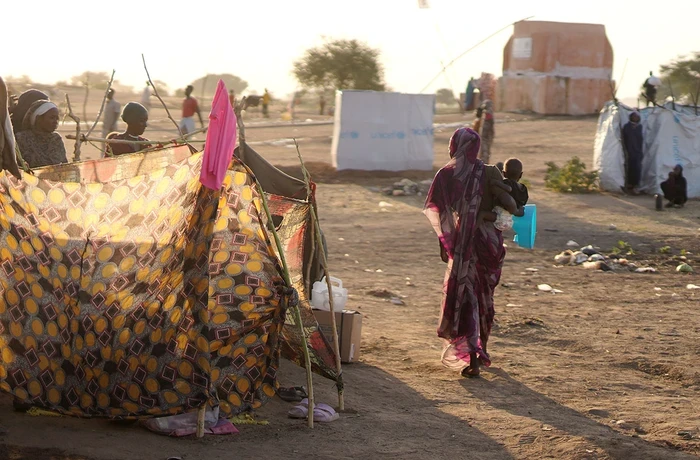
A woman holding a child, facing away from the camera, walks past makeshift tents
Feature

“I feel like I am a warrior”: Sudanese women fight for peace on the front lines of war

23 October 2026
“I feel like I am a warrior”: Sudanese women fight for peace on the front lines of war

Footer menu-HQ

  • News and stories
  • Resources
  • What we do
  • How we work
  • Where we are
  • Partnerships
  • Employment
  • Procurement
  • Contact us
  • Executive Board
  • Commission on the Status of Women

Donate button menu [Footer tablet]

  • Donate

Donate button menu [Footer]

  • Donate

Social media menu

  • Facebook
  • Twitter
  • LinkedIn
  • Flickr
  • YouTube
  • Instagram
UN Women - For all women and girls

Footer bottom [Menu]

  • Copyright
  • Information security
  • Privacy notice
  • Report wrongdoing
  • Terms of use
Share this page
  • Share to Facebook
  • Share to Twitter
  • Share to LinkedIn
  • Share to E-mail

Or copy link