
Universal menu

  • Global
  • Regions
    • Africa
    • Americas and the Caribbean
    • Arab States
    • Asia and the Pacific
    • Europe and Central Asia
  • Knowledge
  • Data
  • Training
  • Transparency
UN Women - For all women and girls

Main Navigation-HQ

  • Who we are
    • About us
      • About UN Women
      • Business model
      • Guiding documents
      • Worldwide presence
    • Leadership
      • Governance structure
      • Executive leadership
      • Executive Board
      • Accountability
    • Work with us
      • Employment
      • Procurement
      • Calls for proposals
      • Contact us
      • UN Women Strategic Plan 2026–2029
      • UN Women Strategic Plan 2026–2029 - social media image
        UN Women Strategic Plan 2026–2029
  • What we do
    • Focus areas
      • Ending violence against women
      • Peace and security
      • Humanitarian action
      • Leadership and governance
      • Economic empowerment
      • Innovation and technology
      • Women with disabilities
      • Youth
      • HIV and AIDS
    • How we work
      • 2030 Agenda for Sustainable Development
      • Commission on the Status of Women
      • Gender parity in the UN system
      • Intergovernmental support
      • Partnerships
      • Research and data
      • Training Centre
      • Trust funds
      • UN system coordination
      • Gender Equality Accelerators
      • Gender Equality Accelerators artwork
        Gender Equality Accelerators
  • News and stories
    • Latest
      • News
      • Articles and explainers
      • In focus
    • Media center
      • Press materials
      • Media contacts
      • Explainer: Why are women so exhausted? Care work and the mental load
      • Two adults stand at a table changing diapers on baby dolls, with laundry hanging on a clothesline behind them in a home setting.
        Explainer: Why are women so exhausted? Care work and the mental load
      • Press release: Aid cuts dismantle women’s organizations working in humanitarian crises
      • A young Ugandan woman sits with another local woman to talk
        Press release: Aid cuts dismantle women’s organizations working in humanitarian crises
  • Digital library
    • Resources
      • Publications
      • Annual reports
      • Gender snapshot
      • Progress of the world’s women
      • World survey on the role of women in development
    • GenderTerm
      • GenderTerm
      • Reprint permissions
      • UN Women Highlights 2025–2026
      • A smiling woman.
        UN Women Highlights 2025–2026
      • Gender snapshot 2026
      • A diverse group of people represented as simplified silhouettes, arranged against a dark blue background.
        Gender snapshot 2026
  • Get involved
    • How to get involved
      • For ALL Women and Girls
      • International Women's Day
      • 16 Days of Activism to End Violence against Women and Girls
      • UNiTE! Campaign to End Violence against Women
      • Generation Equality
      • He for She
Ask AI
https://84e5cfacd5c7e99f9825edf344450c.1b.environment.api.powerplatform.com/powervirtualagents/botsbyschema/crad4_websiteQA/directline/token?api-version=2022-03-01-preview
1
-
Ask your question here
AI website assistant

Hello, how can I assist you?

AI chatbot responses may be incorrect. Always verify important information.

Donate button menu

Donate

Breadcrumb

  1. Home
  2. News and stories
  3. Feature story

Website survey

We want to know how we can improve your experience on this website. Completing this survey takes less than 5 minutes.

TAKE THE SURVEY
Feature

UN programme instructs women on climate-resilient farming

5 October 2023
  • Share to Facebook
  • Share to Twitter
  • Share to LinkedIn
  • Share to E-mail

Since 2019, UN Women has partnered with the Food and Agriculture Organization (FAO) of the United Nations on “Contributing to the Empowerment of Women in Africa through Climate-Smart Agriculture”, a programme to provide technical farming skills, recommendations on best business practices, and climate-conscious agriculture methods to tens of thousands of women farmers in sub-Saharan Africa. 

About 66 per cent of working women in the region are employed in agriculture-related fields, according to a recent report by the FAO. Women’s working conditions “are likely to be worse than men’s”, the report found, citing a disproportionate number of women working in irregular, informal, and labour-intensive work.

Image
Disebo Makatsa, who received training from UN Women and the Food and Agriculture Organization, is seen on her farm in Free State province, South Africa.
Disebo Makatsa, who received training from UN Women and the Food and Agriculture Organization, is seen on her farm in Free State province, South Africa. Photo: Dee-Y Trading.

“Although commercial farming is still a male-dominated industry where women have to work doubly hard, the reality is that women have always been farmers, working the land and producing food”, said Disebo Makatsa, a South African woman who turned her mother’s vegetable garden into Dee-Y Trading, a 368-hectare vegetable and dairy farm in Free State province.

“What many small-scale women farmers need are skills, finance, technology, and access to markets, to move into the formal economy”, she said.

Makatsa is one of 4,560 South African women farmers who received training through the UN Women and FAO programme, supported by Standard Bank.

In South Africa, the programme has focused on helping them grow crops including maize and beans. In Malawi, UN Women reached 10,461 women, with a focus on growing ground nuts. In Uganda, it helped 1,400 women learn to cultivate farm-raised fish, and in Nigeria the programme reached 12,500 women with techniques to produce shea butter and rice.

Image
Disebo Makatsa owns Dee-Y Trading, a 368-hectare vegetable and dairy farm.
Disebo Makatsa owns Dee-Y Trading, a 368-hectare vegetable and dairy farm. Photo: Dee-Y Trading.

Additionally, those trainings have imparted techniques to help fight climate change, through using climate-resilient farming techniques and technologies, as well as responsible land care.

“The programme’s primary goal was to empower women economically while enhancing climate resilience and agricultural productivity”, said Ayanda Mvimbi, Women Economic Empowerment Specialist at UN Women’s South Africa Multi-Country Office.

“I learned a lot about best agricultural practices and implemented them”, Makatsa said, citing programs that taught her about using drip-irrigation technology to conserve water, rotating crops to retain soil nutrients, and growing different vegetables together to save land and keep soil fertile.

Programme participants also receive guidance on legal compliance, helping them formalize their businesses and work with retailers and distributors to sell products that meet food safety standards.

Since working with the programme, Makatsa has added 18 new milk cows to her stock and employs 14 people on her farm year-round, with many more hired during the harvest season. She hopes to grow her business and expand into pasteurized milk, pre-cut vegetables, and other agricultural products.

“I’ve seen a big difference with the quality of crops we're producing and an improvement in the yield,” Makatsa said.

Topics

  • 2030 Agenda for Sustainable Development
  • Sustainable Development Goals (SDGs)
  • Climate change
  • Environmental protection
  • Water
  • Africa
  • Nigeria
  • South Africa

Related content

Image
UNWomen_Placeholder
Press briefing

Nine in 10 organizations say trauma persists among women and girls displaced from El Fasher a year after its fall

23 October 2026
Nine in 10 organizations say trauma persists among women and girls displaced from El Fasher a year after its fall
Image
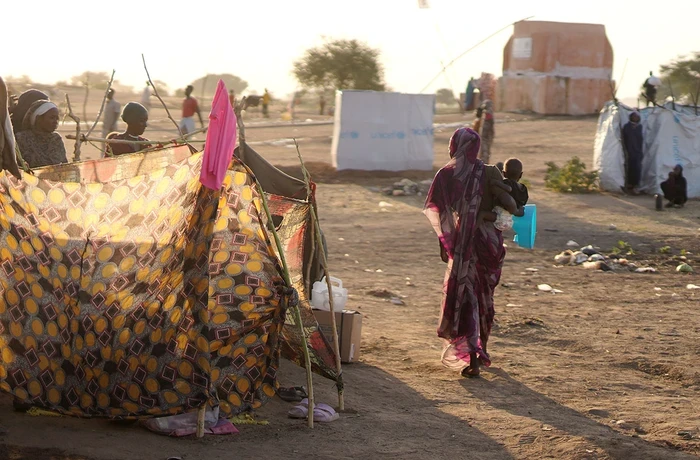
A woman holding a child, facing away from the camera, walks past makeshift tents
Feature

“I feel like I am a warrior”: Sudanese women fight for peace on the front lines of war

23 October 2026
“I feel like I am a warrior”: Sudanese women fight for peace on the front lines of war
Image
Photo collage of women
Statement

UN Women statement for the International Day of Rural Women, 15 October 2026

13 October 2026
UN Women statement for the International Day of Rural Women, 15 October 2026

Footer menu-HQ

  • News and stories
  • Resources
  • What we do
  • How we work
  • Where we are
  • Partnerships
  • Employment
  • Procurement
  • Contact us
  • Executive Board
  • Commission on the Status of Women

Donate button menu [Footer tablet]

  • Donate

Donate button menu [Footer]

  • Donate

Social media menu

  • Facebook
  • Twitter
  • LinkedIn
  • Flickr
  • YouTube
  • Instagram
UN Women - For all women and girls

Footer bottom [Menu]

  • Copyright
  • Information security
  • Privacy notice
  • Report wrongdoing
  • Terms of use
Share this page
  • Share to Facebook
  • Share to Twitter
  • Share to LinkedIn
  • Share to E-mail

Or copy link