Universal menu

  • Global
  • Regions
    • Africa
    • Americas and the Caribbean
    • Arab States
    • Asia and the Pacific
    • Europe and Central Asia
  • Knowledge
  • Data
  • Training
  • Transparency
UN Women - For all women and girls

Main Navigation-HQ

  • Who we are
    • About us
      • About UN Women
      • Business model
      • Guiding documents
      • Worldwide presence
    • Leadership
      • Governance structure
      • Executive leadership
      • Executive Board
      • Accountability
    • Work with us
      • Employment
      • Procurement
      • Calls for proposals
      • Contact us
      • UN Women Strategic Plan 2026–2029
      • UN Women Strategic Plan 2026–2029 - social media image
        UN Women Strategic Plan 2026–2029
  • What we do
    • Focus areas
      • Ending violence against women
      • Peace and security
      • Humanitarian action
      • Leadership and governance
      • Economic empowerment
      • Innovation and technology
      • Women with disabilities
      • Youth
      • HIV and AIDS
    • How we work
      • 2030 Agenda for Sustainable Development
      • Commission on the Status of Women
      • Gender parity in the UN system
      • Intergovernmental support
      • Partnerships
      • Research and data
      • Training Centre
      • Trust funds
      • UN system coordination
      • Gender Equality Accelerators
      • Gender Equality Accelerators artwork
        Gender Equality Accelerators
  • News and stories
    • Latest
      • News
      • Articles and explainers
      • In focus
    • Media center
      • Press materials
      • Media contacts
      • Explainer: Why are women so exhausted? Care work and the mental load
      • Two adults stand at a table changing diapers on baby dolls, with laundry hanging on a clothesline behind them in a home setting.
        Explainer: Why are women so exhausted? Care work and the mental load
      • Press release: Aid cuts dismantle women’s organizations working in humanitarian crises
      • A young Ugandan woman sits with another local woman to talk
        Press release: Aid cuts dismantle women’s organizations working in humanitarian crises
  • Digital library
    • Resources
      • Publications
      • Annual reports
      • Gender snapshot
      • Progress of the world’s women
      • World survey on the role of women in development
    • GenderTerm
      • GenderTerm
      • Reprint permissions
      • UN Women Highlights 2025–2026
      • A smiling woman.
        UN Women Highlights 2025–2026
      • Gender snapshot 2026
      • A diverse group of people represented as simplified silhouettes, arranged against a dark blue background.
        Gender snapshot 2026
  • Get involved
    • How to get involved
      • For ALL Women and Girls
      • International Women's Day
      • 16 Days of Activism to End Violence against Women and Girls
      • UNiTE! Campaign to End Violence against Women
      • Generation Equality
      • He for She
Ask AI
https://84e5cfacd5c7e99f9825edf344450c.1b.environment.api.powerplatform.com/powervirtualagents/botsbyschema/crad4_websiteQA/directline/token?api-version=2022-03-01-preview
1
-
Ask your question here
AI website assistant

Hello, how can I assist you?

AI chatbot responses may be incorrect. Always verify important information.

Donate button menu

Donate

Breadcrumb

  1. Home
  2. News and stories
  3. Feature story

Website survey

We want to know how we can improve your experience on this website. Completing this survey takes less than 5 minutes.

TAKE THE SURVEY
Impact story

How male champions are helping to end gender-based violence in Uganda

18 November 2022
  • Share to Facebook
  • Share to Twitter
  • Share to LinkedIn
  • Share to E-mail

“As a male champion, I strive for gender inclusiveness and making gender parity a priority,” says local government Community Development Officer, Wilfred Nyeko. “Being a male champion means reporting forms of abuse, acting as a source of change and inspiration for men, and being a role model for mindset change. It also means advocating for the rights of women and girls, and working to increase their visibility in society.”


Image
Under the Spotlight Initiative, UN Women and the Uganda Police Force engage male vendors on ending violence against women and girls as part of a 16 Days of Activism police caravan activity. Photo: UN Women/Eva Sibanda

Mr. Nyeko is one of 15 men in Kitgum District who participated in Spotlight Initiative-supported training sessions in 2019 and 2020 on gender equality, women’s rights and ending gender-based violence conducted by UN Women partner LandNet Uganda.

“In Uganda, there is gender bias in education, gender disparities in agriculture, the gender pay gap, lack of representation for women and girls at policy level, and high incidences of sexual harassment,” explains Mr. Nyeko. “As a male champion I use my authority in the community to create a more inclusive culture and promote reduction of violence within my society.” 

During training sessions, Wilfred and other male champions learned about the role of women’s rights in reducing gender-based violence; the importance of family planning services for women and how to encourage men to explore those services with their wives; positive parenting techniques that promote gender equality; and safe sexual behaviours that promote women’s bodily autonomy and agency. The champions were equipped with the skills to act as role models and change agents for other men in their communities, and there are reduced incidences of conflicts in those districts targeted by the trainings. 

How land divides

There are clear links between women’s land rights and access and gender-based violence in Uganda. In Kitgum District, 63 per cent of women own land and 86 per cent of women have access to land, but under customary land tenure systems, these legal rights are often not recognized in communities where men dominate decision-making, and women are excluded from meaningfully participating in governance systems. 

“Generally, women must wait for their husbands to make decisions over land management and access, leaving many rural women underemployed and without any control over productive resources and services,” notes Evelyn Letiyo, Ending Violence against Women and Girls Programme Specialist for UN Women Uganda, “which means that in cases of domestic violence, women often feel they have no option but to stay in violent households as they have no way to support themselves or their children.”

Image
Engaging male vendors on ending violence against women and girls in Uganda. Photo: UN Women/Eva Sibanda

Furthermore, approximately 50 per cent of people in Northern Uganda have experienced land conflicts—the majority being women and widows—and 72 per cent of these conflicts are within households, families and clans. Often, these conflicts over land can lead to economic and physical violence against women and girls.

In addition to training male champions to advocate for gender equality in their communities, LandNet Uganda conducted sensitization meetings and forums with 2,206 community members to raise awareness about women’s land rights, increase the level of women’s participation in decision-making and governance, and help women understand what services are available to them if they experience violence.

“Since the community meetings, 25 women now participate in decision-making over land rights and use, there have been more reports by women about land issues to the appropriate authorities. Access to land for production by women has greatly improved,” enthuses Mr. Nyeko. 

“Importantly, incidences of gender-based violence are now being reported and handled by police and authorities. The counselling and mediation skills we learned as champions have helped us handle land conflicts and reports of violence much better than before. Ultimately, I want men to know that we should co-exist peacefully with women in our society.” 

Despite its pervasiveness, violence against women is preventable. This 16 Days, we’re highlighting the programmes and initiatives making a difference in the lives of women and girls worldwide. Through education, advocacy, service provision and more, UN Women and partners are working to support survivors, bring perpetrators to justice and end gender-based violence once and for all. These impact stories prove that a better future is not only possible—it’s already being built. 

The Spotlight Initiative is a global initiative of the United Nations funded by the European Union. Its aim is to eliminate all forms of violence against women and girls. Under the Spotlight Initiative, UN Women is working to train men as advocates for women’s rights and against gender-based violence.

Originally published on the Spotlight Initiative website

Topics

  • Land and property
  • Ending violence against women and girls
  • Men and boys (masculinity)

Related content

Image
UNWomen_Placeholder
Statement

UN Women statement for the International Day of Care and Support 2026

28 October 2026
UN Women statement for the International Day of Care and Support 2026
Image
UNWomen_Placeholder
Press briefing

Nine in 10 organizations say trauma persists among women and girls displaced from El Fasher a year after its fall

23 October 2026
Nine in 10 organizations say trauma persists among women and girls displaced from El Fasher a year after its fall
Image
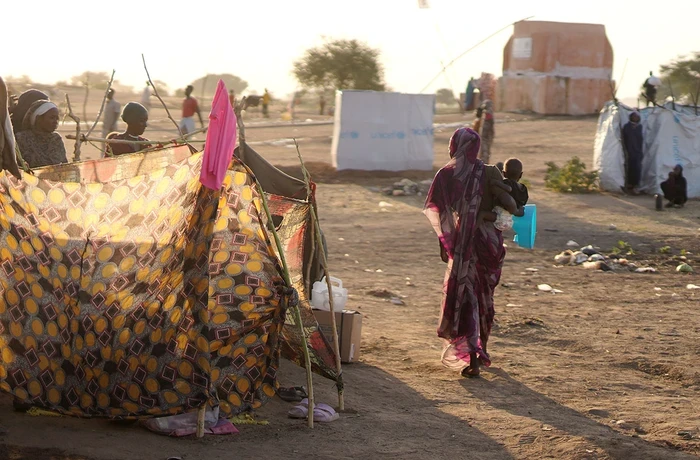
A woman holding a child, facing away from the camera, walks past makeshift tents
Feature

“I feel like I am a warrior”: Sudanese women fight for peace on the front lines of war

23 October 2026
“I feel like I am a warrior”: Sudanese women fight for peace on the front lines of war

Footer menu-HQ

  • News and stories
  • Resources
  • What we do
  • How we work
  • Where we are
  • Partnerships
  • Employment
  • Procurement
  • Contact us
  • Executive Board
  • Commission on the Status of Women

Donate button menu [Footer tablet]

  • Donate

Donate button menu [Footer]

  • Donate

Social media menu

  • Facebook
  • Twitter
  • LinkedIn
  • Flickr
  • YouTube
  • Instagram
UN Women - For all women and girls

Footer bottom [Menu]

  • Copyright
  • Information security
  • Privacy notice
  • Report wrongdoing
  • Terms of use
Share this page
  • Share to Facebook
  • Share to Twitter
  • Share to LinkedIn
  • Share to E-mail

Or copy link