
Universal menu

  • Global
  • Regions
    • Africa
    • Americas and the Caribbean
    • Arab States
    • Asia and the Pacific
    • Europe and Central Asia
  • Knowledge
  • Data
  • Training
  • Transparency
UN Women - For all women and girls

Main Navigation-HQ

  • Who we are
    • About us
      • About UN Women
      • Business model
      • Guiding documents
      • Worldwide presence
    • Leadership
      • Governance structure
      • Executive leadership
      • Executive Board
      • Accountability
    • Work with us
      • Employment
      • Procurement
      • Calls for proposals
      • Contact us
      • UN Women Strategic Plan 2026–2029
      • UN Women Strategic Plan 2026–2029 - social media image
        UN Women Strategic Plan 2026–2029
  • What we do
    • Focus areas
      • Ending violence against women
      • Peace and security
      • Humanitarian action
      • Leadership and governance
      • Economic empowerment
      • Innovation and technology
      • Women with disabilities
      • Youth
      • HIV and AIDS
    • How we work
      • 2030 Agenda for Sustainable Development
      • Commission on the Status of Women
      • Gender parity in the UN system
      • Intergovernmental support
      • Partnerships
      • Research and data
      • Training Centre
      • Trust funds
      • UN system coordination
      • Gender Equality Accelerators
      • Gender Equality Accelerators artwork
        Gender Equality Accelerators
  • News and stories
    • Latest
      • News
      • Articles and explainers
      • In focus
    • Media center
      • Press materials
      • Media contacts
      • Explainer: Why are women so exhausted? Care work and the mental load
      • Two adults stand at a table changing diapers on baby dolls, with laundry hanging on a clothesline behind them in a home setting.
        Explainer: Why are women so exhausted? Care work and the mental load
      • Press release: Aid cuts dismantle women’s organizations working in humanitarian crises
      • A young Ugandan woman sits with another local woman to talk
        Press release: Aid cuts dismantle women’s organizations working in humanitarian crises
  • Digital library
    • Resources
      • Publications
      • Annual reports
      • Gender snapshot
      • Progress of the world’s women
      • World survey on the role of women in development
    • GenderTerm
      • GenderTerm
      • Reprint permissions
      • UN Women Highlights 2025–2026
      • A smiling woman.
        UN Women Highlights 2025–2026
      • Gender snapshot 2026
      • A diverse group of people represented as simplified silhouettes, arranged against a dark blue background.
        Gender snapshot 2026
  • Get involved
    • How to get involved
      • For ALL Women and Girls
      • International Women's Day
      • 16 Days of Activism to End Violence against Women and Girls
      • UNiTE! Campaign to End Violence against Women
      • Generation Equality
      • He for She
Ask AI
https://84e5cfacd5c7e99f9825edf344450c.1b.environment.api.powerplatform.com/powervirtualagents/botsbyschema/crad4_websiteQA/directline/token?api-version=2022-03-01-preview
1
-
Ask your question here
AI website assistant

Hello, how can I assist you?

AI chatbot responses may be incorrect. Always verify important information.

Donate button menu

Donate

Breadcrumb

  1. Home
  2. News and stories
  3. Feature story

Website survey

We want to know how we can improve your experience on this website. Completing this survey takes less than 5 minutes.

TAKE THE SURVEY
Feature

Weather forecasts shift climate change impact for women farmers in Malawi
28 February 2022
  • Share to Facebook
  • Share to Twitter
  • Share to LinkedIn
  • Share to E-mail
Image
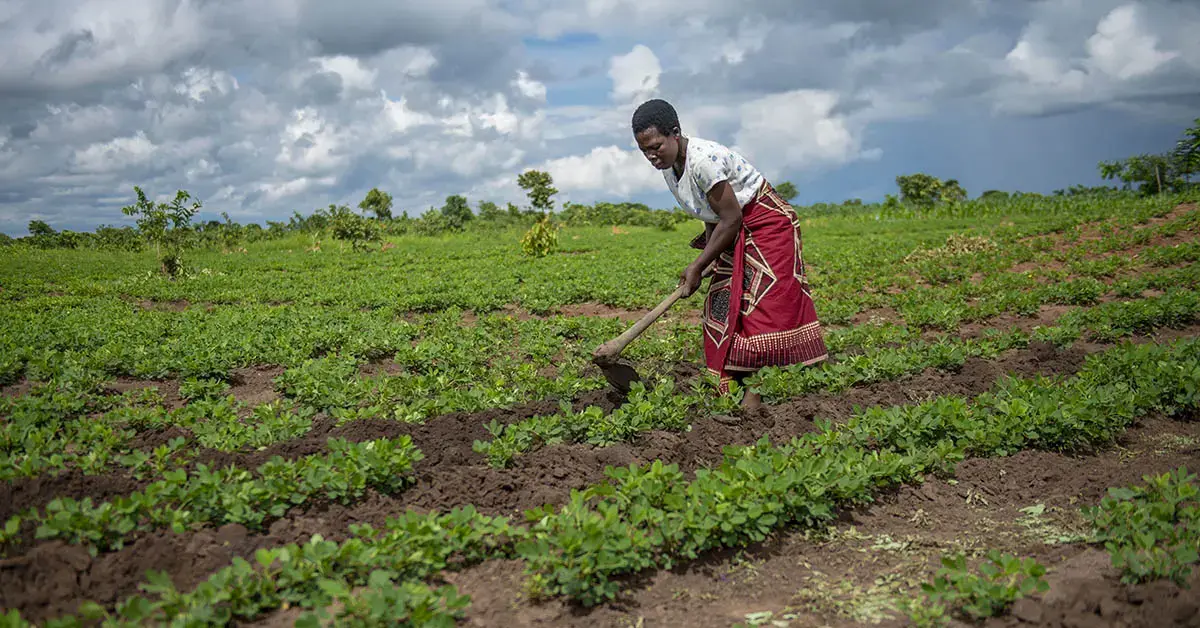
UN Women uses funds from Standard Bank to increase women’s agricultural productivity using climate smart techniques like double row planting and providing early weather information. Photo: UN Women/Bennie Khanyizira
UN Women uses funds from Standard Bank to increase women’s agricultural productivity using climate smart techniques like double row planting and providing early weather information. Photo: UN Women/Bennie Khanyizira.

As grey clouds start moving over the fields in Mkanda village in central Malawi, 43-year-old Jennifer Lipungaa inspects her two-acre groundnut farm. Unlike in the past, Lipunga is no longer worried about negative weather impacts affecting her crop, thanks to Climate Smart Agriculture (CSA) interventions.

“Two years ago, we planted seeds months before the rains fell, the rains delayed further and the temperature continued to rise, ruining the planted seed. Most of our crop was damaged and we only harvested 21 kg of groundnuts” says Lipunga.

The mother of six could only sell a small amount of groundnuts and struggled to feed and care for her family. “With the change of weather patterns, we needed to know the best time to plant, ” she says.

Agriculture is an important sector for Malawi’s economy, and women contribute between 60 and 80 per cent of the agricultural labour force. Small-scale agriculture in Malawi is mostly rain-fed, making farmers vulnerable to the impacts of weather variability and climate change.

Image
Women farmers are increasing agricultural productivity using techniques learned from UN Women. Photo: UN Women/Bennie Khanyizira

Despite significant contribution to the agriculture sector in Malawi, rural women farmers’ agricultural yields and production remains lower than that of men. Several barriers keep farmers, particularly women and other vulnerable groups, from adopting climate change adaptation strategies like climate smart agriculture reducing their exposure to climate-related risks. Systematic gender differences in agricultural productivity continue to persist, due to women’s limited access to and use of agricultural necessities such as seed, fertilizers, pesticides, and access to markets and credit.

Access to weather forecasts for smallholder farming communities is a big challenge in many parts of the county.

UN Women, in collaboration with the Ministry of Agriculture and the Department of Climate Change and Meteorological Services, provide and disseminate location specific weather forecast in the local language and in a simple format to help farmers determine the onset of planting rains so that they can plant on time.

“With support from Standard Bank, UN Women is working with partners to enhance livelihoods of 10,000 women and their households through increasing women’s agricultural productivity using climate smart agriculture techniques and approaches in the production and marketing of the groundnuts value chain thereby building their resilience to climate change through provision of resources, skills and improved technology,” says Clara Anyangwe, UN Women Representative in Malawi.

Image
Grear Hara, a farmer from northern Malawi follows advice to plant groundnuts early. Photo: UN Women/Bennie Khanyizira
Grear Hara, a farmer from northern Malawi follows advice to plant groundnuts early. Photo: UN Women/Bennie Khanyizira.

Through this intervention, women farmers in cooperatives, like Jennifer Lipunga, received accurate and timely information to adopt other climate smart technologies like double-row planting to increase productivity and secure resilient livelihoods. Weather information complemented other Climate Smart Agriculture technologies which helped farmers to plan the acquisition and deployment of inputs and farm level operations better.

“The women producers who are the primary beneficiaries were given weather forecast information from the Department of Climate Change and Meteorological Services in good time which informed decision on land preparations, mobilizing critical inputs like certified seed for planting with the first planting rains as projected by the technical people. Planting with first rains, use of certified seed of improved varieties and planting patterns like double-row planting of groundnuts are some of the important CSA interventions. All these hinge on the farmers ability to access and use weather forecast information,” says Chawezi Banda, an officer at the African Institute of Corporate Citizenship.

Receiving weather information has made a big difference in mitigating negative weather impacts for Lipunga.

“This opportunity of receiving information about the weather has changed my farming practice, I now easily get the information that has helped me harvest bigger crop yields.”

During the last harvest, she earned more that USD 440 after selling her groundnuts enabling her to put a roof on her house and pay her children’s school fees.

“Through this initiative I realized that I too can help other farmers to cope with weather changes. When I receive the forecast, I spread the information to farmers in my community via mobile phone messages or home visits. We are facing this climate change together” Lipunga says.

Topics

  • 2030 Agenda for Sustainable Development
  • Climate change
  • Women farmers
  • Rural women
  • Africa
  • Malawi

Related content

Image
UNWomen_Placeholder
Press briefing

Nine in 10 organizations say trauma persists among women and girls displaced from El Fasher a year after its fall

23 October 2026
Nine in 10 organizations say trauma persists among women and girls displaced from El Fasher a year after its fall
Image
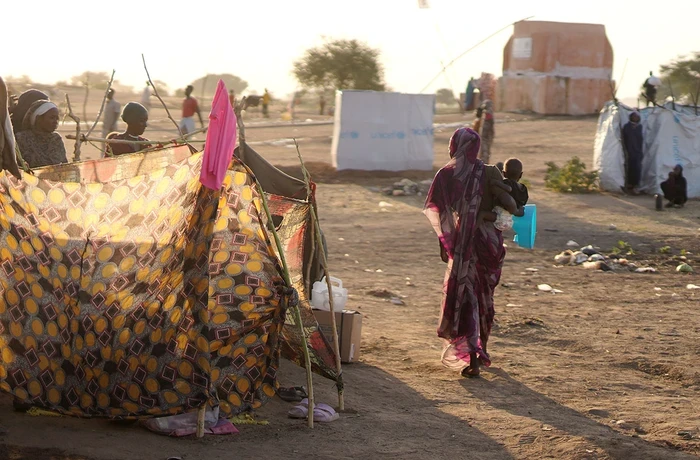
A woman holding a child, facing away from the camera, walks past makeshift tents
Feature

“I feel like I am a warrior”: Sudanese women fight for peace on the front lines of war

23 October 2026
“I feel like I am a warrior”: Sudanese women fight for peace on the front lines of war
Image
Photo collage of women
Statement

UN Women statement for the International Day of Rural Women, 15 October 2026

13 October 2026
UN Women statement for the International Day of Rural Women, 15 October 2026

Footer menu-HQ

  • News and stories
  • Resources
  • What we do
  • How we work
  • Where we are
  • Partnerships
  • Employment
  • Procurement
  • Contact us
  • Executive Board
  • Commission on the Status of Women

Donate button menu [Footer tablet]

  • Donate

Donate button menu [Footer]

  • Donate

Social media menu

  • Facebook
  • Twitter
  • LinkedIn
  • Flickr
  • YouTube
  • Instagram
UN Women - For all women and girls

Footer bottom [Menu]

  • Copyright
  • Information security
  • Privacy notice
  • Report wrongdoing
  • Terms of use
Share this page
  • Share to Facebook
  • Share to Twitter
  • Share to LinkedIn
  • Share to E-mail

Or copy link