
Universal menu

  • Global
  • Regions
    • Africa
    • Americas and the Caribbean
    • Arab States
    • Asia and the Pacific
    • Europe and Central Asia
  • Knowledge
  • Data
  • Training
  • Transparency
UN Women - For all women and girls

Main Navigation-HQ

  • Who we are
    • About us
      • About UN Women
      • Business model
      • Guiding documents
      • Worldwide presence
    • Leadership
      • Governance structure
      • Executive leadership
      • Executive Board
      • Accountability
    • Work with us
      • Employment
      • Procurement
      • Calls for proposals
      • Contact us
      • UN Women Strategic Plan 2026–2029
      • UN Women Strategic Plan 2026–2029 - social media image
        UN Women Strategic Plan 2026–2029
  • What we do
    • Focus areas
      • Ending violence against women
      • Peace and security
      • Humanitarian action
      • Leadership and governance
      • Economic empowerment
      • Innovation and technology
      • Women with disabilities
      • Youth
      • HIV and AIDS
    • How we work
      • 2030 Agenda for Sustainable Development
      • Commission on the Status of Women
      • Gender parity in the UN system
      • Intergovernmental support
      • Partnerships
      • Research and data
      • Training Centre
      • Trust funds
      • UN system coordination
      • Gender Equality Accelerators
      • Gender Equality Accelerators artwork
        Gender Equality Accelerators
  • News and stories
    • Latest
      • News
      • Articles and explainers
      • In focus
    • Media center
      • Press materials
      • Media contacts
      • Explainer: Why are women so exhausted? Care work and the mental load
      • Two adults stand at a table changing diapers on baby dolls, with laundry hanging on a clothesline behind them in a home setting.
        Explainer: Why are women so exhausted? Care work and the mental load
      • Press release: Aid cuts dismantle women’s organizations working in humanitarian crises
      • A young Ugandan woman sits with another local woman to talk
        Press release: Aid cuts dismantle women’s organizations working in humanitarian crises
  • Digital library
    • Resources
      • Publications
      • Annual reports
      • Gender snapshot
      • Progress of the world’s women
      • World survey on the role of women in development
    • GenderTerm
      • GenderTerm
      • Reprint permissions
      • UN Women Highlights 2025–2026
      • A smiling woman.
        UN Women Highlights 2025–2026
      • Gender snapshot 2026
      • A diverse group of people represented as simplified silhouettes, arranged against a dark blue background.
        Gender snapshot 2026
  • Get involved
    • How to get involved
      • For ALL Women and Girls
      • International Women's Day
      • 16 Days of Activism to End Violence against Women and Girls
      • UNiTE! Campaign to End Violence against Women
      • Generation Equality
      • He for She
Ask AI
https://84e5cfacd5c7e99f9825edf344450c.1b.environment.api.powerplatform.com/powervirtualagents/botsbyschema/crad4_websiteQA/directline/token?api-version=2022-03-01-preview
1
-
Ask your question here
AI website assistant

Hello, how can I assist you?

AI chatbot responses may be incorrect. Always verify important information.

Donate button menu

Donate

Breadcrumb

  1. Home
  2. News and stories
  3. Feature story

Website survey

We want to know how we can improve your experience on this website. Completing this survey takes less than 5 minutes.

TAKE THE SURVEY
Feature

Believe Survivors. Act Now. Goretti’s Story, Kenya

12 November 2021
  • Share to Facebook
  • Share to Twitter
  • Share to LinkedIn
  • Share to E-mail
Image
illustration of a mother and child tending a garden.

Nearly 1 in 3 women have experienced violence, globally. In times of crises, the numbers may be even higher. Gender-based violence is the most pervasive violation of human rights, but it is neither natural, nor inevitable. It can and must be prevented. Stopping this violence starts with believing survivors and taking action, every day. Through this special editorial series for the 16 Days of Activism, UN Women showcases the voices of survivors, and the transformative programmes that make real differences.

Trigger warning: The following story includes descriptions of gender-based violence.

Image
Goretti Ondola, at right, speaks with Caren Omanga of the  Nyando Social Justice Centre.  Photo: UN Women/Luke Horswell
Goretti Ondola, at right, speaks with Caren Omanga of the Nyando Social Justice Centre. Photo: UN Women/Luke Horswell

“In 2001, I came back to [Western Kenya] to bury my husband. In the local culture, if the husband dies, the widow is expected to remain in the family’s homestead,” explains Goretti Ondola. “As part of the family, you’re expected to live with your mother-in-law if you don’t have your own property. But they wouldn’t give me food. Everything I came with from Nairobi – clothes, household items – were taken from me and divided between the family.”

Dowries – a transaction of money or livestock from the groom’s to the bride’s family – are still common in Kenya. The dowry paid to Ondola’s family trapped her in a life of abuse for nearly 20 years after her husband’s death. In late 2020, they beat her so badly that she was hospitalised and unable to work.

In rural Kenya, people are often hesitant to go to local law enforcement. Ondola reached out to a local human rights defender instead.

“The human rights defender helped me get to the medical centre and report the case to the local police station. When I reported the case, [the police] said they didn’t have a vehicle to ago and arrest (the culprits). I also learned that the perpetrators had already contacted the police. They even [forged] an agreement in my name to withdraw the case… but I cannot even write,” recalls Ondola.

Human rights defenders in Kenya are often the first responders to human rights violations, including gender-based violence. Since 2019, UN Women and the UN Office of the High Commissioner for Human Rights (UN Human Rights) has been supporting legal training and capacity-building of grass-roots organizations so that they can better assist survivors. The project, funded by the Government of Italy, aims to increase access to justice for survivors and facilitate peaceful elections in 2022.

Caren Omanga is one of the human rights defenders who received the training. She is also the chairperson of the Nyando Social Justice Centre, situated approximately 30 km east of Kisumu, the third-largest city in Kenya. She came to Ondola’s assistance and reported the issue to the local police commander and the courts. Knowing that community disputes are often settled outside state legal channels, she appealed to the local elders as well.

“I was almost arrested when confronting the officer-in-charge,” explains Omanga. “But I knew the community would be against her, so I started the alternative dispute-resolution process, while pushing the case to court. There were a number of irregularities with how the case was handled, so I ensured these were made clear to the magistrate and the prosecutors.”

Ondola’s case was finally settled outside of court with an agreement that granted Ondola her own property and land title, and the perpetrators had to pay fines to avoid prison sentences.

“It is like beginning a new life after 20 years, and my son is feeling more secure… I’m thinking of planting some trees to safeguard the plot and building a poultry house. In our home, I want a kitchen to make life a bit more comfortable,” says Ondola.

Preventing violence against women in Kenya

During electoral periods, Kenya often sees a surge in sexual and gender-based violence cases. Tensions run high, and women bear the brunt of the violence. The Kenya National Commission on Human Rights reported 201 sexual violence cases during the 2017 elections, between August and December. Only 22 per cent of the cases were reported to police, and 54 per cent of the reported crimes were perpetrated by security and law enforcement officials.

How you can take action

  • Listen to survivors, refer them to appropriate support services, and amplify their stories using #OrangeTheWorld
  • Fund women’s rights organizations. Start by taking the #Give25forUNTF25 challenge
  • Speak up. Challenge your peers to reflect on their own behaviours, call out sexist comments and behaviours, and speak up when someone crosses the line

Since 2019, with support from the Government of Italy, UN Women Kenya and UN Human Rights have been working in Western Kenya and Nairobi on prevention and response mechanisms to reduce violence against women during elections. Strengthening the capacities of human rights defenders, who are community volunteers assisting survivors, is one of the main strategies of the project.

Wangechi Kahuria, UN Women expert in Kenya, explains that “one of the critical components of the project is to empower the community in sexual and gender-based violence response. They are often the first responders and should therefore be equipped to deal with cases. This means training [them] on responding to survivors, understanding the referral pathways from a legal perspective, but also ensuring that human rights defenders have the support they need, to avoid burnout.”

The project has trained more than 38 human rights defenders in Western Kenya and Nairobi, and 555 survivors have accessed legal aid and psychosocial counselling in 2020.

The project is also working with the country’s senior law enforcement officers to improve internal reporting mechanisms and to facilitate positive reforms within the justice sector. A criminal justice manual has been produced, which guides law enforcement, health and legal aid officers in the appropriate management of gender-based violence cases.

If you have experienced abuse, feel threatened, unsafe or need assistance, help is available. Find helplines here. Learn about some common signs of abuse and how to help here

Topics

  • Economic empowerment
  • Inheritance rights
  • Land and property
  • Ending violence against women and girls
  • Service delivery
  • Africa
  • Kenya
  • Italy

Related content

Image
UNWomen_Placeholder
Statement

UN Women statement for the International Day of Care and Support 2026

28 October 2026
UN Women statement for the International Day of Care and Support 2026
Image
UNWomen_Placeholder
Press briefing

Nine in 10 organizations say trauma persists among women and girls displaced from El Fasher a year after its fall

23 October 2026
Nine in 10 organizations say trauma persists among women and girls displaced from El Fasher a year after its fall
Image
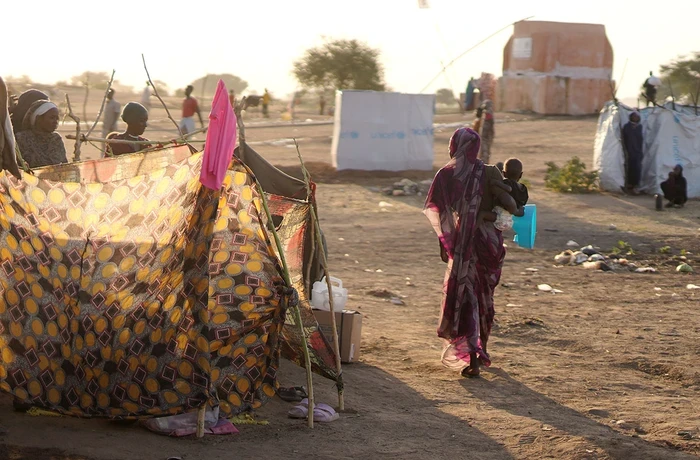
A woman holding a child, facing away from the camera, walks past makeshift tents
Feature

“I feel like I am a warrior”: Sudanese women fight for peace on the front lines of war

23 October 2026
“I feel like I am a warrior”: Sudanese women fight for peace on the front lines of war

Footer menu-HQ

  • News and stories
  • Resources
  • What we do
  • How we work
  • Where we are
  • Partnerships
  • Employment
  • Procurement
  • Contact us
  • Executive Board
  • Commission on the Status of Women

Donate button menu [Footer tablet]

  • Donate

Donate button menu [Footer]

  • Donate

Social media menu

  • Facebook
  • Twitter
  • LinkedIn
  • Flickr
  • YouTube
  • Instagram
UN Women - For all women and girls

Footer bottom [Menu]

  • Copyright
  • Information security
  • Privacy notice
  • Report wrongdoing
  • Terms of use
Share this page
  • Share to Facebook
  • Share to Twitter
  • Share to LinkedIn
  • Share to E-mail

Or copy link