
Universal menu

  • Global
  • Regions
    • Africa
    • Americas and the Caribbean
    • Arab States
    • Asia and the Pacific
    • Europe and Central Asia
  • Knowledge
  • Data
  • Training
  • Transparency
UN Women - For all women and girls

Main Navigation-HQ

  • Who we are
    • About us
      • About UN Women
      • Business model
      • Guiding documents
      • Worldwide presence
    • Leadership
      • Governance structure
      • Executive leadership
      • Executive Board
      • Accountability
    • Work with us
      • Employment
      • Procurement
      • Calls for proposals
      • Contact us
      • UN Women Strategic Plan 2026–2029
      • UN Women Strategic Plan 2026–2029 - social media image
        UN Women Strategic Plan 2026–2029
  • What we do
    • Focus areas
      • Ending violence against women
      • Peace and security
      • Humanitarian action
      • Leadership and governance
      • Economic empowerment
      • Innovation and technology
      • Women with disabilities
      • Youth
      • HIV and AIDS
    • How we work
      • 2030 Agenda for Sustainable Development
      • Commission on the Status of Women
      • Gender parity in the UN system
      • Intergovernmental support
      • Partnerships
      • Research and data
      • Training Centre
      • Trust funds
      • UN system coordination
      • Gender Equality Accelerators
      • Gender Equality Accelerators artwork
        Gender Equality Accelerators
  • News and stories
    • Latest
      • News
      • Articles and explainers
      • In focus
    • Media center
      • Press materials
      • Media contacts
      • Explainer: Why are women so exhausted? Care work and the mental load
      • Two adults stand at a table changing diapers on baby dolls, with laundry hanging on a clothesline behind them in a home setting.
        Explainer: Why are women so exhausted? Care work and the mental load
      • Press release: Aid cuts dismantle women’s organizations working in humanitarian crises
      • A young Ugandan woman sits with another local woman to talk
        Press release: Aid cuts dismantle women’s organizations working in humanitarian crises
  • Digital library
    • Resources
      • Publications
      • Annual reports
      • Gender snapshot
      • Progress of the world’s women
      • World survey on the role of women in development
    • GenderTerm
      • GenderTerm
      • Reprint permissions
      • UN Women Highlights 2025–2026
      • A smiling woman.
        UN Women Highlights 2025–2026
      • Gender snapshot 2026
      • A diverse group of people represented as simplified silhouettes, arranged against a dark blue background.
        Gender snapshot 2026
  • Get involved
    • How to get involved
      • For ALL Women and Girls
      • International Women's Day
      • 16 Days of Activism to End Violence against Women and Girls
      • UNiTE! Campaign to End Violence against Women
      • Generation Equality
      • He for She
Ask AI
https://84e5cfacd5c7e99f9825edf344450c.1b.environment.api.powerplatform.com/powervirtualagents/botsbyschema/crad4_websiteQA/directline/token?api-version=2022-03-01-preview
1
-
Ask your question here
AI website assistant

Hello, how can I assist you?

AI chatbot responses may be incorrect. Always verify important information.

Donate button menu

Donate

Breadcrumb

  1. Home
  2. News and stories
  3. Speech

Website survey

We want to know how we can improve your experience on this website. Completing this survey takes less than 5 minutes.

TAKE THE SURVEY
Speech

Speech: Justice goes beyond the courtroom to encompass accessible, coordinated, and adequately resourced systems

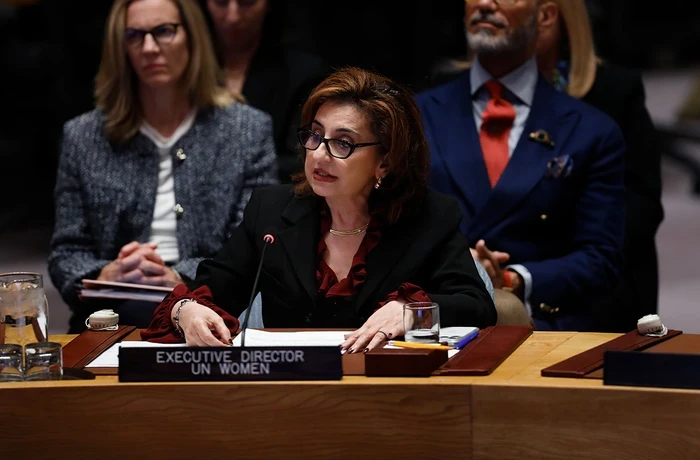
Remarks by UN Women Executive Director Sima Bahous at the CSW high-level meeting on the occasion of the 5th anniversary of the Group of Friends for the Elimination of Violence against Women and Girls, on 12 March 2026, at the UN Headquarters.

12 March 2026
UN Women Executive Director Sima Bahous
  • Share to Facebook
  • Share to Twitter
  • Share to LinkedIn
  • Share to E-mail

[As delivered.]

It is an honour to join you here today to mark the five years of the Group of Friends for the Elimination of Violence against Women and Girls. Very difficult to speak after these two wonderful speakers, which we heard just before, but I will continue to proceed with my speech.

The Group, this Group, was born of crisis and instability during COVID. Today that sense of crisis and instability is changed but it is not diminished.

Conflict has intensified. Democratic spaces are contracting. Digital technologies outpace safeguards, facilitating old forms of violence while making possible new ones. Prevalence remains of violence against women and girls horrific, with one in three women reporting lifetime physical or sexual violence.

Image
UN Women Executive Director Sima Bahous delivers remarks at the CSW high-level meeting on the occasion of the 5th anniversary of the Group of Friends for the Elimination of Violence against Women and Girls, 12 March 2026, UN Headquarters. Photo: UN Women/Ryan Brown.

We have not been idle. Since 2019, 90 per cent of Member States have strengthened laws on violence against women and girls. Seventy-nine per cent have updated or expanded national action plans. Now we need action.

Despite this, too many survivors encounter fragmented and biased systems across police, across courts, across health services, and social protection. Too many lack access to legal aid. Less than 10 per cent report violence because it feels futile or unsafe to report it, thereby undermining deterrence and fuelling impunity.

And the strong feminist movements and organizations we depend on are ever-more underfunded. UN Women’s analysis shows us that over one third are suspending programmes addressing violence, and almost all reporting severe reductions in women’s and girls’ access to essential services.

We have spent the past few days discussing access to justice—the priority theme of this 70th session of the Commission on the Status of Women.

We applaud the agreed conclusions that were adopted by a large majority on Monday, calling for greater justice, increased accountability, better protection for all women and girls.

Justice, as you know, goes beyond the courtroom to encompass accessible, coordinated, and adequately resourced systems, centred on survivors’ needs and dignity.

And I will quote just a few data points:

  • We know, now, that women face greater barriers to justice than men in nearly 70 per cent of countries. And globally, women hold just 64 per cent of the legal rights enjoyed by men in every single country of the world.
  • Less than 40 per cent of the women who experience violence seek help of any sort. In the majority of countries with available data on this issue, women who do seek help look to their family and to their friends, and very few seek support from formal institutions, such as police and health services. And less than 10 per cent of women who experience violence report it to the police.
  • Countries with domestic violence laws report significantly lower prevalence rates compared to those without such legislation.
  • And whole-of-government and comprehensive action to end violence against women is more effective. Prevalence rates are2.5 times lower in countries with comprehensive prevention and response measures.

So, we really need to act and to act fast.

Also, it is about budgeted national action plans and trained institutions. It is about prevention, accountability, and the clear signal that violence will not and will never be tolerated.

And UN Women, as you all know, works with Member States in all these areas and more.

Through the Spotlight Initiative, for example, which was supported by the EU [European Union], we have seen that when the UN acts together, it delivers major results. The UN’s unique strength lies in its ability to connect international commitments to real change in people’s lives. Between 2019 and 2024, coordinated UN action through Spotlight Initiative helped reform 548 laws related to violence against women and girls and gender equality, and doubled conviction rates in 13 countries. That is good, but we still have a long way to go.

With the leadership and support of governments and partners represented here today, and through initiatives like the EU-funded ACT to End Violence Against Women Programme, UN Women and the UN Trust Fund have strengthened feminist leadership, resilience, and institutional capacities of hundreds of CSOs [civil society organizations], facilitated evidence-based advocacy, and influenced legal change.

So, maintaining such progress depends on sustained political will, political leadership, and also investment.

With 96 Member States, this Group of Friends is a powerful force. It can drive visibility and momentum, keeping ending violence against women and girls at the top of a crowded agenda, and championing effective national approaches. It can also demand resources, including for the essential work of women’s rights organizations.

These five years have been inspiring. I thank the European Union for your leadership, and Member State leaders and the Secretary-General for their continued commitment. UN Women will continue to support this Group’s work with pride.

I believe we can go even further in the next five years. I believe we can outpace our challenges, accelerate our actions, surpass each success with the next.

That is our task and it is [our] responsibility. It is what we owe the women and girls of the world and what we owe humanity. And it is within our power to make this real.

I urge us all to vigorously sustain and deepen our partnerships towards this end.

And I thank you.
Topics

  • Ending violence against women and girls
  • Intergovernmental processes
  • Commission on the Status of Women
  • UN Women administration
  • Executive Director

Related content

Image
UN Under-Secretary-General and UN Women Executive Director Sima Bahous delivers remarks to the Security Council open debate on women and peace and security, UN headquarters, 27 October 2026. Photo: UN Women/Ryan Brown.
Speech

Speech: Do we have the courage to share power, the resolve to invest in women’s leadership, and the political will to turn our commitments into action?

27 October 2026
Speech: Do we have the courage to share power, the resolve to invest in women’s leadership, and the political will to turn our commitments into action?
Image
UNWomen_Placeholder
Press briefing

Nine in 10 organizations say trauma persists among women and girls displaced from El Fasher a year after its fall

23 October 2026
Nine in 10 organizations say trauma persists among women and girls displaced from El Fasher a year after its fall
Image
UNWomen_Placeholder
Statement

UN Women statement for the International Day of the Girl 2026

11 October 2026
UN Women statement for the International Day of the Girl 2026

Footer menu-HQ

  • News and stories
  • Resources
  • What we do
  • How we work
  • Where we are
  • Partnerships
  • Employment
  • Procurement
  • Contact us
  • Executive Board
  • Commission on the Status of Women

Donate button menu [Footer tablet]

  • Donate

Donate button menu [Footer]

  • Donate

Social media menu

  • Facebook
  • Twitter
  • LinkedIn
  • Flickr
  • YouTube
  • Instagram
UN Women - For all women and girls

Footer bottom [Menu]

  • Copyright
  • Information security
  • Privacy notice
  • Report wrongdoing
  • Terms of use
Share this page
  • Share to Facebook
  • Share to Twitter
  • Share to LinkedIn
  • Share to E-mail

Or copy link
