Universal menu

  • Global
  • Regions
    • Africa
    • Americas and the Caribbean
    • Arab States
    • Asia and the Pacific
    • Europe and Central Asia
  • Knowledge
  • Data
  • Training
  • Transparency
UN Women - For all women and girls

Main Navigation-HQ

  • Who we are
    • About us
      • About UN Women
      • Business model
      • Guiding documents
      • Worldwide presence
    • Leadership
      • Governance structure
      • Executive leadership
      • Executive Board
      • Accountability
    • Work with us
      • Employment
      • Procurement
      • Calls for proposals
      • Contact us
      • UN Women Strategic Plan 2026–2029
      • UN Women Strategic Plan 2026–2029 - social media image
        UN Women Strategic Plan 2026–2029
  • What we do
    • Focus areas
      • Ending violence against women
      • Peace and security
      • Humanitarian action
      • Leadership and governance
      • Economic empowerment
      • Innovation and technology
      • Women with disabilities
      • Youth
      • HIV and AIDS
    • How we work
      • 2030 Agenda for Sustainable Development
      • Commission on the Status of Women
      • Gender parity in the UN system
      • Intergovernmental support
      • Partnerships
      • Research and data
      • Training Centre
      • Trust funds
      • UN system coordination
      • Gender Equality Accelerators
      • Gender Equality Accelerators artwork
        Gender Equality Accelerators
  • News and stories
    • Latest
      • News
      • Articles and explainers
      • In focus
    • Media center
      • Press materials
      • Media contacts
      • Explainer: Why are women so exhausted? Care work and the mental load
      • Two adults stand at a table changing diapers on baby dolls, with laundry hanging on a clothesline behind them in a home setting.
        Explainer: Why are women so exhausted? Care work and the mental load
      • Press release: Aid cuts dismantle women’s organizations working in humanitarian crises
      • A young Ugandan woman sits with another local woman to talk
        Press release: Aid cuts dismantle women’s organizations working in humanitarian crises
  • Digital library
    • Resources
      • Publications
      • Annual reports
      • Gender snapshot
      • Progress of the world’s women
      • World survey on the role of women in development
    • GenderTerm
      • GenderTerm
      • Reprint permissions
      • UN Women Highlights 2025–2026
      • A smiling woman.
        UN Women Highlights 2025–2026
      • Gender snapshot 2026
      • A diverse group of people represented as simplified silhouettes, arranged against a dark blue background.
        Gender snapshot 2026
  • Get involved
    • How to get involved
      • For ALL Women and Girls
      • International Women's Day
      • 16 Days of Activism to End Violence against Women and Girls
      • UNiTE! Campaign to End Violence against Women
      • Generation Equality
      • He for She
Ask AI
https://84e5cfacd5c7e99f9825edf344450c.1b.environment.api.powerplatform.com/powervirtualagents/botsbyschema/crad4_websiteQA/directline/token?api-version=2022-03-01-preview
1
-
Ask your question here
AI website assistant

Hello, how can I assist you?

AI chatbot responses may be incorrect. Always verify important information.

Donate button menu

Donate

Breadcrumb

  1. Home
  2. News and stories
  3. Speech

Website survey

We want to know how we can improve your experience on this website. Completing this survey takes less than 5 minutes.

TAKE THE SURVEY
Speech

Speech: Women’s land rights are intrinsically and vitally linked to gender equality

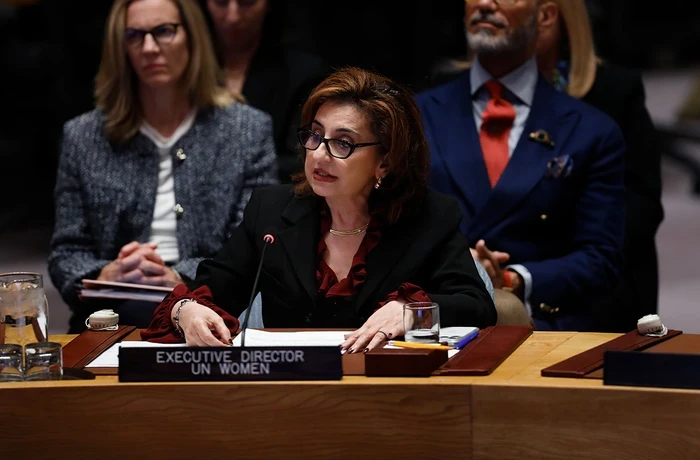
Remarks by UN Women Executive Director Sima Bahous at the Global Land Forum in Jordan, on 24 May 2022 (via video).

24 May 2022
UN Women Executive Director Sima Bahous
  • Share to Facebook
  • Share to Twitter
  • Share to LinkedIn
  • Share to E-mail

[As delivered.]

I would like to thank the Royal Hashemite Court of Jordan and the Government of Jordan, as well as the International Land Coalition, the European Union, and SEEDS for organizing this important Forum. UN Women welcomes and highly appreciates the Forum’s inclusive emphasis on women and young people.

Women’s land rights are intrinsically and vitally linked to gender equality. They are key enablers of women’s economic autonomy and decision-making. They are a major factor in rebalancing unequal power relations within homes, communities, and institutions. This makes land rights a central issue for the accelerated achievement of both the Sustainable Development Goals and the Beijing Platform for Action.

Yet, far too often, this powerful economic asset rests in the hands of men alone. In half of the world’s countries, women are still unable to assert equal land and property rights. Less than 15 per cent of all landholders in the world are women.

The denial of women’s rights to land impacts everyone. It leads to increasing land degradation, desertification, and water scarcity. Global events are already demonstrating how vulnerable we all are to changes in agricultural and energy supply. Recognizing the interlinked nature of the current multiple crises, the Commission on the Status of Women in March this year called for policies, programmes, and resources on climate change to respond to the resulting heightened vulnerabilities faced by women and girls.

Our solutions must also account for the negative impacts of COVID-19 on women’s land and property rights. For example, research by USAID finds that the pandemic aggravated women’s already-limited rights to customary land in southern Africa.

We must address the barriers to women’s land rights across the life cycle. Young, working-age, and older women face particular discrimination. Laws alone are not enough to solve this. Deeply rooted traditional and social norms strongly affect women’s access to and ownership of land and property, including being denied rightful inheritance.

One of the most powerful tools we have for these kinds of changes is Generation Equality and its dedicated Action Coalitions on Economic Justice and Rights and Feminist Action for Climate Justice. This multi-stakeholder global initiative seeks to radically accelerate progress on gender equality by 2026, connecting across different sectors to mobilize the necessary action and to amplify women’s voices.

I am encouraged by the formation of a Collective Commitment on Women’s Land Rights under Generation Equality. This will work on a large scale to secure land, natural resources, and other property rights for those most often left behind. This includes 100 million rural, urban, grassroots, and indigenous women and youth.

Today, I salute you for joining this movement. To achieve the progress we need, we must all work together, putting women at the centre of the solutions, restoring their rights, and giving our planet its chance to thrive.

Thank you.
Topics

  • 2030 Agenda for Sustainable Development
  • Sustainable Development Goals (SDGs)
  • Climate change
  • Campaigns
  • Generation Equality
  • Economic empowerment
  • Productive resources
  • Land and property
  • UN Women administration
  • Executive Director
  • Arab States/North Africa
  • Jordan

Related content

Image
UNWomen_Placeholder
Statement

UN Women statement for the International Day of Care and Support 2026

28 October 2026
UN Women statement for the International Day of Care and Support 2026
Image
UN Under-Secretary-General and UN Women Executive Director Sima Bahous delivers remarks to the Security Council open debate on women and peace and security, UN headquarters, 27 October 2026. Photo: UN Women/Ryan Brown.
Speech

Speech: Do we have the courage to share power, the resolve to invest in women’s leadership, and the political will to turn our commitments into action?

27 October 2026
Speech: Do we have the courage to share power, the resolve to invest in women’s leadership, and the political will to turn our commitments into action?
Image
UNWomen_Placeholder
Press briefing

Nine in 10 organizations say trauma persists among women and girls displaced from El Fasher a year after its fall

23 October 2026
Nine in 10 organizations say trauma persists among women and girls displaced from El Fasher a year after its fall

Footer menu-HQ

  • News and stories
  • Resources
  • What we do
  • How we work
  • Where we are
  • Partnerships
  • Employment
  • Procurement
  • Contact us
  • Executive Board
  • Commission on the Status of Women

Donate button menu [Footer tablet]

  • Donate

Donate button menu [Footer]

  • Donate

Social media menu

  • Facebook
  • Twitter
  • LinkedIn
  • Flickr
  • YouTube
  • Instagram
UN Women - For all women and girls

Footer bottom [Menu]

  • Copyright
  • Information security
  • Privacy notice
  • Report wrongdoing
  • Terms of use
Share this page
  • Share to Facebook
  • Share to Twitter
  • Share to LinkedIn
  • Share to E-mail

Or copy link