
Universal menu

  • Global
  • Regions
    • Africa
    • Americas and the Caribbean
    • Arab States
    • Asia and the Pacific
    • Europe and Central Asia
  • Knowledge
  • Data
  • Training
  • Transparency
UN Women - For all women and girls

Main Navigation-HQ

  • Who we are
    • About us
      • About UN Women
      • Business model
      • Guiding documents
      • Worldwide presence
    • Leadership
      • Governance structure
      • Executive leadership
      • Executive Board
      • Accountability
    • Work with us
      • Employment
      • Procurement
      • Calls for proposals
      • Contact us
      • UN Women Strategic Plan 2026–2029
      • UN Women Strategic Plan 2026–2029 - social media image
        UN Women Strategic Plan 2026–2029
  • What we do
    • Focus areas
      • Ending violence against women
      • Peace and security
      • Humanitarian action
      • Leadership and governance
      • Economic empowerment
      • Innovation and technology
      • Women with disabilities
      • Youth
      • HIV and AIDS
    • How we work
      • 2030 Agenda for Sustainable Development
      • Commission on the Status of Women
      • Gender parity in the UN system
      • Intergovernmental support
      • Partnerships
      • Research and data
      • Training Centre
      • Trust funds
      • UN system coordination
      • Gender Equality Accelerators
      • Gender Equality Accelerators artwork
        Gender Equality Accelerators
  • News and stories
    • Latest
      • News
      • Articles and explainers
      • In focus
    • Media center
      • Press materials
      • Media contacts
      • Explainer: Why are women so exhausted? Care work and the mental load
      • Two adults stand at a table changing diapers on baby dolls, with laundry hanging on a clothesline behind them in a home setting.
        Explainer: Why are women so exhausted? Care work and the mental load
      • Press release: Aid cuts dismantle women’s organizations working in humanitarian crises
      • A young Ugandan woman sits with another local woman to talk
        Press release: Aid cuts dismantle women’s organizations working in humanitarian crises
  • Digital library
    • Resources
      • Publications
      • Annual reports
      • Gender snapshot
      • Progress of the world’s women
      • World survey on the role of women in development
    • GenderTerm
      • GenderTerm
      • Reprint permissions
      • UN Women Highlights 2025–2026
      • A smiling woman.
        UN Women Highlights 2025–2026
      • Gender snapshot 2026
      • A diverse group of people represented as simplified silhouettes, arranged against a dark blue background.
        Gender snapshot 2026
  • Get involved
    • How to get involved
      • For ALL Women and Girls
      • International Women's Day
      • 16 Days of Activism to End Violence against Women and Girls
      • UNiTE! Campaign to End Violence against Women
      • Generation Equality
      • He for She
Ask AI
https://84e5cfacd5c7e99f9825edf344450c.1b.environment.api.powerplatform.com/powervirtualagents/botsbyschema/crad4_websiteQA/directline/token?api-version=2022-03-01-preview
1
-
Ask your question here
AI website assistant

Hello, how can I assist you?

AI chatbot responses may be incorrect. Always verify important information.

Donate button menu

Donate

Breadcrumb

  1. Home
  2. News and stories
  3. Press release

Website survey

We want to know how we can improve your experience on this website. Completing this survey takes less than 5 minutes.

TAKE THE SURVEY
Press release

Two billion women and girls worldwide lack access to any form of social protection, UN Women report shows

Women are lagging behind on measures such as unemployment benefits, pensions, or healthcare worldwide.

15 October 2024
  • Share to Facebook
  • Share to Twitter
  • Share to LinkedIn
  • Share to E-mail

New York, 15 October 2024 — UN Women’s latest flagship report reveals a widening gender gap in social protection – the raft of policies including cash benefits, unemployment protection, pensions and healthcare – leaving women and girls more vulnerable to poverty.

Published ahead of the International Day for the Eradication of Poverty on 17 October, the report shows that a staggering two billion women and girls are without access to any form of social protection. While levels of social protection have increased since 2015, gender gaps in such coverage have widened in most developing regions, suggesting that the recent gains have benefited men more than women.

The report shows the dismal state of maternity protection across the globe. Despite advancements, more than 63 per cent of women worldwide still give birth without access to maternity benefits, with the figure soaring to 94 per cent in sub-Saharan Africa. The lack of financial support during maternity leave not only places women at an economic disadvantage, it also compromises their health and well-being and that of their children, perpetuating poverty across generations.

The report paints a stark picture of the gendered nature of poverty. Women and girls are overrepresented among the poor at every stage of life, with the largest gaps during their childbearing years. Women aged 25-34 are 25 per cent more likely to live in extremely poor households than men in the same age group. Conflict and climate change exacerbate this inequality. Women in fragile contexts are 7.7 times more likely to live in extreme poverty compared to those in non-fragile environments.

Gender-specific risks and vulnerabilities are often neglected in the aftermath of shocks. For example, very high rates of inflation since 2022, which have led to spiraling food and energy prices, hit women particularly hard. Yet, out of nearly 1,000 social protection measures adopted by governments across 171 countries in the months that followed, only 18 per cent targeted women’s economic security, the report reveals.
Which government policies do the most to keep women out of poverty?

Through the right policies, governments can support women and girls to realize their rights and full potential.

Read more
Image
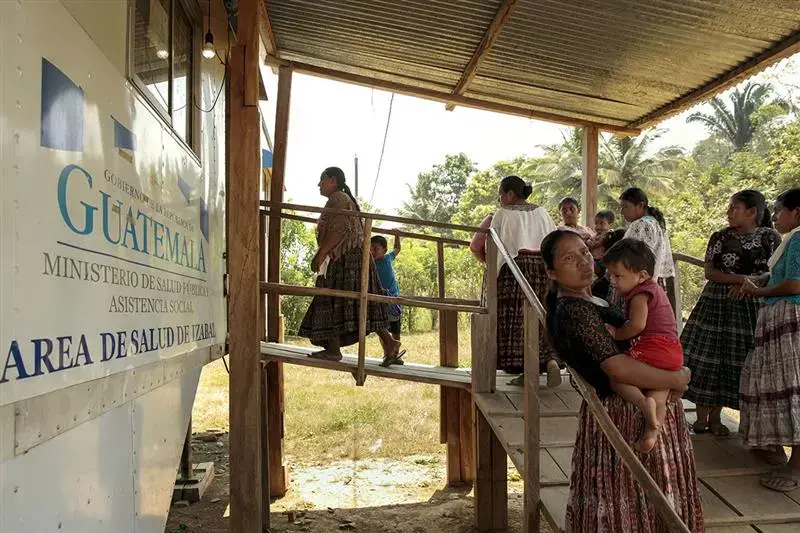
A free government-run mobile health clinic is seen in Guatemala, where it serves 70 to 80 people per day.

“The potential of social protection for gender equality, resilience and transformation is enormous. To harness this, we need to centre the dignity, agency and empowerment of women and girls at every stage of the process – from policy and programme design to delivery and financing”, said Sarah Hendriks, Director of the Policy, Programme and Intergovernmental Division at UN Women, presenting the report at a joint event with the UN Department of Economic and Social Affairs.

With contributions from academia, civil society and the UN system, notably the International Labour Organization, the report spotlights examples of progress. Countries such as Mongolia have extended maternity leave benefits to informal workers, including herders and the self-employed, while also strengthening paternity leave to support gender equality in caregiving responsibilities. In countries like Mexico and Tunisia, steps have been taken to include domestic workers in social security systems. In Senegal, the National Health Insurance scheme has extended and adapted its services to cater to rural women, with support from UN Women.

These initiatives demonstrate the transformative potential of social protection systems, policies and programmes that are gender-responsive, i.e. that pay special attention to the unique challenges that women and girls face.

In this world of turmoil, UN Women’s report calls on governments to provide women and girls with sustainable pathways out of poverty, by prioritizing the needs of women and girls in their social protection measures and crisis responses.

For media inquiries, contact [ Click to reveal ].

Topics

  • 2030 Agenda for Sustainable Development
  • Sustainable Development Goals (SDGs)
  • Poverty
  • Social protection

Related content

Image
UNWomen_Placeholder
Press briefing

Nine in 10 organizations say trauma persists among women and girls displaced from El Fasher a year after its fall

23 October 2026
Nine in 10 organizations say trauma persists among women and girls displaced from El Fasher a year after its fall
Image
Photo collage of women
Statement

UN Women statement for the International Day of Rural Women, 15 October 2026

13 October 2026
UN Women statement for the International Day of Rural Women, 15 October 2026
Image
Ma Nowai Kaine (centre) and two other women from Sargent Kollie Town, Bong County, Liberia, hold mobile phones received through the D4WEE Project, implemented by UN Women with support from the Orange Foundation. Photo: UN Women/Aisha Kolubah.
Feature

For rural women in Liberia, digital and economic empowerment go hand-in-hand

1 October 2026
For rural women in Liberia, digital and economic empowerment go hand-in-hand

Footer menu-HQ

  • News and stories
  • Resources
  • What we do
  • How we work
  • Where we are
  • Partnerships
  • Employment
  • Procurement
  • Contact us
  • Executive Board
  • Commission on the Status of Women

Donate button menu [Footer tablet]

  • Donate

Donate button menu [Footer]

  • Donate

Social media menu

  • Facebook
  • Twitter
  • LinkedIn
  • Flickr
  • YouTube
  • Instagram
UN Women - For all women and girls

Footer bottom [Menu]

  • Copyright
  • Information security
  • Privacy notice
  • Report wrongdoing
  • Terms of use
Share this page
  • Share to Facebook
  • Share to Twitter
  • Share to LinkedIn
  • Share to E-mail

Or copy link