
Universal menu

  • Global
  • Regions
    • Africa
    • Americas and the Caribbean
    • Arab States
    • Asia and the Pacific
    • Europe and Central Asia
  • Knowledge
  • Data
  • Training
  • Transparency
UN Women - For all women and girls

Main Navigation-HQ

  • Who we are
    • About us
      • About UN Women
      • Business model
      • Guiding documents
      • Worldwide presence
    • Leadership
      • Governance structure
      • Executive leadership
      • Executive Board
      • Accountability
    • Work with us
      • Employment
      • Procurement
      • Calls for proposals
      • Contact us
      • UN Women Strategic Plan 2026–2029
      • UN Women Strategic Plan 2026–2029 - social media image
        UN Women Strategic Plan 2026–2029
  • What we do
    • Focus areas
      • Ending violence against women
      • Peace and security
      • Humanitarian action
      • Leadership and governance
      • Economic empowerment
      • Innovation and technology
      • Women with disabilities
      • Youth
      • HIV and AIDS
    • How we work
      • 2030 Agenda for Sustainable Development
      • Commission on the Status of Women
      • Gender parity in the UN system
      • Intergovernmental support
      • Partnerships
      • Research and data
      • Training Centre
      • Trust funds
      • UN system coordination
      • Gender Equality Accelerators
      • Gender Equality Accelerators artwork
        Gender Equality Accelerators
  • News and stories
    • Latest
      • News
      • Articles and explainers
      • In focus
    • Media center
      • Press materials
      • Media contacts
      • Explainer: Why are women so exhausted? Care work and the mental load
      • Two adults stand at a table changing diapers on baby dolls, with laundry hanging on a clothesline behind them in a home setting.
        Explainer: Why are women so exhausted? Care work and the mental load
      • Press release: Aid cuts dismantle women’s organizations working in humanitarian crises
      • A young Ugandan woman sits with another local woman to talk
        Press release: Aid cuts dismantle women’s organizations working in humanitarian crises
  • Digital library
    • Resources
      • Publications
      • Annual reports
      • Gender snapshot
      • Progress of the world’s women
      • World survey on the role of women in development
    • GenderTerm
      • GenderTerm
      • Reprint permissions
      • UN Women Highlights 2025–2026
      • A smiling woman.
        UN Women Highlights 2025–2026
      • Gender snapshot 2026
      • A diverse group of people represented as simplified silhouettes, arranged against a dark blue background.
        Gender snapshot 2026
  • Get involved
    • How to get involved
      • For ALL Women and Girls
      • International Women's Day
      • 16 Days of Activism to End Violence against Women and Girls
      • UNiTE! Campaign to End Violence against Women
      • Generation Equality
      • He for She
Ask AI
https://84e5cfacd5c7e99f9825edf344450c.1b.environment.api.powerplatform.com/powervirtualagents/botsbyschema/crad4_websiteQA/directline/token?api-version=2022-03-01-preview
1
-
Ask your question here
AI website assistant

Hello, how can I assist you?

AI chatbot responses may be incorrect. Always verify important information.

Donate button menu

Donate

Breadcrumb

  1. Home
  2. News and stories
  3. Op-ed

Website survey

We want to know how we can improve your experience on this website. Completing this survey takes less than 5 minutes.

TAKE THE SURVEY
Op-ed

Expanding broadband safely and inclusively to reach digital gender equality

“Insight” by Ms. Sima Bahous, Broadband Commissioner, UN Under-Secretary-General and UN Women Executive Director

18 September 2022
  • Share to Facebook
  • Share to Twitter
  • Share to LinkedIn
  • Share to E-mail

First published in The State of Broadband 2022

Online and ICT-facilitated violence against women and girls is evolving and expanding, including sexual harassment, stalking, and zoom bombing[i]. Innovations, including virtual reality and the metaverse, are creating new digital spaces for misogyny and sexual violence.  Those relying on an online presence for their work, including women journalists, politicians, and activists, are disproportionately affected [ii]. And there is growing evidence of the reinforcing connection between online violence and real-life violence against women and girls,[iii] acts which often have important consequences for women’s and girls’ professional and personal lives[iv].  Women and girls must have safe and equal access to information, to become part of the next generation of innovators, tech and software engineers and online content creators.

More than half of girls and young women surveyed globally have experienced online violence[i]. One global study found that the majority of girls surveyed were only 14 to 16 years old when they first experienced online sexual harassment. Women belonging to ethnic minorities, indigenous women, lesbian, bisexual and transgender women, and women with disabilities are at even greater risk of online violence[ii]. 

In line with the work of the Generation Equality Action Coalition for Technology and Innovation for Gender Equality as well as our work with the EQUALS Global Partnerships and the Global Partnership for Action on Gender Based Online Harassment and Abuse, I propose two primary areas of focus to address this.

First, I recommend to governments that they ensure strong and clear codes of conduct for law enforcement officials addressing online violence against women and girls and invest in specialized justice officers to address such violence with a human rights and gender-sensitive approach.  I ask that they inform Internet users about existing safety protocols and how users can report cases of abuse and access essential services online, and that they actively engage women’s rights organizations to develop relevant guidance and good practices.

Governments can also strengthen the evidence base by generating quantitative and qualitative data on the different forms of violence against women and girls in digital contexts, sharing examples of promising and good practices with stakeholders to strengthen prevention and response efforts [iii].

Second, I recommend that internet intermediaries set high-level and clear commitments to uphold women’s and girls’ safety in online spaces. These include the design and improvement of tools and systems that prevent, detect, respond and monitor online violence as well as filtering, blocking and taking down illegal content on the Internet, in particular non-consensual filming and sharing of intimate images. I also ask that they demonstrate their accountability by generating quantitative and qualitative data on the different forms of online violence against women and girls on digital platforms [iv].

To increase safety online, I call for investment in education campaigns, including on preventing ICT-facilitated violence, sharing online safety advice, and providing accessible and transparent reporting and complaints procedures.

And I ask private sector and civil society organizations to work together to develop solutions; strengthen employee capacities to understand online violence; and encourage more women and girls to pursue education and employment in STEM [v].

We need a renewed drive towards safe, universal and meaningful connectivity[vi] more than ever – based on gender equality - and the Broadband Commission aims to achieve this across all targets by 2025.  As we invest in proactive measures to make this realization of rights a reality, we must also ensure safety in digital spaces.  Only then can we unlock the power of women and girls’ contributions.
[i] Zoombombing” describes the practice of disrupting or infiltrating a video-conference call and showing racially charged or sexually explicit material to the unexpecting participants. See Sexual Violence Research Initiative, “Online safety in a changing world – COVID-19 and cyber violence”, 2020

[ii] A/76/258 “Promotion and protection of the right to freedom of opinion and expression” Note by Secretary General; 2021

[iii] UNESCO Online Violence Against Women Journalists: A Global Snapshot of Incidents and Impacts, 2020. p.3

[iv] European Institute for Gender Equality, “Artificial intelligence, platform work and gender equality”, 2021.

[v] Plan International, “Free to Be Online?”, 2020, p. 7; World Wide Web Foundation and World Association of Girl Guides and Girl Scouts, “Survey - Young People’s Experience of Online Harassment”, 2020. See also U-Report, “Internet Safety Day - Online Harassment”, 8 February 2020.

[vi] A/HRC/38/47, “Report of the Special Rapporteur on violence against women, its causes and consequences on online violence against women

and girls from a human rights perspective” para. 28.; 2018

[vii] UN Women, “Online and ICT facilitated violence against women and girls during COVID-19”; 2020. p.6.

[viii] The Generation Equality Global Acceleration Plan: Blueprint for the Action Coalition on Technology and Innovation for Gender Equality, 2021 p. 104-123.

[ix] UN Women, “Online and ICT facilitated violence against women and girls during COVID-19”; 2020. p.7.

[x] ITU and United Nations Office of the Secretary-General’s Envoy on Technology; 2022. “Achieving Universal and Meaningful Digital Connectivity: Setting a Baseline and Targets for 2030”

Topics

  • Ending violence against women and girls
  • Information and communications technology (ICT)
  • Executive Director

Related content

Image
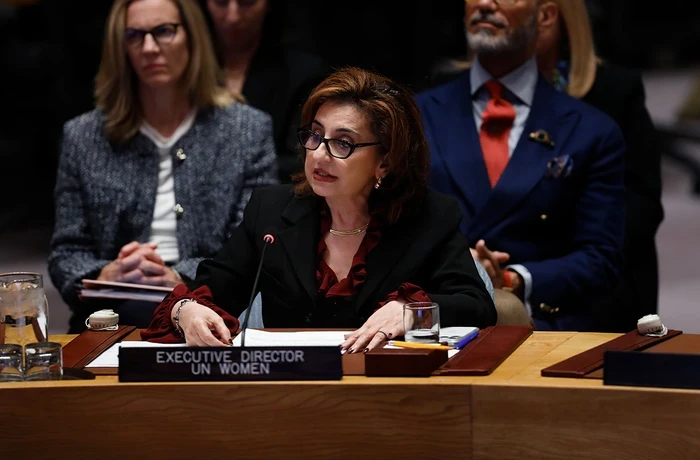
UN Under-Secretary-General and UN Women Executive Director Sima Bahous delivers remarks to the Security Council open debate on women and peace and security, UN headquarters, 27 October 2026. Photo: UN Women/Ryan Brown.
Speech

Speech: Do we have the courage to share power, the resolve to invest in women’s leadership, and the political will to turn our commitments into action?

27 October 2026
Speech: Do we have the courage to share power, the resolve to invest in women’s leadership, and the political will to turn our commitments into action?
Image
UNWomen_Placeholder
Press briefing

Nine in 10 organizations say trauma persists among women and girls displaced from El Fasher a year after its fall

23 October 2026
Nine in 10 organizations say trauma persists among women and girls displaced from El Fasher a year after its fall
Image
UNWomen_Placeholder
Statement

UN Women statement for the International Day of the Girl 2026

11 October 2026
UN Women statement for the International Day of the Girl 2026

Footer menu-HQ

  • News and stories
  • Resources
  • What we do
  • How we work
  • Where we are
  • Partnerships
  • Employment
  • Procurement
  • Contact us
  • Executive Board
  • Commission on the Status of Women

Donate button menu [Footer tablet]

  • Donate

Donate button menu [Footer]

  • Donate

Social media menu

  • Facebook
  • Twitter
  • LinkedIn
  • Flickr
  • YouTube
  • Instagram
UN Women - For all women and girls

Footer bottom [Menu]

  • Copyright
  • Information security
  • Privacy notice
  • Report wrongdoing
  • Terms of use
Share this page
  • Share to Facebook
  • Share to Twitter
  • Share to LinkedIn
  • Share to E-mail

Or copy link
