
Universal menu

  • Global
  • Regions
    • Africa
    • Americas and the Caribbean
    • Arab States
    • Asia and the Pacific
    • Europe and Central Asia
  • Knowledge
  • Data
  • Training
  • Transparency
UN Women - For all women and girls

Main Navigation-HQ

  • Who we are
    • About us
      • About UN Women
      • Business model
      • Guiding documents
      • Worldwide presence
    • Leadership
      • Governance structure
      • Executive leadership
      • Executive Board
      • Accountability
    • Work with us
      • Employment
      • Procurement
      • Calls for proposals
      • Contact us
      • UN Women Strategic Plan 2026–2029
      • UN Women Strategic Plan 2026–2029 - social media image
        UN Women Strategic Plan 2026–2029
  • What we do
    • Focus areas
      • Ending violence against women
      • Peace and security
      • Humanitarian action
      • Leadership and governance
      • Economic empowerment
      • Innovation and technology
      • Women with disabilities
      • Youth
      • HIV and AIDS
    • How we work
      • 2030 Agenda for Sustainable Development
      • Commission on the Status of Women
      • Gender parity in the UN system
      • Intergovernmental support
      • Partnerships
      • Research and data
      • Training Centre
      • Trust funds
      • UN system coordination
      • Gender Equality Accelerators
      • Gender Equality Accelerators artwork
        Gender Equality Accelerators
  • News and stories
    • Latest
      • News
      • Articles and explainers
      • In focus
    • Media center
      • Press materials
      • Media contacts
      • Explainer: Why are women so exhausted? Care work and the mental load
      • Two adults stand at a table changing diapers on baby dolls, with laundry hanging on a clothesline behind them in a home setting.
        Explainer: Why are women so exhausted? Care work and the mental load
      • Press release: Aid cuts dismantle women’s organizations working in humanitarian crises
      • A young Ugandan woman sits with another local woman to talk
        Press release: Aid cuts dismantle women’s organizations working in humanitarian crises
  • Digital library
    • Resources
      • Publications
      • Annual reports
      • Gender snapshot
      • Progress of the world’s women
      • World survey on the role of women in development
    • GenderTerm
      • GenderTerm
      • Reprint permissions
      • UN Women Highlights 2025–2026
      • A smiling woman.
        UN Women Highlights 2025–2026
      • Gender snapshot 2026
      • A diverse group of people represented as simplified silhouettes, arranged against a dark blue background.
        Gender snapshot 2026
  • Get involved
    • How to get involved
      • For ALL Women and Girls
      • International Women's Day
      • 16 Days of Activism to End Violence against Women and Girls
      • UNiTE! Campaign to End Violence against Women
      • Generation Equality
      • He for She
Ask AI
https://84e5cfacd5c7e99f9825edf344450c.1b.environment.api.powerplatform.com/powervirtualagents/botsbyschema/crad4_websiteQA/directline/token?api-version=2022-03-01-preview
1
-
Ask your question here
AI website assistant

Hello, how can I assist you?

AI chatbot responses may be incorrect. Always verify important information.

Donate button menu

Donate

Breadcrumb

  1. Home
  2. News and stories
  3. Op-ed

Website survey

We want to know how we can improve your experience on this website. Completing this survey takes less than 5 minutes.

TAKE THE SURVEY
Op-ed

Op-ed: What does the military offensive in Ukraine mean for women and girls?
3 March 2022
  • Share to Facebook
  • Share to Twitter
  • Share to LinkedIn
  • Share to E-mail
Image
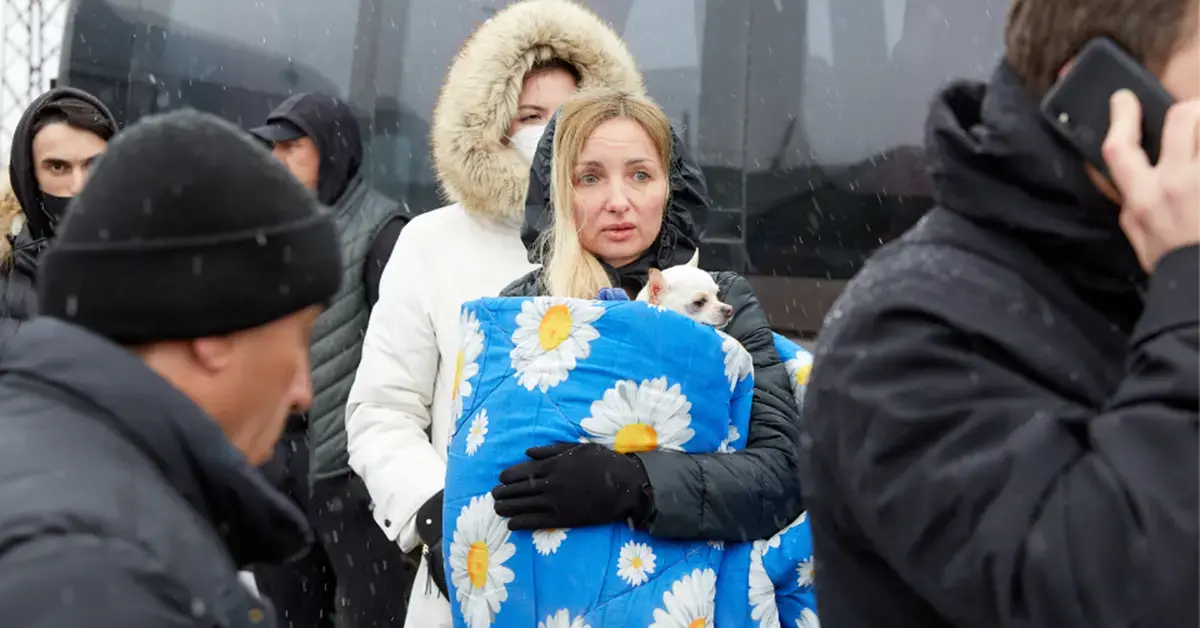
A Ukrainian woman waiting in line at the Palanca-Maiaki-Udobnoe border crossing point, between the Republic of Moldova and Ukraine, 1 March 2022. Photo: Aurel Obreja, UN Women Moldova
A Ukrainian woman waiting in line at the Palanca-Maiaki-Udobnoe border crossing point, between the Republic of Moldova and Ukraine, 1 March 2022. Photo: UN Women/Aurel Obreja

Originally published on UN Women's Regional website for Europe and Central Asia

By Alia El-Yassir, UN Women Regional Director for Europe and Central Asia

The military attack in Ukraine is undermining access to rights for all, and UN Women is deeply concerned about the rapidly mounting humanitarian crisis inside Ukraine and in the neighboring countries. We know that women and girls will be impacted differently and disproportionally, and we will seek to ensure that their specific needs are adequately met.

UN Women will use its expertise in Ukraine and neighboring countries to identify and respond to women and girls’ specific needs as they evolve. We will redirect our programming on the ground and share our gender expertise with the UN System and our humanitarian partners to help make humanitarian response plans and their implementation more gender responsive. 

UN Women has been present in Ukraine since 2015, including with offices in the east. Even before the recent escalation, conflict raged in eastern Ukraine and women and girls were severely impacted. More than 1.5 million people – two-thirds women and children – were internally displaced and suffered from impeded access to healthcare, housing, and employment.

UN Women has been supporting social mobilization amongst women in the conflict-affected areas of eastern Ukraine, advancing their resilience, livelihoods and boosting their capacities and confidence, including by helping them to form self-help groups. We’ve also been working closely with civil society partners and women peacemakers, supporting them with their advocacy needs to ensure their voices are heard in decision-making on humanitarian aid provision, recovery, reconstruction and conflict resolution. 

Since starting our work in Ukraine, the resilience of women and girls, as well as of other groups often left behind such as young people and members of the LGBTIQ community, have greatly impressed us and guided our efforts. We aim to continue to support the efforts of our partners, calling for their rights to be protected, including to benefit equally from aid and the allocation of resources, and to participate in decision making.

As the number of Ukrainians fleeing to neighboring countries rises, we will also engage in the refugee response there. With our field presence in Moldova, UN Women plans to conduct a rapid gender assessment. A similar needs assessment of Syrian women refugees in transit in the Western Balkans in 2015 laid bare the specific challenges facing women including, family separation, psychosocial stress and trauma, physical harm and injury, lack of access to sexual and reproductive health, exploitation and gender-based violence. Our work with Syrian refugees since 2015 and the internally displaced women of Ukraine has taught us good practices to help women and girls while they are in transit and as their displacement becomes more permanent. 

I join our Executive Director in her call to the international community “to keep women and girls at the centre and to ensure that the humanitarian assistance planned and provided is gender-responsive.” I also echo statements by the UN SG and the High Commissioner for Human Rights who have called for an end to the military action which undermines human rights and humanitarian law. But no matter how the war evolves, we will continue to identify and respond to the needs of women and girls, ensuring their voices are heard, and work closely with our UN System and humanitarian partners, as well as women’s civil society organizations on the ground to help meet these needs.

Topics

  • Migration
  • Human rights
  • Humanitarian action
  • Conflict, war
  • Europe and Central Asia
  • Ukraine

Related content

Image
UNWomen_Placeholder
Press briefing

The UN Secretary General’s report on Women, Peace, and Security

26 October 2026
The UN Secretary General’s report on Women, Peace, and Security
Image
UNWomen_Placeholder
Press release

Women and girls’ death toll in armed conflict doubles since 2021

26 October 2026
Women and girls’ death toll in armed conflict doubles since 2021
Image
UNWomen_Placeholder
Press briefing

Nine in 10 organizations say trauma persists among women and girls displaced from El Fasher a year after its fall

23 October 2026
Nine in 10 organizations say trauma persists among women and girls displaced from El Fasher a year after its fall

Footer menu-HQ

  • News and stories
  • Resources
  • What we do
  • How we work
  • Where we are
  • Partnerships
  • Employment
  • Procurement
  • Contact us
  • Executive Board
  • Commission on the Status of Women

Donate button menu [Footer tablet]

  • Donate

Donate button menu [Footer]

  • Donate

Social media menu

  • Facebook
  • Twitter
  • LinkedIn
  • Flickr
  • YouTube
  • Instagram
UN Women - For all women and girls

Footer bottom [Menu]

  • Copyright
  • Information security
  • Privacy notice
  • Report wrongdoing
  • Terms of use
Share this page
  • Share to Facebook
  • Share to Twitter
  • Share to LinkedIn
  • Share to E-mail

Or copy link