Universal menu

  • Global
  • Regions
    • Africa
    • Americas and the Caribbean
    • Arab States
    • Asia and the Pacific
    • Europe and Central Asia
  • Knowledge
  • Data
  • Training
  • Transparency
UN Women - For all women and girls

Main Navigation-HQ

  • Who we are
    • About us
      • About UN Women
      • Business model
      • Guiding documents
      • Worldwide presence
    • Leadership
      • Governance structure
      • Executive leadership
      • Executive Board
      • Accountability
    • Work with us
      • Employment
      • Procurement
      • Calls for proposals
      • Contact us
      • UN Women Strategic Plan 2026–2029
      • UN Women Strategic Plan 2026–2029 - social media image
        UN Women Strategic Plan 2026–2029
  • What we do
    • Focus areas
      • Ending violence against women
      • Peace and security
      • Humanitarian action
      • Leadership and governance
      • Economic empowerment
      • Innovation and technology
      • Women with disabilities
      • Youth
      • HIV and AIDS
    • How we work
      • 2030 Agenda for Sustainable Development
      • Commission on the Status of Women
      • Gender parity in the UN system
      • Intergovernmental support
      • Partnerships
      • Research and data
      • Training Centre
      • Trust funds
      • UN system coordination
      • Gender Equality Accelerators
      • Gender Equality Accelerators artwork
        Gender Equality Accelerators
  • News and stories
    • Latest
      • News
      • Articles and explainers
      • In focus
    • Media center
      • Press materials
      • Media contacts
      • Explainer: Why are women so exhausted? Care work and the mental load
      • Two adults stand at a table changing diapers on baby dolls, with laundry hanging on a clothesline behind them in a home setting.
        Explainer: Why are women so exhausted? Care work and the mental load
      • Press release: Aid cuts dismantle women’s organizations working in humanitarian crises
      • A young Ugandan woman sits with another local woman to talk
        Press release: Aid cuts dismantle women’s organizations working in humanitarian crises
  • Digital library
    • Resources
      • Publications
      • Annual reports
      • Gender snapshot
      • Progress of the world’s women
      • World survey on the role of women in development
    • GenderTerm
      • GenderTerm
      • Reprint permissions
      • UN Women Highlights 2025–2026
      • A smiling woman.
        UN Women Highlights 2025–2026
      • Gender snapshot 2026
      • A diverse group of people represented as simplified silhouettes, arranged against a dark blue background.
        Gender snapshot 2026
  • Get involved
    • How to get involved
      • For ALL Women and Girls
      • International Women's Day
      • 16 Days of Activism to End Violence against Women and Girls
      • UNiTE! Campaign to End Violence against Women
      • Generation Equality
      • He for She
Ask AI
https://84e5cfacd5c7e99f9825edf344450c.1b.environment.api.powerplatform.com/powervirtualagents/botsbyschema/crad4_websiteQA/directline/token?api-version=2022-03-01-preview
1
-
Ask your question here
AI website assistant

Hello, how can I assist you?

AI chatbot responses may be incorrect. Always verify important information.

Donate button menu

Donate

Breadcrumb

  1. Home
  2. News and stories
  3. Feature story

Website survey

We want to know how we can improve your experience on this website. Completing this survey takes less than 5 minutes.

TAKE THE SURVEY
Feature

Leaders discuss best practices for gender-responsive policing at Copenhagen conference

5 December 2023
  • Share to Facebook
  • Share to Twitter
  • Share to LinkedIn
  • Share to E-mail

“Gender-based violence continues to be a pervasive threat to the safety and dignity of – first and foremost – women and girls all over the world, including in the Nordic countries.”

Those are the words of Karen Ellemann, Secretary-General of the Nordic Council of Ministers, who on 4 December 2023 spoke at a high-level panel discussion hosted by UN Women in partnership with the Nordic Council of Ministers and civil society organizations Danner and Dialog Mod Vold.

Image
Speakers, including UN Women Senior Police Consultant Jane Townsley (third from left), discuss best practices for gender-responsive policing at a conference in Copenhagen.
Speakers, including UN Women Senior Police Consultant Jane Townsley (third from left), discuss best practices for gender-responsive policing at a conference in Copenhagen. Photo: UN City Copenhagen/Alma Dzafic-ferhatovic and Natalie de Souza

“If we are to effectively help the victims, we need to make sure that our law enforcement agencies are attuned to the unique challenges and vulnerabilities faced by those affected”, she continued. “The Nordic countries are committed to counter and prevent gender-based violence – and to promote solutions that work within the justice sector.” 

The event, held as part of the 16 Days of Activism against Gender-Based Violence campaign, gathered key regional decision-makers, including senior representatives from the police, civil society, and political sectors to discuss how gender-responsive policing can work to end violence against women and girls.

Held at UN City Copenhagen, the event was complemented by a photography exhibition showcasing UN Women’s work on gender-responsive policing in action in these and other countries.
  • Image
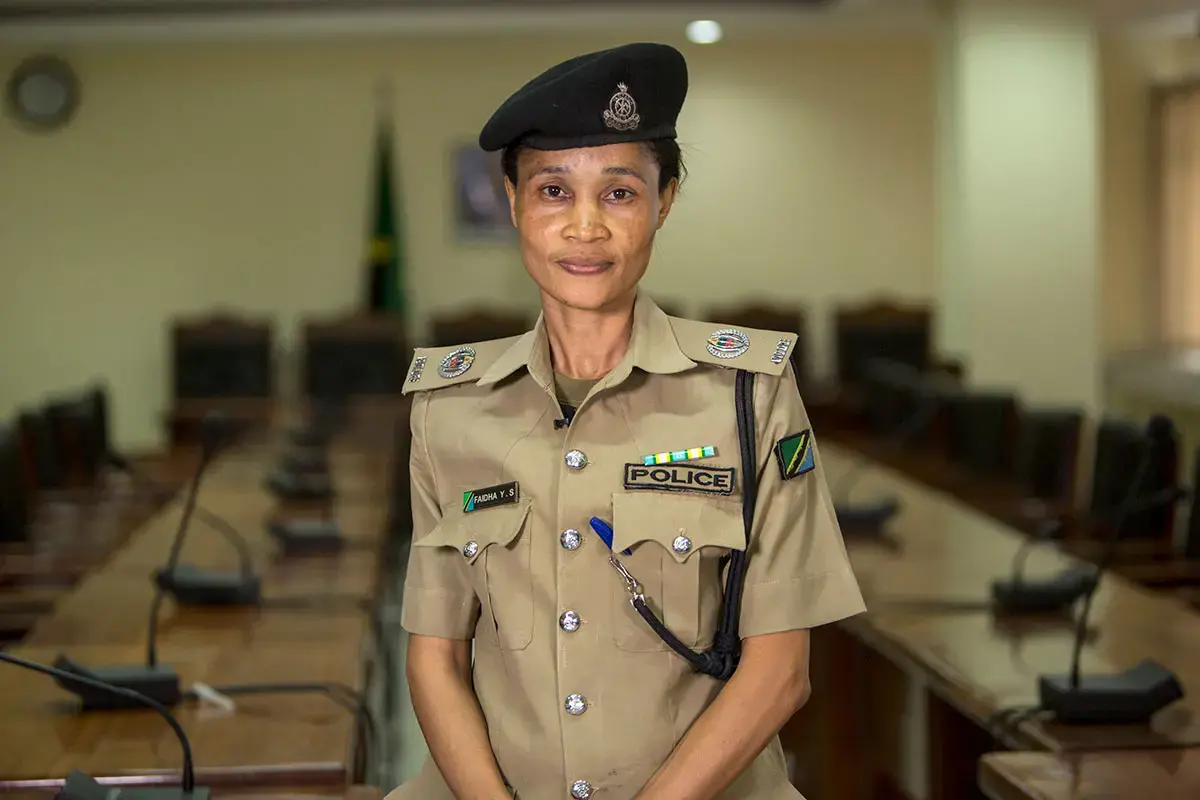
    Faidah Suleiman, Superintendent of the police Gender and Children Desk is seen in Sitakishari, Tanzania, in 2014.
    Faidah Suleiman, Superintendent of the police Gender and Children Desk is seen in Sitakishari, Tanzania, in 2014. Photo: UN Women/Daniel Donald.
  • Image
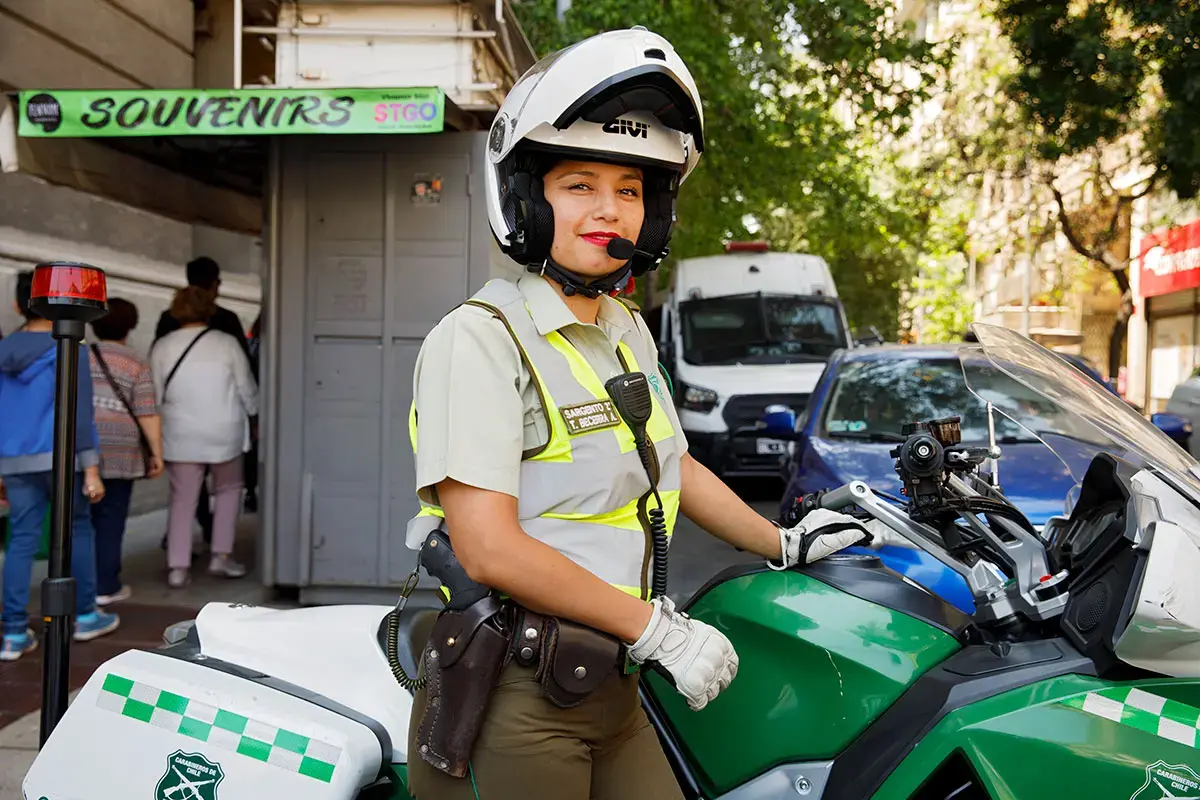
    Sergeant Becerra of the Carabineros de Chile manages traffic and patrols near La Moneda Palace in downtown Santiago.
    Sergeant Becerra of the Carabineros de Chile manages traffic and patrols near La Moneda Palace in downtown Santiago. Photo: UN Women/Ryan Brown
  • Image
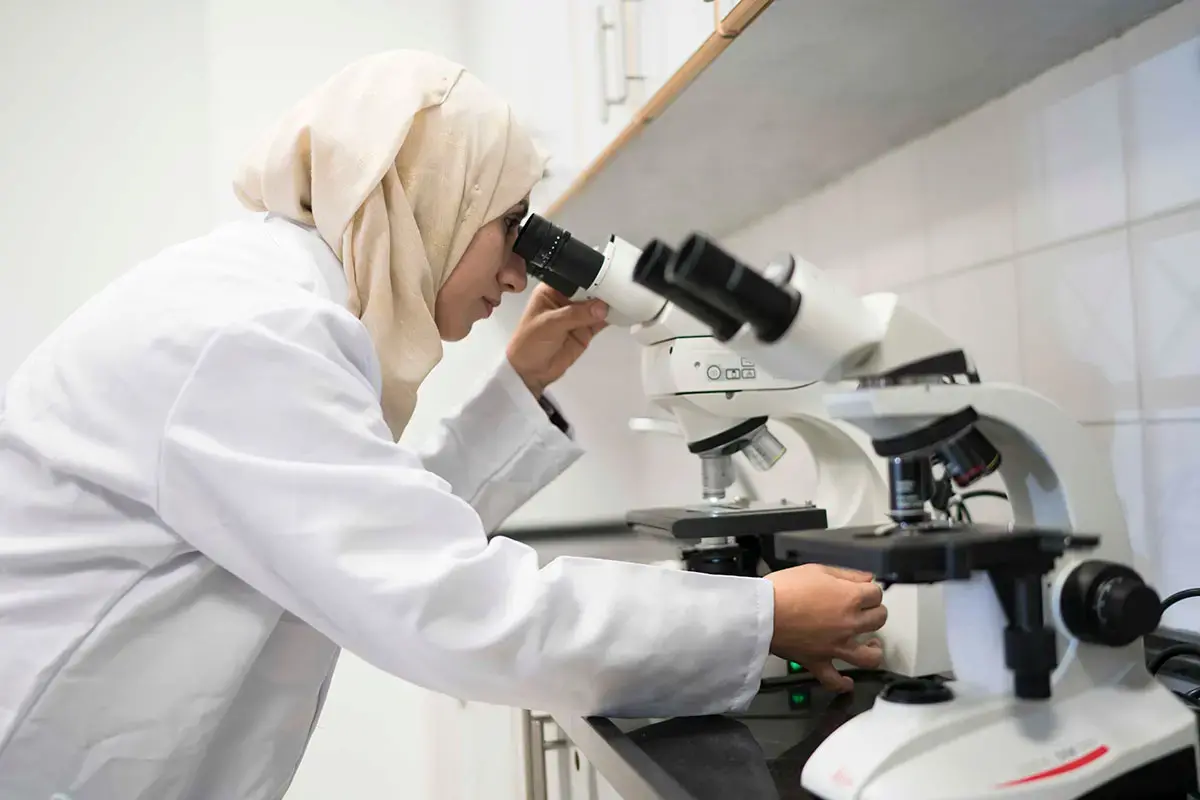
    Forensic science laboratory expert Rawan Tomalieh conducts a microscopic examination in Ramallah, West Bank in 2019.
    Forensic science laboratory expert Rawan Tomalieh conducts a microscopic examination in Ramallah, West Bank in 2019. Photo: HAYA Joint Programme/Samar Hazboun.
  • Image
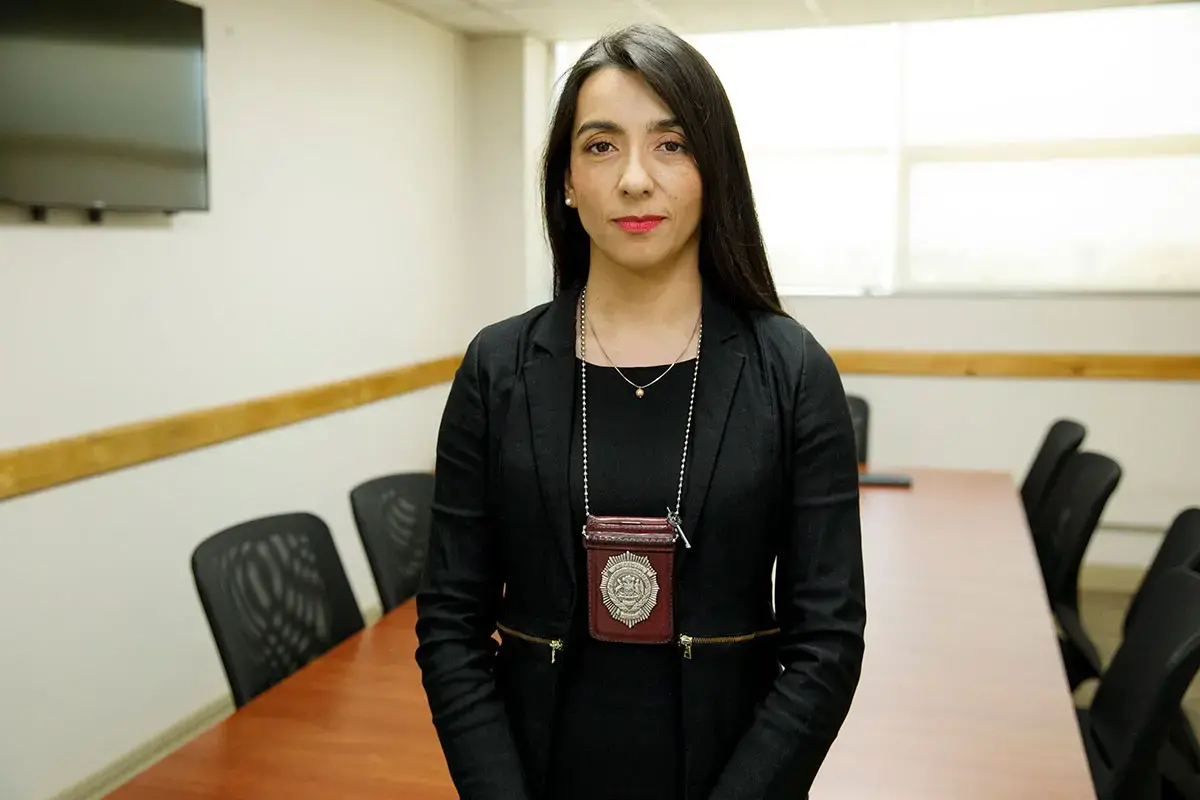
    Detective Paula Rodriguez Nuñez of Chile’s PDI police is an expert in the deactivation of explosive devices and nuclear, radiological, biological and chemical threats.
    Detective Paula Rodriguez Nuñez of Chile’s PDI police is an expert in the deactivation of explosive devices and nuclear, radiological, biological and chemical threats. Photo: UN Women/Ryan Brown.
  • Image
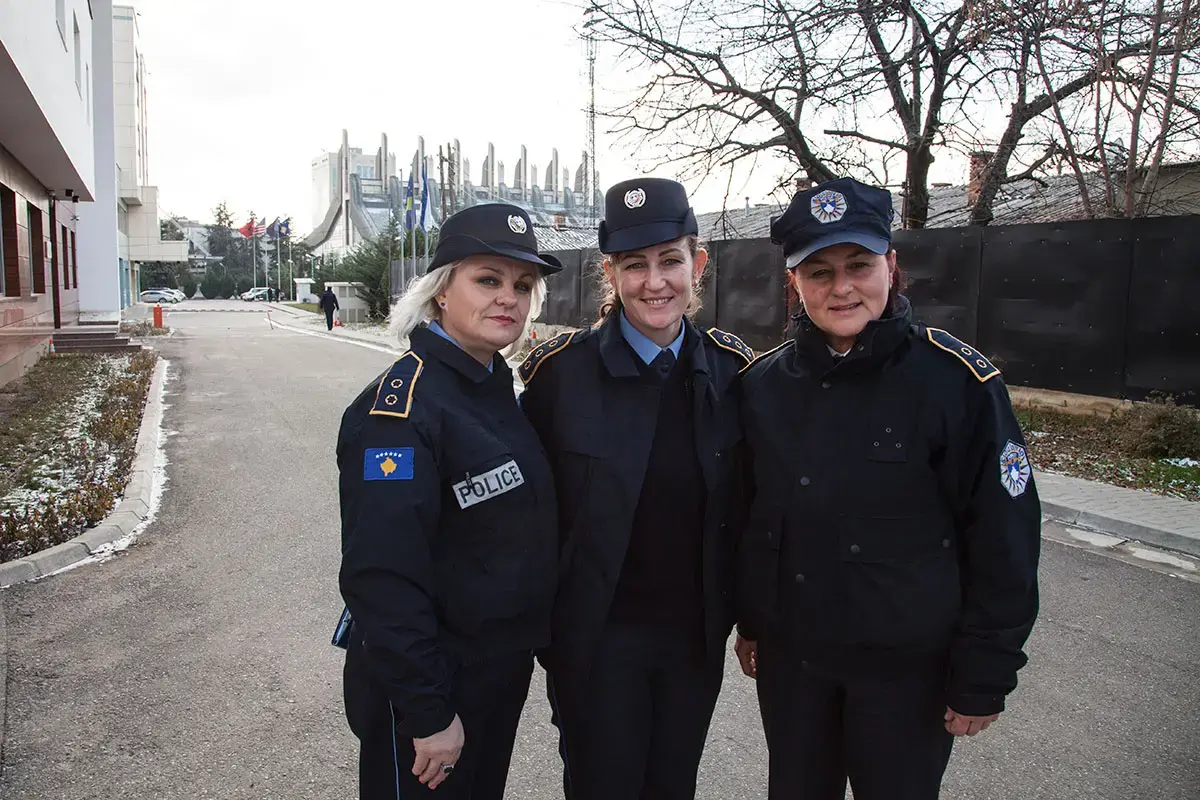
    Mergime Dobra, Teuta Nimani, and Sofije Kozniku have been serving in Kosovo police force since its establishment in 1999.
    (Left to Right) Mergime Dobra, Teuta Nimani, and Sofije Kozniku have been serving in Kosovo police force since its establishment in 1999. They are seen in Pristina, Kosovo (under UNSCR 1244), in November 2016. Photo: UN Women/Rena Effendi.
  • Image
    Officer Valdenegro of the carabineros works in a dedicated office for inter-family violence, in a private area of a Chilean district police station.
    Officer Valdenegro of the carabineros works in a dedicated office for inter-family violence, in a private area of a Chilean district police station. Photo: UN Women/Ryan Brown.
  • Image
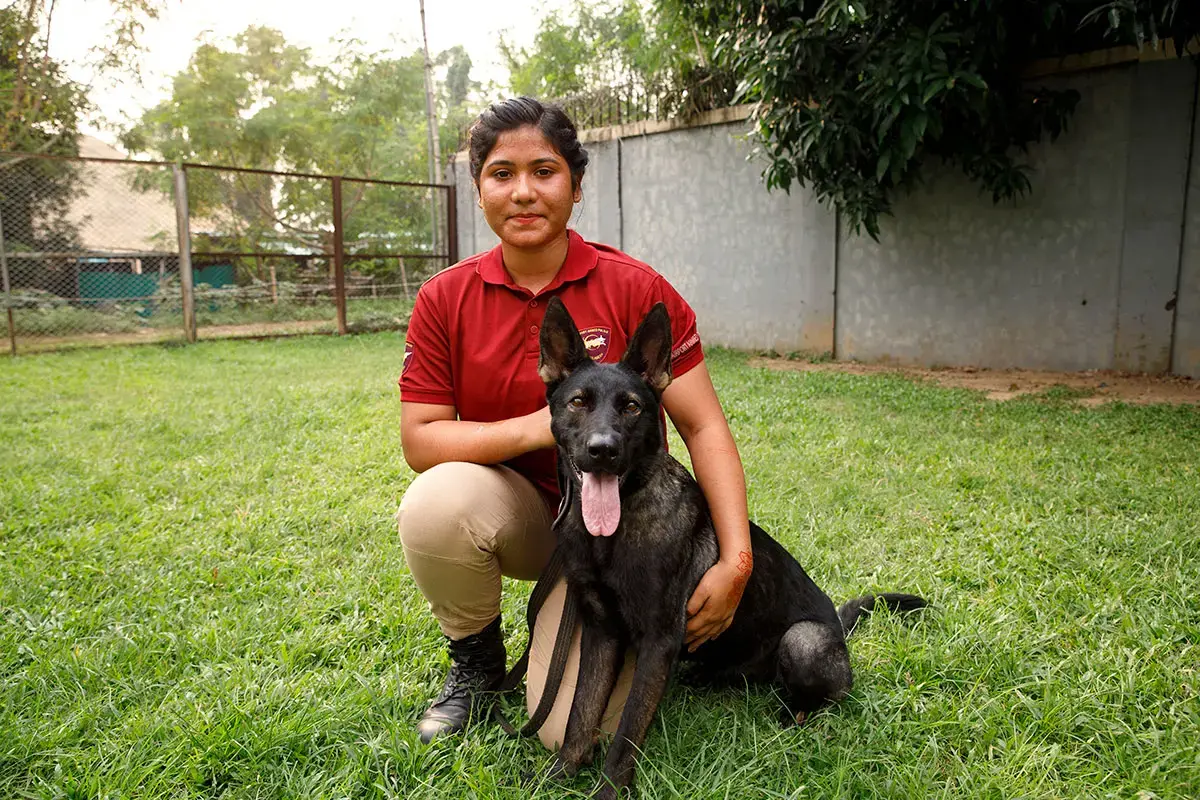
    In Dhaka, young officers in the Bangladesh Airport Armed Police K-9 Unit are among the first female canine unit police officers in Asia.
    In Dhaka, young officers in the Bangladesh Airport Armed Police K-9 Unit are among the first female canine unit police officers in Asia. Photo: UN Women/Ryan Brown.
  • Image
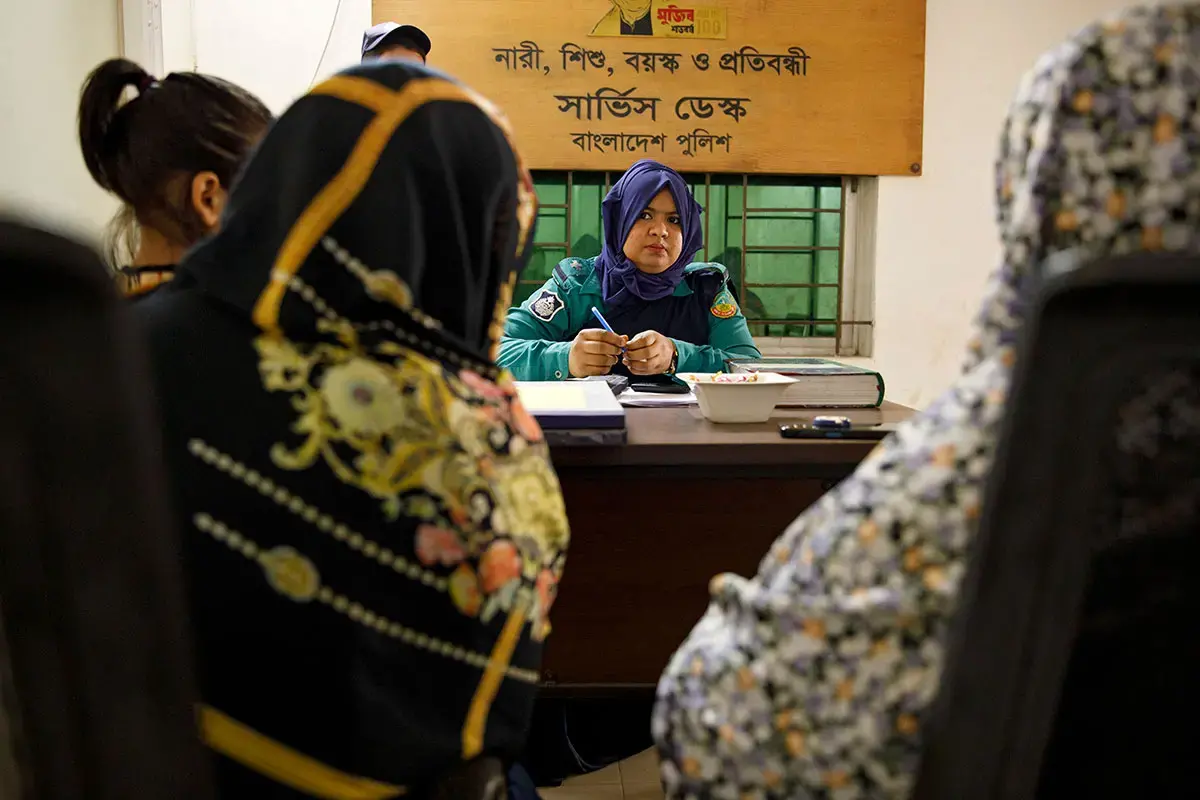
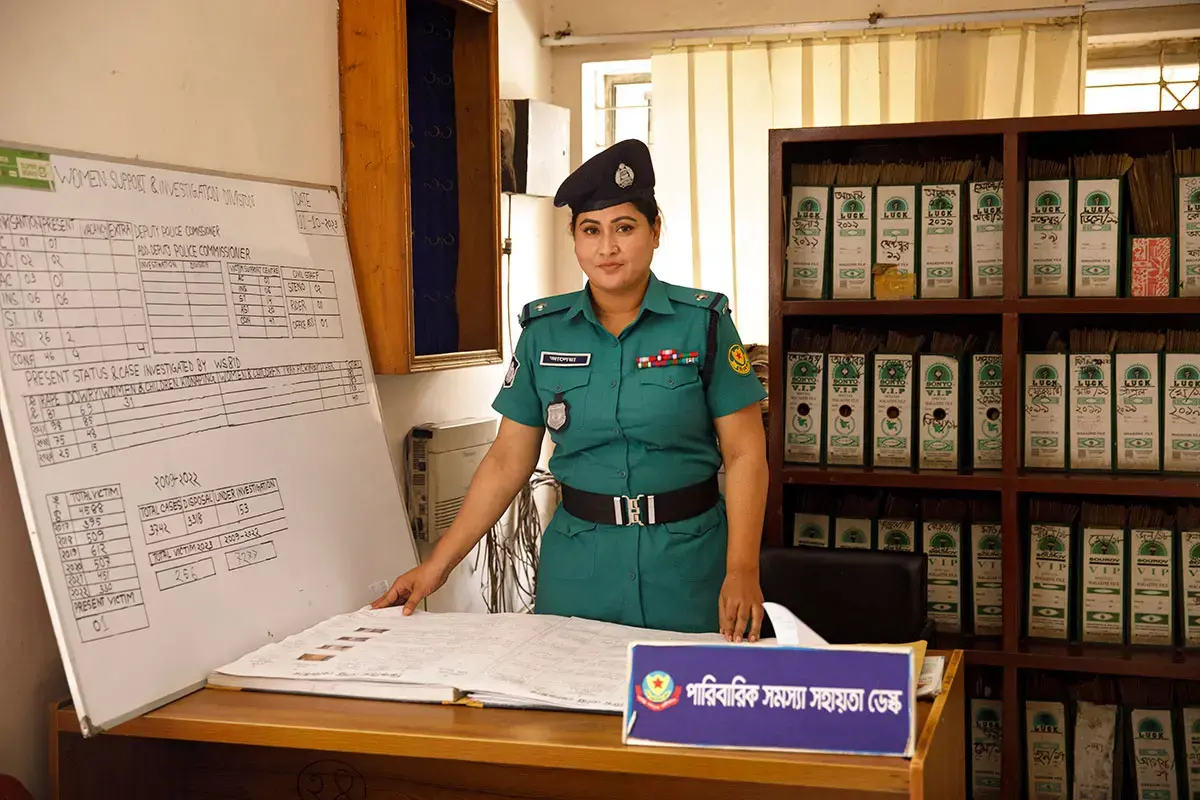
    At the help desk specifically created to serve women, children, disabled persons, and elderly in Tongi Station in Dhaka, Bangladesh, Assistant Sub Inspector Fatima of the Dhaka Metropolitan Police receives testimony from a member of the community lodging a case.
    At the help desk specifically created to serve women, children, disabled persons, and elderly in Tongi Station in Dhaka, Bangladesh, Assistant Sub Inspector Fatima of the Dhaka Metropolitan Police receives testimony from a member of the community lodging a case. Photo: UN Women/Ryan Brown.
  • Image
    Officer Aliea Begum, Assistant Sub Inspector at a Victim Support Centre run by the Dhaka Metropolitan Police in Bangladesh.
    Officer Aliea Begum, Assistant Sub Inspector at a Victim Support Centre run by the Dhaka Metropolitan Police in Bangladesh. UN Women/Ryan Brown.
  • Image
    Chilean PDI Comisaria Viviana Baeza trains officers in the investigative police on victim-centered approaches to interviewing survivors of sexual violence crimes
    Chilean PDI Comisaria Viviana Baeza trains officers in the investigative police on victim-centred approaches to interviewing survivors of sexual violence crimes. Photo: UN Women/Ryan Brown.
    • Image
      Faidah Suleiman, Superintendent of the police Gender and Children Desk is seen in Sitakishari, Tanzania, in 2014.
      Faidah Suleiman, Superintendent of the police Gender and Children Desk is seen in Sitakishari, Tanzania, in 2014. Photo: UN Women/Daniel Donald.
    • Image
      Sergeant Becerra of the Carabineros de Chile manages traffic and patrols near La Moneda Palace in downtown Santiago.
      Sergeant Becerra of the Carabineros de Chile manages traffic and patrols near La Moneda Palace in downtown Santiago. Photo: UN Women/Ryan Brown
    • Image
      Forensic science laboratory expert Rawan Tomalieh conducts a microscopic examination in Ramallah, West Bank in 2019.
      Forensic science laboratory expert Rawan Tomalieh conducts a microscopic examination in Ramallah, West Bank in 2019. Photo: HAYA Joint Programme/Samar Hazboun.
    • Image
      Detective Paula Rodriguez Nuñez of Chile’s PDI police is an expert in the deactivation of explosive devices and nuclear, radiological, biological and chemical threats.
      Detective Paula Rodriguez Nuñez of Chile’s PDI police is an expert in the deactivation of explosive devices and nuclear, radiological, biological and chemical threats. Photo: UN Women/Ryan Brown.
    • Image
      Mergime Dobra, Teuta Nimani, and Sofije Kozniku have been serving in Kosovo police force since its establishment in 1999.
      (Left to Right) Mergime Dobra, Teuta Nimani, and Sofije Kozniku have been serving in Kosovo police force since its establishment in 1999. They are seen in Pristina, Kosovo (under UNSCR 1244), in November 2016. Photo: UN Women/Rena Effendi.
    • Image
      Officer Valdenegro of the carabineros works in a dedicated office for inter-family violence, in a private area of a Chilean district police station.
      Officer Valdenegro of the carabineros works in a dedicated office for inter-family violence, in a private area of a Chilean district police station. Photo: UN Women/Ryan Brown.
    • Image
      In Dhaka, young officers in the Bangladesh Airport Armed Police K-9 Unit are among the first female canine unit police officers in Asia.
      In Dhaka, young officers in the Bangladesh Airport Armed Police K-9 Unit are among the first female canine unit police officers in Asia. Photo: UN Women/Ryan Brown.
    • Image
      At the help desk specifically created to serve women, children, disabled persons, and elderly in Tongi Station in Dhaka, Bangladesh, Assistant Sub Inspector Fatima of the Dhaka Metropolitan Police receives testimony from a member of the community lodging a case.
      At the help desk specifically created to serve women, children, disabled persons, and elderly in Tongi Station in Dhaka, Bangladesh, Assistant Sub Inspector Fatima of the Dhaka Metropolitan Police receives testimony from a member of the community lodging a case. Photo: UN Women/Ryan Brown.
    • Image
      Officer Aliea Begum, Assistant Sub Inspector at a Victim Support Centre run by the Dhaka Metropolitan Police in Bangladesh.
      Officer Aliea Begum, Assistant Sub Inspector at a Victim Support Centre run by the Dhaka Metropolitan Police in Bangladesh. UN Women/Ryan Brown.
    • Image
      Chilean PDI Comisaria Viviana Baeza trains officers in the investigative police on victim-centered approaches to interviewing survivors of sexual violence crimes
      Chilean PDI Comisaria Viviana Baeza trains officers in the investigative police on victim-centred approaches to interviewing survivors of sexual violence crimes. Photo: UN Women/Ryan Brown.

    The Nordic region has been in the forefront of implementing best practice on gender-responsive policing, and countries there have worked to educate police officers on the impact of gender norms and stereotypes on crime and victimization, develop frameworks for dealing with domestic violence cases, and to integrate gender equality principles into recruitment and career development processes. 

    Strengthening the justice-sector response to gender-based violence, particularly that of law enforcement, has consistently been cited as one of the most challenging issues when responding to violence against women and girls. Less than 1 in 10 women who seek help after experiencing violence turn to the police, and only a minority of cases of violence are ever formally reported to the police, with even fewer cases resulting in convictions. 

    Event panelists spoke about their personal experiences of implementing gender-responsive policing principles and the importance of collaboration, including with survivors’ organizations and other police officers, especially female officers. They also discussed the value of tools like UN Women’s Handbook on Gender-Responsive Police Services for Women and Girls Subject to Violence, developed together with the International Association of Women Police (IAWP) and the United Nations Office on Drugs and Crime (UNODC).

    “Creating a fully gender-responsive policing service requires not only increasing the number of women, but empowering all officers, both male and female, to be victim/survivor-centred, gender-sensitive, and trauma-informed when responding to all acts of crime and violence,” said Jane Townsley, Executive Director of the IAWP, UN Women Senior Police Consultant, and co-author of the handbook.

    “This requires the professional development of law enforcement to be transformative in nature and for officers to be equipped to respond adequately to the diverse security needs of the communities they serve”, she said. “Equally important, a gender-responsive police service requires senior leadership to institutionalize gender-sensitive policies, strategies, and accountability mechanisms that ensure effective operational leadership that is fit for purpose.” 

    Launched in 2021 by UN Women, UNODC, and the IAWP, the handbook provides practical guidance to police to enable effective and gender-sensitive responses to violence against women and girls, and to promote police services that balance effectiveness with accountability in their response to violence. But fundamentally, it seeks to inspire behavioural change towards prevention-orientated policing that is gender-responsive, trauma-informed, and perpetrator-focused.

    The handbook is currently being rolled out in over a dozen pilot countries across five regions, including Bangladesh, Chile, Kosovo1, Viet Nam, and Tanzania. 

    “We are seeing positive change in the police handling of gender-based violence cases, especially in relation to the criminalization of psychological violence and stalking, and the work of the specialized GBV teams”, said Mette Marie Yde, Director of Danner, Demark’s largest nongovernmental organization providing shelter and safe accommodation for survivors of violence against women and children.

    “However, we still need to strengthen the rest of judicial chain, to ensure justice for survivors”, she said.
    Strengthening police and justice sector responses, including through gender-responsive policing, is firmly at the centre of the work of the Generation Equality Action Coalition on Gender-Based Violence, which is co-led by UN Women and other Commitment Makers and Leaders. As the first multi-stakeholder and inter-generational initiative of its kind, the Action Coalition brings together actors from all sectors of society, including women’s movements; feminist, youth, and girl-led organizations; governments; faith-based institutions; the private sector; and international organizations – around concrete financial, programmatic, and policy commitments to drive long-term change and end gender-based violence. 

    Gender-responsive policing features largely within this Action Coalition, with Commitment Makers and Leaders such as the Australian Federal Police, Bellevue Police Department in Nebraska, USA, and the National Police Force in Senegal taking key concrete actions to ensure perpetrator accountability and delivering gender-responsive police services that are accountable, transparent, and representative of the communities they serve. 

    1. This designation is without prejudice to positions on status and is in line with UN Security Council resolution 1244 and the International Court of Justice Opinion on the Kosovo declaration of independence.

    Topics

    • Ending violence against women and girls
    • Anti-violence interventions
    • Access to justice and legal protection
    • Domestic violence/interpersonal violence

    Related content

    Image
    UNWomen_Placeholder
    Press briefing

    Nine in 10 organizations say trauma persists among women and girls displaced from El Fasher a year after its fall

    23 October 2026
    Nine in 10 organizations say trauma persists among women and girls displaced from El Fasher a year after its fall
    Image
    UNWomen_Placeholder
    Statement

    UN Women statement for the International Day of the Girl 2026

    11 October 2026
    UN Women statement for the International Day of the Girl 2026
    Image
    UN Women Executive Director Sima Bahous poses with the Prime Minister of Croatia at an indoor event.
    News

    Governments, civil society, and private sector call for coordinated action to end technology-facilitated violence against women and girls

    25 September 2026
    Governments, civil society, and private sector call for coordinated action to end technology-facilitated violence against women and girls

    Footer menu-HQ

    • News and stories
    • Resources
    • What we do
    • How we work
    • Where we are
    • Partnerships
    • Employment
    • Procurement
    • Contact us
    • Executive Board
    • Commission on the Status of Women

    Donate button menu [Footer tablet]

    • Donate

    Donate button menu [Footer]

    • Donate

    Social media menu

    • Facebook
    • Twitter
    • LinkedIn
    • Flickr
    • YouTube
    • Instagram
    UN Women - For all women and girls

    Footer bottom [Menu]

    • Copyright
    • Information security
    • Privacy notice
    • Report wrongdoing
    • Terms of use
    Share this page
    • Share to Facebook
    • Share to Twitter
    • Share to LinkedIn
    • Share to E-mail

    Or copy link