Universal menu

  • Global
  • Regions
    • Africa
    • Americas and the Caribbean
    • Arab States
    • Asia and the Pacific
    • Europe and Central Asia
  • Knowledge
  • Data
  • Training
  • Transparency
UN Women - For all women and girls

Main Navigation-HQ

  • Who we are
    • About us
      • About UN Women
      • Business model
      • Guiding documents
      • Worldwide presence
    • Leadership
      • Governance structure
      • Executive leadership
      • Executive Board
      • Accountability
    • Work with us
      • Employment
      • Procurement
      • Calls for proposals
      • Contact us
      • UN Women Strategic Plan 2026–2029
      • UN Women Strategic Plan 2026–2029 - social media image
        UN Women Strategic Plan 2026–2029
  • What we do
    • Focus areas
      • Ending violence against women
      • Peace and security
      • Humanitarian action
      • Leadership and governance
      • Economic empowerment
      • Innovation and technology
      • Women with disabilities
      • Youth
      • HIV and AIDS
    • How we work
      • 2030 Agenda for Sustainable Development
      • Commission on the Status of Women
      • Gender parity in the UN system
      • Intergovernmental support
      • Partnerships
      • Research and data
      • Training Centre
      • Trust funds
      • UN system coordination
      • Gender Equality Accelerators
      • Gender Equality Accelerators artwork
        Gender Equality Accelerators
  • News and stories
    • Latest
      • News
      • Articles and explainers
      • In focus
    • Media center
      • Press materials
      • Media contacts
      • Explainer: Why are women so exhausted? Care work and the mental load
      • Two adults stand at a table changing diapers on baby dolls, with laundry hanging on a clothesline behind them in a home setting.
        Explainer: Why are women so exhausted? Care work and the mental load
      • Press release: Aid cuts dismantle women’s organizations working in humanitarian crises
      • A young Ugandan woman sits with another local woman to talk
        Press release: Aid cuts dismantle women’s organizations working in humanitarian crises
  • Digital library
    • Resources
      • Publications
      • Annual reports
      • Gender snapshot
      • Progress of the world’s women
      • World survey on the role of women in development
    • GenderTerm
      • GenderTerm
      • Reprint permissions
      • UN Women Highlights 2025–2026
      • A smiling woman.
        UN Women Highlights 2025–2026
      • Gender snapshot 2026
      • A diverse group of people represented as simplified silhouettes, arranged against a dark blue background.
        Gender snapshot 2026
  • Get involved
    • How to get involved
      • For ALL Women and Girls
      • International Women's Day
      • 16 Days of Activism to End Violence against Women and Girls
      • UNiTE! Campaign to End Violence against Women
      • Generation Equality
      • He for She
Ask AI
https://84e5cfacd5c7e99f9825edf344450c.1b.environment.api.powerplatform.com/powervirtualagents/botsbyschema/crad4_websiteQA/directline/token?api-version=2022-03-01-preview
1
-
Ask your question here
AI website assistant

Hello, how can I assist you?

AI chatbot responses may be incorrect. Always verify important information.

Donate button menu

Donate

Breadcrumb

  1. Home
  2. Articles
  3. In Focus

Website survey

We want to know how we can improve your experience on this website. Completing this survey takes less than 5 minutes.

TAKE THE SURVEY
In focus

Care work keeps the world running

15 October 2026
  • Share to Facebook
  • Share to Twitter
  • Share to LinkedIn
  • Share to E-mail
Nurachayatun, an Indonesian domestic worker from Surabaya Java, prepares food in her employer's kitchen after early morning grocery shopping. Photo: UN Women/Staton Winter

Basic Hero Banner

Everyone needs care, gives and receives care.

Care work – paid and unpaid – keeps the world running. From the moment we wake up to the time we sleep, care shapes our lives, our economies, and communities. It's in the meals prepared, the children walked to school, the aging parents supported, the laundry washed and folded, and the countless invisible tasks that make daily life possible. And it contributes to the mental load that caregivers – who are mostly women – bear. Without care work, societies would simply stop functioning.

But here's the problem: We've been looking at care work all wrong.

International Day of Care and Support, 29 October

Established by the United Nations General Assembly, the International Day of Care and Support is observed annually on 29 October. This year’s theme, “Building sustainable care and support systems through decent work,” focuses on care workers and decent work, highlighting the need to address persistent gaps in labour rights, working conditions, social protection, occupational safety and health, skills development, wages, and the voice and representation of paid care workers.

Read our statement

Duty of a carer: Care work is not a women’s issue. It’s everyone’s reality – and responsibility

We've all heard it before: Caring is “women’s work.” That outdated belief limits women’s rights and opportunities – and is holding us all back.

Globally, women spend 2.5 times as many hours on unpaid care work as men. Women also hold most paid care jobs – as nannies, domestic workers, carers, nurses, and teachers. But these roles are often informal, low-paying, and lack basic protections like healthcare and paid leave.

The way care work is organized today restricts women’s time to pursue education, access decent paid work, take part in public life, or simply rest. Globally, the share of women outside the labour force due to care responsibilities is 45 percent, compared to just 5 per cent of men. 

We all need care, and we all provide it

Throughout life we all move between giving and receiving care, sometimes doing both at once.

Yet, the unpaid care work that underpins every economy remains largely invisible and undervalued. If unpaid labor were counted, it would exceed 40 per cent of GDP in some countries.
3
3
UNWomen_Placeholder
Press release

Fathers get one-eighth of the paid parental leave of mothers – and everyone pays the price

22 October 2026
Image
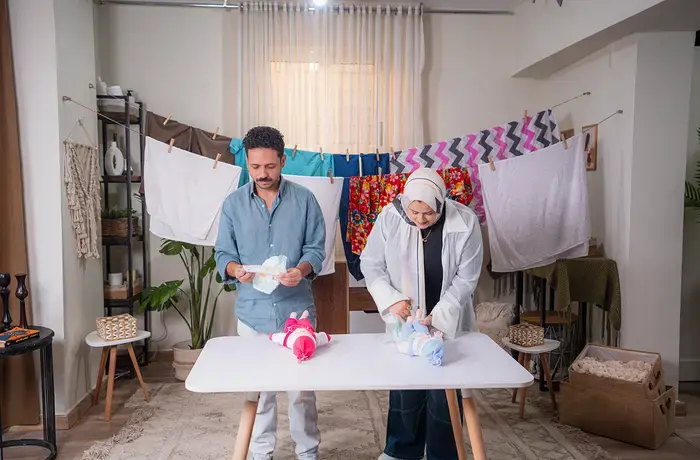
Two adults stand at a table changing diapers on baby dolls, with laundry hanging on a clothesline behind them in a home setting.
Explainer

Why are women so exhausted? Care work and the mental load

24 June 2026
Image
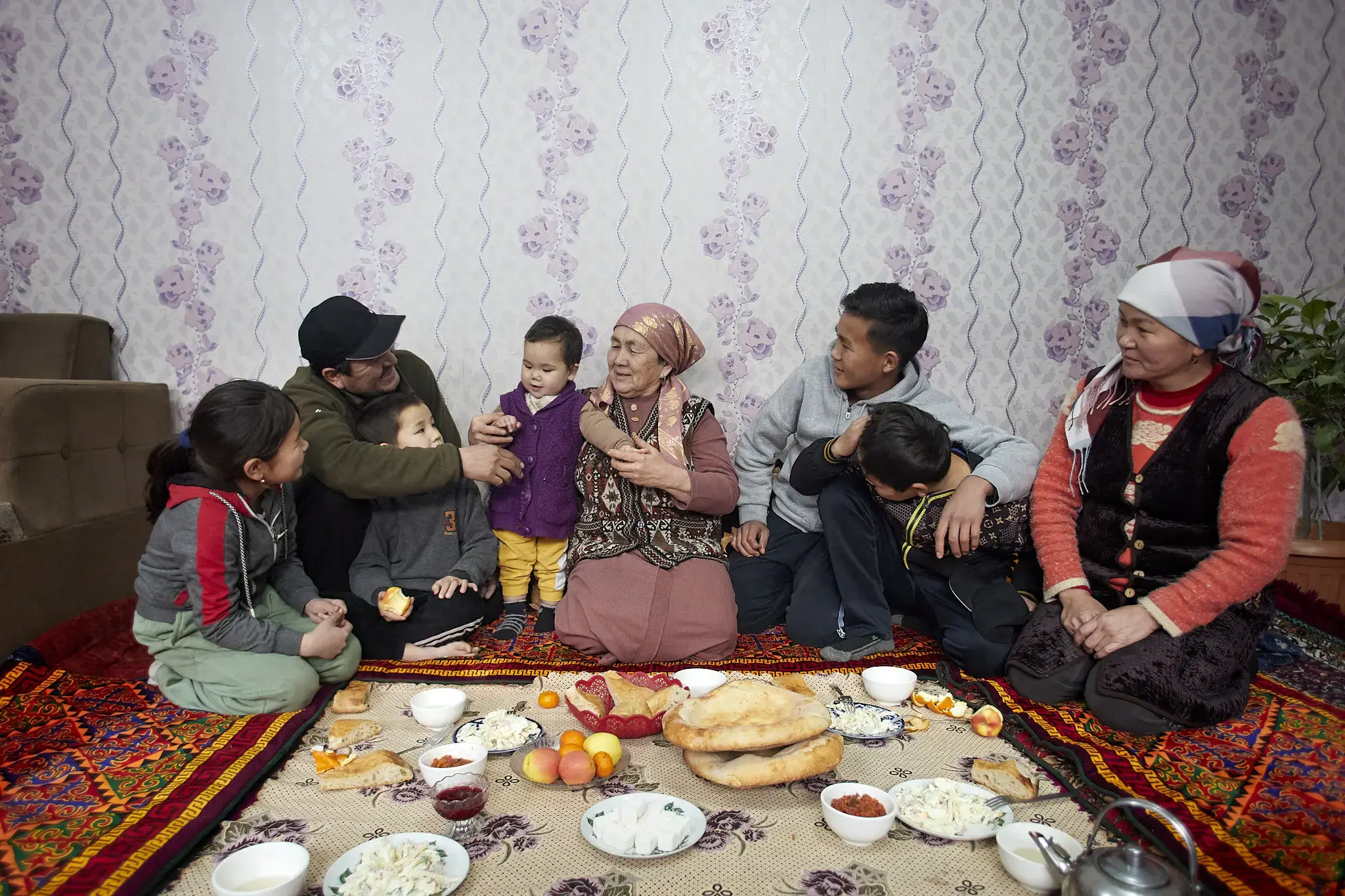
A photo of a happy and affectionate family, seated on the floor next to fresh food they are sharing
Press release

Media fact sheet: Five reasons why the care economy is one of the most transformative investments of our time

24 June 2026

UN Women is transforming care work from undervalued and invisible labour to a public good

Care work is a matter of human rights. Strong care systems are essential to ensuring the dignity, rights, and well-being of caregivers and those receiving care.

Real change starts with seeing care work as essential and skilled work – not as a favor or a woman’s duty, but a public good and human right that deserves recognition, investment, and shared responsibility. The care economy – all care work, paid and unpaid, direct and indirect – is at the core of human development and quality of life.

A care system that works means:

  • Recognizing care as the foundation of thriving and gender-equal societies.
  • Reducing energy-intensive unpaid domestic care work tasks through infrastructure and technology.
  • Redistributing responsibilities more fairly between women and men, households and the state, families, communities, and businesses.
  • Rewarding the millions of care workers with fair pay, social protection, and decent working conditions.
  • Representing care workers and caregivers in policymaking, organizations, and decisions that affect their lives.
  • Resourcing care systems with public financing for care policies, services and infrastructure, standards and training.

Closing the care gaps is essential for achieving gender equality

The gender gap that societies around the world now face because of undervaluation and unequal distribution of care work is one of the long-standing barriers to achieving gender equality.

Conversely, investing in care systems delivers real returns: stronger economies, greater gender equality, and more resilient communities.

Ready to reimagine care?

Explore stories, research, and solutions that are building holistic care societies – where care is at the heart of thriving, just economies that work for everyone.
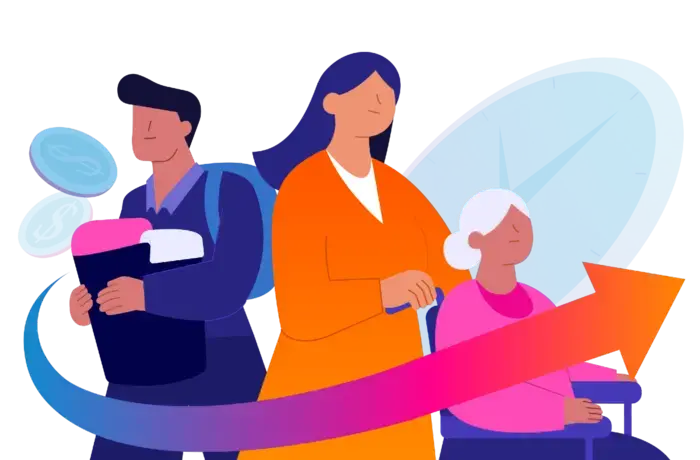
Care work, care gap, care economy – explained

4
5
Image
Illustration depicting men and women doing unpaid care work tasks
FAQs

FAQs: What is unpaid care work and how does it power the economy? 

23 October 2025
Image
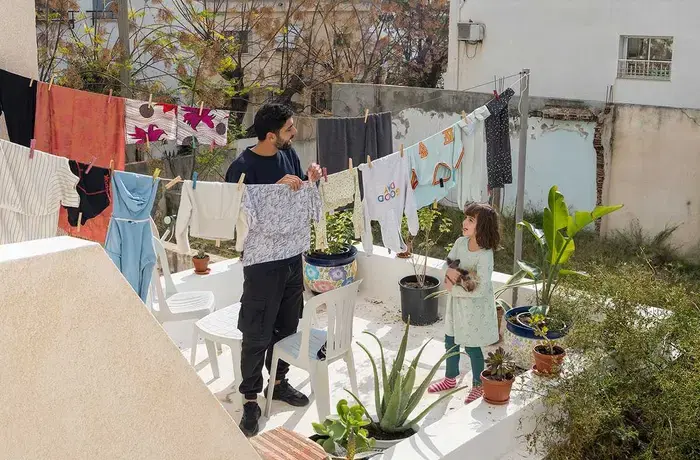
A father and daughter hand out laundry together
Explainer

How to talk to kids about gender equality and stereotypes

13 May 2025
Image
climate care nexus thumbnail
Explainer

Unpacking the care society: Caring for people and the planet

28 June 2024
Image
Two adults stand at a table changing diapers on baby dolls, with laundry hanging on a clothesline behind them in a home setting.
Explainer

Why are women so exhausted? Care work and the mental load

24 June 2026
A photo of a happy and affectionate family, seated on the floor next to fresh food they are sharing
Press release

Media fact sheet: Five reasons why the care economy is one of the most transformative investments of our time

24 June 2026

Stories: Transforming care systems

4
7
A group of mostly women squeeze together for a big group photo around a table
Feature story

Stronger together: How care workers in Georgia are organizing for their rights

15 October 2026
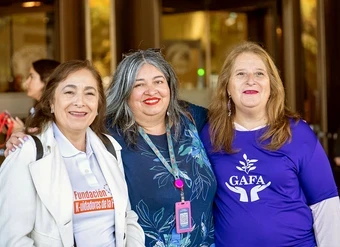
Three women pose together outside a building, with two wearing purple shirts featuring organization logos.
Feature story

We need better care policies. But where do we start?

30 September 2026
Nepal is part of a growing global movement to transform care systems that work better for women, families, and communities. UN Women’s Transform Care Investment Initiative Asia-Pacific calls for catalytic investments to benefit at least 100 million women and girls and create 125 million new employment opportunities in the care economy by 2035, and reduce women’s unpaid care work. In this photo, a woman assists an older woman walking on the street. Photo: UN Women/Srijana Bhatta
Feature story

Kathmandu is a caring city – here’s what that means for women

17 July 2026
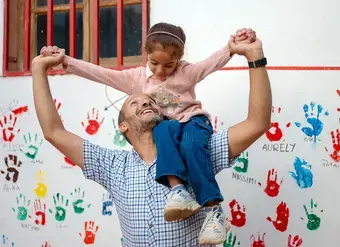
Father carries his daughter onto his shoulders while they play in front of a wall decorated with colourful handprints.
Feature story

The fatherhood programme challenging gender norms

18 June 2026
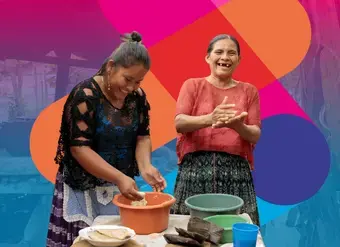
Indigenous women of Guatemala’s Polochic valley are feeding their families, growing their businesses and saving more money than ever before, with the help of a joint UN programme that’s empowering rural women. Photo: UN Women/Ryan Brown
Feature story

In Latin America, we’re not just recognizing care work – we’re rebuilding economies around it

27 June 2025
A UN Women programme beneficiary uses an improved cookstove, which has helped her significantly reduce the hours she spends preparing food. Photo: UN Women Tanzania.
Feature story

In East and Southern Africa, care is everyone’s business – and it’s changing lives

23 October 2025
Image
Maïga Bintou Diarra, an active member of the Bougouni Leaders' Coalition, received training on the EVAW program initiated by UN Women in the Bougouni region, southern Mali, April 2022. Photo: UN Women.
Explainer

Unpaid but essential: How women’s care work powers Mali’s economy

25 October 2024

Resources

12
Cover.

TransformCare: UN Women’s vision for transforming care systems for equality and shared prosperity

23 October 2026
Publication cover.

From parenthood leave to childcare services: Building care systems that work for women, families and economies

22 October 2026
Publication cover.

Transforming care systems for equality and shared prosperity: TransformCare 2025 annual report

5 October 2026
transforming care systems cover

Transforming care systems: UN system policy paper

17 July 2024
Publication cover.

Care, climate and a just transition: Guidance note for UN Women and partners

7 October 2026
Brief cover

Investing in the care economy: A step-by-step guide for measuring gaps, costs, and returns on investing in care services sectors

10 April 2026
Guidance note: Addressing care in times of conflict and crisis

Addressing care in times of conflict and crisis

5 December 2025
Financing care infrastructure: An opportunity for public development banks to pave the way for tomorrow’s equality

Financing care infrastructure: An opportunity for public development banks to pave the way for tomorrow’s equality

25 February 2025
Consolidated report: A guide to public investments in the care economy: Estimating care deficits, investment costs and economic returns

Consolidated report: A guide to public investments in the care economy: Estimating care deficits, investment costs and economic returns

12 June 2024
Working paper: The climate–care nexus: Addressing the linkages between climate change and women’s and girls’ unpaid care, domestic, and communal work

The climate–care nexus: Addressing the linkages between climate change and women’s and girls’ unpaid care, domestic, and communal work

10 November 2023
A toolkit on paid and unpaid care work: From 3Rs to 5Rs

A toolkit on paid and unpaid care work: From 3Rs to 5Rs

6 July 2022
A guide to public investments in the care economy: Policy support tool for estimating care deficits, investment costs, and economic returns

A guide to public investments in the care economy: Policy support tool for estimating care deficits, investment costs, and economic returns

31 March 2021

Topics

  • Economic empowerment
  • Employment
  • Care work
  • Domestic work
  • Gender wage gap
  • Migrant workers
  • Unpaid work
  • Care and support services

Footer menu-HQ

  • News and stories
  • Resources
  • What we do
  • How we work
  • Where we are
  • Partnerships
  • Employment
  • Procurement
  • Contact us
  • Executive Board
  • Commission on the Status of Women

Donate button menu [Footer tablet]

  • Donate

Donate button menu [Footer]

  • Donate

Social media menu

  • Facebook
  • Twitter
  • LinkedIn
  • Flickr
  • YouTube
  • Instagram
UN Women - For all women and girls

Footer bottom [Menu]

  • Copyright
  • Information security
  • Privacy notice
  • Report wrongdoing
  • Terms of use
Share this page
  • Share to Facebook
  • Share to Twitter
  • Share to LinkedIn
  • Share to E-mail

Or copy link