Speech: Building a strengthened UN Women – Solutions to close the gender gaps
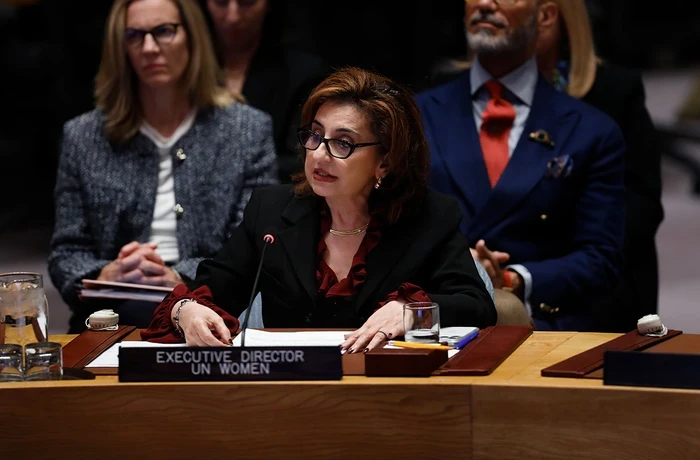
Opening statement of UN Women Executive Director Sima Bahous to the second regular session of the Executive Board, at UN Headquarters, on 12–13 September 2023.
[As delivered.]
It is a pleasure to be with you again at this second regular session of the UN Women Executive Board 2023. Allow me first to express my profound sadness and solidarity with the people of the Kingdom of Morocco following the earthquake this past weekend. UN Women stands ready to work with the UN family to provide all support necessary, if requested, to the Government in its response and recovery.
My deepest condolences also go to the people of Libya who are grappling with yet another national disaster in the wake of the devastating flooding.

As always, I would like to warmly thank our President, H.E. Ambassador Mr. Sergiy Kyslytsya, Permanent Representative of Ukraine, and the entire 2023 Bureau for their exemplary and unwavering support: H.E. Ms. Leonor Zalabata Torres, Ambassador and Permanent Representative of Colombia; H.E. Mr. Maurizio Massari, Ambassador and Permanent Representative of Italy; H.E. Mr. Suriya Chindawongse, Ambassador and Permanent Representative of Thailand; and Ms. Nelly Banaken Elel, First Counsellor at the Permanent Mission of the Republic of Cameroon. You all remain a crucial driver of our work.
I would also like to acknowledge colleagues beside me: Ms. Sarah Hendriks and Mr. Moez Doraid, whom I have asked to step up and assure a seamless transition in leadership as Deputy Executive Directors ad interim. You know them well, and I am sure you join me in appreciating their efforts during this transition. The recruitment for our new DEDs is progressing well in close collaboration with the Secretary-General’s Office. I look forward to welcoming them at our next session.
This second regular session takes place at a time when Member States and the world reflect on how well we are living up to the most consequential promise in history, that of the 2030 Agenda and its Sustainable Development Goals (SDGs). As you know, the overall picture is not what we would wish.
We collectively struggle to overcome multiple challenges, including ongoing COVID recovery, climate change, and conflicts in multiple parts of the world. I am particularly saddened by ongoing and, in some cases, increasing violence, conflict, and displacement in many parts of the world: in Sudan and Niger, the ongoing war in Ukraine with its impact far beyond Europe’s borders, the gender apartheid suffocating the women and girls of Afghanistan, and the awful violations of women’s rights in Haiti and elsewhere.
As you know, we work as UN Women to support gender-responsive humanitarian action, including from the vantage point of membership in the IASC [Inter-Agency Standing Committee]. The demands upon us could not be more pressing.
We continue to make the case, together with you, that SDG 5 is the great enabler, the key to accelerate progress across all SDGs. At this General Assembly, that case is advanced yet further through two reports that we have developed together with UN partners, both of which I hope you will be able to review if you have not already.
The “Paths to equal” report, developed together with UNDP, and the “Gender snapshot”, developed together with UN DESA, are authoritative and clear. They show that, while we should rightly celebrate progress in key areas of gender equality, notably in areas such as women’s political representation, maternal mortality, and legislative reform for ending violence against women, yet the overall picture is one of regression.
We are going backwards when we need gender equality more urgently than ever. None of the targets for SDG 5 are at “met” or “almost met”. No country is within reach of eradicating intimate partner violence. Gender gaps in poverty remain high, particularly among women aged 25 to 34, driving food insecurity.
Our reports allow us to see the extent of inequality with greater clarity and granularity than ever before. They tell us that 99 per cent of the world’s women live in countries with substantial gender gaps and limited women’s empowerment; that by the metrics employed in the study, women are empowered to achieve only 60 per cent of their potential; and that the average woman scores less than 75 per cent of what the average man does against a basket of human development indicators.
This should be a wakeup call to all of us, and a clarion call for change.
However, as you will see, the reports are not about problems, they are about solutions. And here I want to share one simple and compelling point that I ask you to carry with you throughout your work and in your various engagements at the upcoming SDG Summit and the General Assembly.
We have costed gender equality. We have shown that to close those gender gaps would cost a mere USD 360 billion. I say “mere” quite deliberately because that is less than one fifth of the USD 2.2 trillion spent globally on military expenditure in 2022. It is even less than two thirds of what the world spends on coffee every year. It is eminently affordable, eminently possible, should we so choose. It is hard to think of a more obvious investment if we are truly serious about the promises we have made not only to women and girls but to everyone.
This is a political undertaking. Acceleration is about raising ambition, making commitments to do more and do it together, holding ourselves to account, and widening our partnership as much as possible. I know many of you will be involved in the Generation Equality Midpoint Moment this Sunday and have supported the overall process, including through leadership roles in its Action Coalitions. This initiative and others, such as the HeForShe movement which holds its summit next week also, are crucial, particularly in the run-up to the thirtieth anniversary of the Beijing Platform for Action.
You have heard many times the emphasis I have placed in my two years on organizational strengthening, including through ensuring transparency as a driver of accountability, and accountability as a driver of improved performance. Much of this session relates to that.
We will talk about our integrated budget. This is the financial expression of the Strategic Plan, and I believe you will see therein the improved processes and the intentional shifts in allocation, to drive in particular an increased emphasis on results at country level. This includes six new regional coordination posts and increased capacity for humanitarian response in the light of our IASC membership. All are part of our pivot to the field and the increased investment of resources where they are most efficient, and where the impact is the greatest.
At the same time, the integrated budget reflects financial prudence, with costs for new capacities, for example, being offset by savings elsewhere. It is also an investment in the areas we have highlighted to you, and where we will continue to strive for excellence: ethics, better systems and reporting, second line of defence, and the implementation of important audit recommendations.
I am pleased to share that 87.5 per cent of our total resources are proposed for development activities. This includes integrated coordination, normative, and operational work at the regional and country levels.
Allow me here to briefly acknowledge India and their successful G20 Summit. The consensus declaration features, for the first time, a standalone commitment on gender equality. It recognizes the multiplier effect that investing in women and girls has.
UN Women worked very closely with the G20 Secretariat and the Government of India throughout its Presidency, work that was made possible through our triple mandate. We look forward to building on this with Brazil next year.
Our structured dialogue on financing this session will show the health of our overall revenue but also the challenges we face in terms of the balance between regular and other resources. This is a shared challenge across the UN Development System. We fare better than most, but our mandate is a special one, and any imbalance has more pronounced effects as a result.
We will make the case again, and once more request your support, to better align our financing with the objectives of the Strategic Plan. We will discuss progress on the ethics function, something you know I have prioritized, and I look forward to sharing progress with you. And we will hear our standing update on our operational activities, this time focusing on the Arab States. It will illustrate the reality and concrete impact of our triple mandate, as well as what a focus on the field means and how we pursue it at the heart of the UN system at all levels. Recalling our discussions at the annual session you will hear the emphasis and concrete ambitions of our offices in the Arab States to make a real and measurable difference in women’s economic empowerment, in particular.
The Bureau’s recent field visit to the Pacific region echoed many of the themes we will hear about at this session. It highlighted the impact of climate change and rising sea levels on the communities visited and their resilient responses. It reaffirmed that UN Women’s triple mandate is as relevant in crisis as it is in peace. It showed how our collaboration, with governments, civil society, and sister UN agencies, is right and is making a positive contribution to the achievement of the Sustainable Development Goals.
Our sessions together are about advancing our shared agenda. We meet today in the run-up to the General Assembly and the SDG Summit, a crucial moment. I depend and call on all of you, our distinguished Members of this Executive Board, to be champions for gender equality in these events and beyond.
The SDG Summit, convened by the President of the General Assembly, marks the beginning of a new phase of heightened multilateral action towards the Sustainable Development Goals, alongside the Climate Ambition Summit. Gender equality must be at the heart of both.
I am thankful to the Board that, over the last two years, we have succeeded in building a much stronger UN Women. But that strength must be judged by the results we deliver. Those results are ones we deliver together with all of you.
We know that we must continue to strengthen UN Women. We know what we must do. We even know how much it will cost. Let us, together, continue to advance our collective commitment to women and girls, and to achieve the vision of the 2030 Agenda.
I thank you.