
Universal menu

  • Global
  • Regions
    • Africa
    • Americas and the Caribbean
    • Arab States
    • Asia and the Pacific
    • Europe and Central Asia
  • Knowledge
  • Data
  • Training
  • Transparency
UN Women - For all women and girls

Main Navigation-HQ

  • Who we are
    • About us
      • About UN Women
      • Business model
      • Guiding documents
      • Worldwide presence
    • Leadership
      • Governance structure
      • Executive leadership
      • Executive Board
      • Accountability
    • Work with us
      • Employment
      • Procurement
      • Calls for proposals
      • Contact us
      • UN Women Strategic Plan 2026–2029
      • UN Women Strategic Plan 2026–2029 - social media image
        UN Women Strategic Plan 2026–2029
  • What we do
    • Focus areas
      • Ending violence against women
      • Peace and security
      • Humanitarian action
      • Leadership and governance
      • Economic empowerment
      • Innovation and technology
      • Women with disabilities
      • Youth
      • HIV and AIDS
    • How we work
      • 2030 Agenda for Sustainable Development
      • Commission on the Status of Women
      • Gender parity in the UN system
      • Intergovernmental support
      • Partnerships
      • Research and data
      • Training Centre
      • Trust funds
      • UN system coordination
      • Gender Equality Accelerators
      • Gender Equality Accelerators artwork
        Gender Equality Accelerators
  • News and stories
    • Latest
      • News
      • Articles and explainers
      • In focus
    • Media center
      • Press materials
      • Media contacts
      • Explainer: Why are women so exhausted? Care work and the mental load
      • Two adults stand at a table changing diapers on baby dolls, with laundry hanging on a clothesline behind them in a home setting.
        Explainer: Why are women so exhausted? Care work and the mental load
      • Press release: Aid cuts dismantle women’s organizations working in humanitarian crises
      • A young Ugandan woman sits with another local woman to talk
        Press release: Aid cuts dismantle women’s organizations working in humanitarian crises
  • Digital library
    • Resources
      • Publications
      • Annual reports
      • Gender snapshot
      • Progress of the world’s women
      • World survey on the role of women in development
    • GenderTerm
      • GenderTerm
      • Reprint permissions
      • UN Women Highlights 2025–2026
      • A smiling woman.
        UN Women Highlights 2025–2026
      • Gender snapshot 2026
      • A diverse group of people represented as simplified silhouettes, arranged against a dark blue background.
        Gender snapshot 2026
  • Get involved
    • How to get involved
      • For ALL Women and Girls
      • International Women's Day
      • 16 Days of Activism to End Violence against Women and Girls
      • UNiTE! Campaign to End Violence against Women
      • Generation Equality
      • He for She
Ask AI
https://84e5cfacd5c7e99f9825edf344450c.1b.environment.api.powerplatform.com/powervirtualagents/botsbyschema/crad4_websiteQA/directline/token?api-version=2022-03-01-preview
1
-
Ask your question here
AI website assistant

Hello, how can I assist you?

AI chatbot responses may be incorrect. Always verify important information.

Donate button menu

Donate

Breadcrumb

  1. Home
  2. News and stories
  3. Speech

Website survey

We want to know how we can improve your experience on this website. Completing this survey takes less than 5 minutes.

TAKE THE SURVEY
Statement

Speech: 2022 is a chance to close the gender gaps in disaster risk reduction and resilience

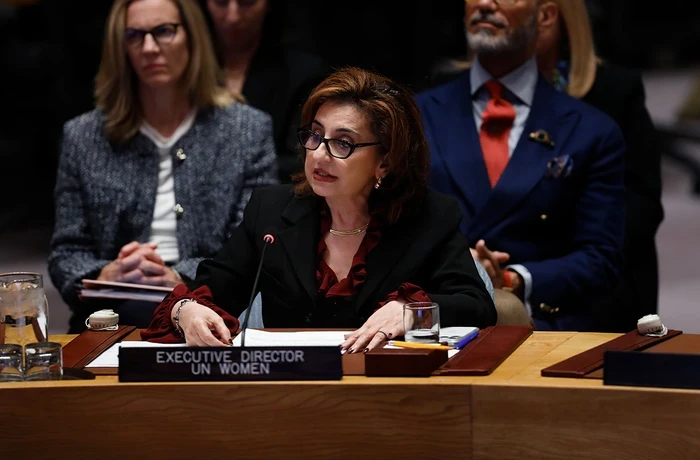
Statement by UN Women Executive Director Sima Bahous at the 7th Session of the Global Platform for Disaster Risk Reduction, on 23 May 2022.

23 May 2022
UN Women Executive Director Sima Bahous
  • Share to Facebook
  • Share to Twitter
  • Share to LinkedIn
  • Share to E-mail

[As delivered.]

It is an honour to address this seventh session of the Global Platform for Disaster Risk Reduction. Allow me to express my appreciation to the Government of Indonesia for hosting this important gathering, and to the UN Office for Disaster Risk Reduction for co-organizing.

Over the past two years, the COVID-19 pandemic has exacerbated existing disasters, including climate and environmental crises. These have all taken their highest toll on women and girls.

The Sendai Framework recognizes that gender equality, social inclusion, and women’s and girls’ leadership are essential to building resilience to disasters. Yet, we have not seen sufficient action on the ground. The ongoing Sendai Framework mid-term review is a critical opportunity to address gender gaps in disaster risk reduction and resilience. We need to strategically incorporate gender dimensions into the review process to identify and address the causes of gender-specific disaster impacts. We also need to leverage women’s voice, agency and leadership for disaster and climate resilience.

Concrete solutions include investments in understanding the gender dimensions of disaster risk and the indispensable role that women, including grassroots and indigenous women, play in reducing risks and building resilience. It is critical to increase financing for women’s organizations working on disaster risk reduction and resilience.

We also need to strengthen gender-responsive risk governance, including through the development and implementation of gender-responsive strategies, plans, budgets and policies. In this regard, we congratulate the host country, Indonesia, and the ASEAN region, in launching last year the ASEAN Regional Framework on Protection, Gender and Inclusion in Disaster Management, with UN Women’s support. This Framework presents a global example of how multilateral, international cooperation can catalyse both strategic and operational commitments to gender equality and addressing gender-based violence in disasters. Lastly, we need to foster cooperation and partnership for gender equality and women’s leadership in disaster risk reduction.

UN Women calls upon the Global Platform to include, in the chair’s summary, the promotion of a gender-responsive and inclusive Sendai Framework mid-term review process. We also call for the development of the Sendai Framework Gender Action Plan, in line with the Agreed Conclusions at the 66th session of the Commission on the Status of Women.

I am pleased to share that, in partnership with UNDRR and UNFPA, supported by the Government of Australia, UN Women has developed a gender guidance note. And we are working with a global network of gender experts and more than 500 women’s organizations to help countries to integrate gender considerations into their national Sendai Framework mid-term review processes. 

With its critical milestones, such as the Global Platform for disaster risk reduction, the Asia-Pacific Ministerial Conference on disaster risk reduction and the mid-term review process of the Sendai Framework, 2022 is a chance to close the gender gaps in disaster risk reduction and resilience. In doing so, we can achieve the inclusive, sustainable, and resilient planet we all strive for.

I thank you.
Topics

  • Disaster risk reduction
  • UN Women administration
  • Executive Director

Related content

Image
UN Under-Secretary-General and UN Women Executive Director Sima Bahous delivers remarks to the Security Council open debate on women and peace and security, UN headquarters, 27 October 2026. Photo: UN Women/Ryan Brown.
Speech

Speech: Do we have the courage to share power, the resolve to invest in women’s leadership, and the political will to turn our commitments into action?

27 October 2026
Speech: Do we have the courage to share power, the resolve to invest in women’s leadership, and the political will to turn our commitments into action?
Image
UN Women Executive Director Sima Bahous speaks at the High-Level Dialogue on Reinvigorating Feminist Multilateralism held at the UN Headquarters during the High-Level week of the 81st session of the UN General Assembly on 25 September 2026.  Photo: UN Women/Ryan Brown
Speech

Speech: Multilateralism will only remain fit for purpose if it shares power, centres women’s leadership, and delivers for the people it serves

25 September 2026
Speech: Multilateralism will only remain fit for purpose if it shares power, centres women’s leadership, and delivers for the people it serves
Image
A young woman speaks into a microphone
News

UN Women Leaders Network champions intergenerational leadership at UNGA81

25 September 2026
UN Women Leaders Network champions intergenerational leadership at UNGA81

Footer menu-HQ

  • News and stories
  • Resources
  • What we do
  • How we work
  • Where we are
  • Partnerships
  • Employment
  • Procurement
  • Contact us
  • Executive Board
  • Commission on the Status of Women

Donate button menu [Footer tablet]

  • Donate

Donate button menu [Footer]

  • Donate

Social media menu

  • Facebook
  • Twitter
  • LinkedIn
  • Flickr
  • YouTube
  • Instagram
UN Women - For all women and girls

Footer bottom [Menu]

  • Copyright
  • Information security
  • Privacy notice
  • Report wrongdoing
  • Terms of use
Share this page
  • Share to Facebook
  • Share to Twitter
  • Share to LinkedIn
  • Share to E-mail

Or copy link