Speech: Crises multiply threats, women are the solution multipliers
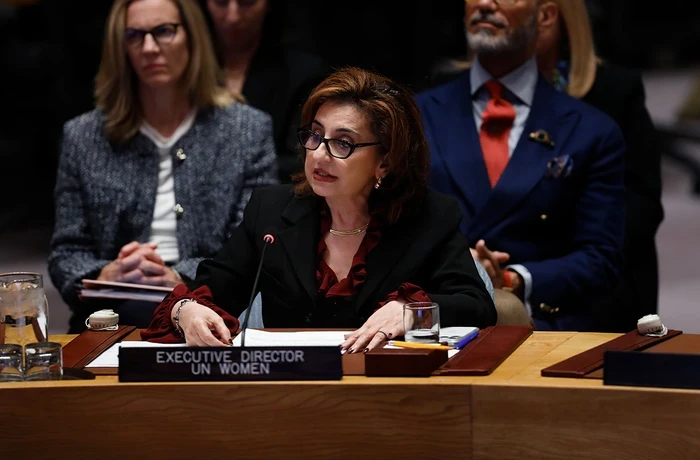
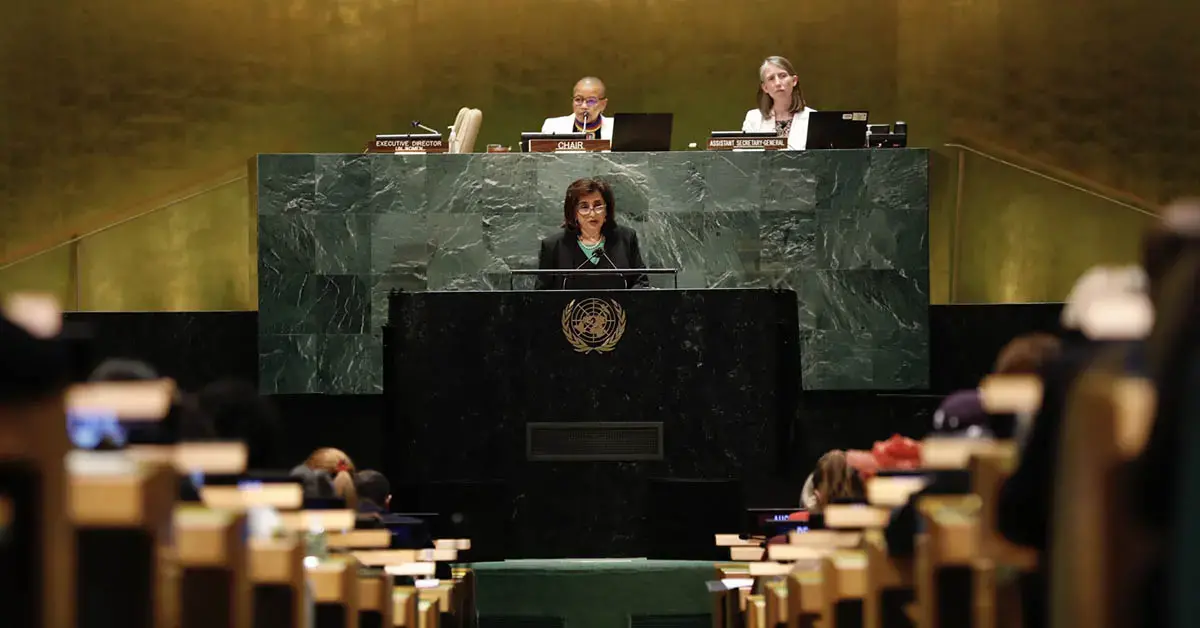
Introductory statement by UN Women Executive Director Sima Bahous to the Commission on the Status of Women at its 66th session.
[As delivered.]
We meet at a moment that brings our mandate as the UN into especially sharp focus. All crises and conflicts exact their highest price from women and girls; from Myanmar to Afghanistan, from the Sahel to Haiti, from Palestine to Syria, to Somalia, to Yemen, to Ethiopia. The horrifying war in Ukraine now joins this list.
The Secretary-General has been clear. The invasion of Ukraine must end, war must end and peace must prevail. We see with every passing day the damage done to the lives, hopes and futures of Ukrainian women and girls. I reiterate our solidarity and support and I pray that all those who are experiencing conflict will soon know peace.
We meet today against the backdrop of crisis. However, we are also convening in this hall, in person, for the first time in three years. The COVID-19 pandemic laid bare the existing global inequalities. It brought progress on women´s empowerment to a screeching halt. While we can remove our masks today, many parts of the world are still grappling with access to vaccines and adequate health care. Here too, gender inequalities in access to care are prevalent.
Inevitably, global conflicts and the COVID-19 pandemic continue to greatly occupy our minds. They are a stark reminder of the interconnectedness of the global challenges we face. The war in Ukraine, between two wheat- and oil-producing nations, threatens food security and access to essential services the world over. This too, will impact women and girls the hardest.
The COVID-19 pandemic continues to threaten progress on Agenda 2030. What is required today is not only solidarity and global solutions, but also renewed commitment.
This Commission’s Agreed Conclusions can set out a path for global resilience and recovery. This path must be guided by the Sustainable Development Goals; and be underpinned by gender equality and a commitment to multilateralism, diplomacy, peace and justice.
One of our greatest common challenges is climate change: the priority theme of this 66th Commission. The world is on fire. It impacts every corner of our globe, and threatens peace, food security and sustainable development from the Pacific to the Arctic. As with all crises, climate change also exacts its highest price from women and girls. Especially from those who are already being left behind: female-headed households; rural women; women who cannot access land; young girls who must walk further to fetch water in times of drought and missing school to do so; older women; women without access to finance -and the list goes on.
Member States have already made many important commitments to gender equality through multilateral environmental agreements such as the Rio conventions and the Sendai Framework. Now is the time to implement what has already been agreed and create gender action plans where there are gaps.
The Secretary-General’s priority theme report sets out clear recommendations, which I hope will be reflected in your Agreed Conclusions. The report is clear. Young people’s participation is necessary and key. Women´s participation and leadership are crucial to effect change. It is the only way to ensure a sustainable future. We must leverage women’s skills in managing the conservation and sustainable use of natural resources. Women and youth are taking climate and environment action everywhere. Young women are leading the global climate movement. Indigenous women have solutions from their lived experiences. We must listen; and we must act.
Currently, women’s and girls’ rights, priorities and needs are systematically overlooked by climate, environmental and disaster risk policies and programmes. For example, only a third of national energy frameworks from 137 countries include gender considerations.
We must take an all-of-government approach, intentionally bolstering the representation of women, including young women, in national parliaments, in national gender equality mechanisms, municipalities and institutions. Women in all their diversity must be part of decision-making spaces, meaningfully and without barriers. This inclusion, including through temporary special measures, is one concrete accelerated action you can take to advance gender equality and identify solutions to the global climate crisis.
We know with certainty that climate and environmental crises and disasters are escalating. When we foster and invest in women’s resilience, we are building the defences of the future as well as the assets of today. Resilience and empowerment go hand in hand.
Our ability to anticipate the next emergencies, prevent them to the extent possible, and manage them when they arise, depends on actively equipping women and girls and their organizations. Resources to do so, such as best practices in agroecology and agroforestry, already exist. They must be shared and scaled up, building on scientific, indigenous and ancestral knowledge.
We must expand decentralized sustainable energy solutions. We must support gender-responsive fisheries in the blue economy. Currently, less than 17 per cent of the water sector workforce is made up of women.
We must strive for a more stable environment and the ecosystems on which more than 1.2 billion jobs rely. There is potential for an estimated 24 million new jobs in green sectors. It is critical that women are given the training and the support to access these jobs.
We must close the global gender digital divide and gender gaps in education, information and skills. We must build resilience through increasing women’s economic empowerment and access to resources. And we must achieve universal, gender-responsive, social protection and care systems.
The COVID-19 pandemic showed us how crises dramatically increase both women’s paid care work and women’s and girls’ unpaid care and domestic work.
New global estimates by UN Women and ILO covering 189 countries and territories reveal that more than 2 million mothers left the labour force in 2020. This affected their access to social protection, equal pay, and income security as well as opportunities for management and leadership positions. This is a cumulative loss no society can afford.
Expanding decentralized sustainable energy solutions would have significant benefits for the livelihoods and resilience of women and girls by reducing their unpaid care and domestic work. As I informed the Security Council this past week, women’s inclusion in economic recovery yields enormous dividends for both peace and prosperity. The opposite is also true. When women are excluded, economies and societies suffer.
I urged the Security Council to play its part in women’s economic inclusion. I now urge this Commission, tasked also with reviewing progress in women’s economic empowerment, to do the same. The green transition has the potential to create decent jobs for women. We cannot miss this opportunity.
I said that resilience and empowerment go hand in hand. Responding to crises, ensuring that women are leading the response and prevention, is a priority for UN Women.
Similarly, increased levels of violence against women and girls and crises go hand in hand. This is also true for women who are displaced by climate emergencies. Their health comes under siege also in climate crises, including their sexual and reproductive health and rights. We must strengthen health systems and expand service delivery, including essential services for women and girls experiencing all kinds of violence.
We must also actively promote and protect the rights of women environmental human rights defenders against threats, violence and murder, improving the monitoring of these abuses and bringing to justice those responsible. Impunity for all forms of violence must end. UN Women is committed to working across the UN system and with the broadest possible range of partners, including all civil society, to tackle this pervasive violation of women’s rights.
Therefore, there are three interlocking aspects that are critical to address the nexus between climate change and gender equality. They are crises, the economy, including care, and violence against women and girls. Together, these three, unresolved aspects underpin the structural barriers that block progress for Sustainable Development.
The Secretary-General’s report shows us that an effective response to climate stabilization and environmental sustainability requires significantly increased public and private financing, as well as significant political commitment. Financing is especially needed to support women’s organizations, enterprises and cooperatives. Yet, the gender and climate movements are under-supported, under-resourced, under-valued and under-recognized.
We all must place women and girls at the centre of climate and environmental policies. In the Agreed Conclusions, you have the opportunity to commit to a more sustainable future. This will take a combination of gender-responsive, just transitions and putting care for people and planet at the very centre. It will take global solidarity, forged in the united pursuit of a world that is accelerating progress on Agenda 2030. Despite the very grim outlook, we do still have a window in which to forge a sustainable future where we will all thrive. Women and girls must be a crucial mainstay of renewed and vigorous multilateralism that truly represents the full diversity of the peoples of our world.
In closing, the interlocking crises we face today continue to compound each other’s impacts as threat multipliers. But women are the solution multipliers.
I call for the members of this Commission to live up to our resolve in the 2030 Agenda, which centrally includes – and I quote – “to protect human rights and promote gender equality and the empowerment of women and girls; and to ensure the lasting protection of the planet and its natural resources.”
We must not fail in this, nor in our pledge that “no one will be left behind”.
Today, I call upon you all to re-commit to the full and meaningful inclusion of the world’s women and girls in climate solutions. As leaders, as partners, as innovators, as implementers, as co-creators.
I began my statement with a call to action. Our global challenges are interconnected. There will be no progress for one, without progress for all. The climate emergency and gender inequality are two of the most pervasive challenges we face. We must rise to them together. It is what we owe all future generations.
I thank you.