Universal menu

  • Global
  • Regions
    • Africa
    • Americas and the Caribbean
    • Arab States
    • Asia and the Pacific
    • Europe and Central Asia
  • Knowledge
  • Data
  • Training
  • Transparency
UN Women - For all women and girls

Main Navigation-HQ

  • Who we are
    • About us
      • About UN Women
      • Business model
      • Guiding documents
      • Worldwide presence
    • Leadership
      • Governance structure
      • Executive leadership
      • Executive Board
      • Accountability
    • Work with us
      • Employment
      • Procurement
      • Calls for proposals
      • Contact us
      • UN Women Strategic Plan 2026–2029
      • UN Women Strategic Plan 2026–2029 - social media image
        UN Women Strategic Plan 2026–2029
  • What we do
    • Focus areas
      • Ending violence against women
      • Peace and security
      • Humanitarian action
      • Leadership and governance
      • Economic empowerment
      • Innovation and technology
      • Women with disabilities
      • Youth
      • HIV and AIDS
    • How we work
      • 2030 Agenda for Sustainable Development
      • Commission on the Status of Women
      • Gender parity in the UN system
      • Intergovernmental support
      • Partnerships
      • Research and data
      • Training Centre
      • Trust funds
      • UN system coordination
      • Gender Equality Accelerators
      • Gender Equality Accelerators artwork
        Gender Equality Accelerators
  • News and stories
    • Latest
      • News
      • Articles and explainers
      • In focus
    • Media center
      • Press materials
      • Media contacts
      • Explainer: Why are women so exhausted? Care work and the mental load
      • Two adults stand at a table changing diapers on baby dolls, with laundry hanging on a clothesline behind them in a home setting.
        Explainer: Why are women so exhausted? Care work and the mental load
      • Press release: Aid cuts dismantle women’s organizations working in humanitarian crises
      • A young Ugandan woman sits with another local woman to talk
        Press release: Aid cuts dismantle women’s organizations working in humanitarian crises
  • Digital library
    • Resources
      • Publications
      • Annual reports
      • Gender snapshot
      • Progress of the world’s women
      • World survey on the role of women in development
    • GenderTerm
      • GenderTerm
      • Reprint permissions
      • UN Women Highlights 2025–2026
      • A smiling woman.
        UN Women Highlights 2025–2026
      • Gender snapshot 2026
      • A diverse group of people represented as simplified silhouettes, arranged against a dark blue background.
        Gender snapshot 2026
  • Get involved
    • How to get involved
      • For ALL Women and Girls
      • International Women's Day
      • 16 Days of Activism to End Violence against Women and Girls
      • UNiTE! Campaign to End Violence against Women
      • Generation Equality
      • He for She
Ask AI
https://84e5cfacd5c7e99f9825edf344450c.1b.environment.api.powerplatform.com/powervirtualagents/botsbyschema/crad4_websiteQA/directline/token?api-version=2022-03-01-preview
1
-
Ask your question here
AI website assistant

Hello, how can I assist you?

AI chatbot responses may be incorrect. Always verify important information.

Donate button menu

Donate

Breadcrumb

  1. Home
  2. News and stories
  3. News

Website survey

We want to know how we can improve your experience on this website. Completing this survey takes less than 5 minutes.

TAKE THE SURVEY
News

COP29: What is at stake for gender equality as the second week of negotiations starts 

18 November 2024
  • Share to Facebook
  • Share to Twitter
  • Share to LinkedIn
  • Share to E-mail

As the COP29 climate conference enters its second week in Baku, Azerbaijan, global media have spotlighted it’s potential to become the second- largest COP on record with 65,000 registrations, Brazil’s bold emission-cutting commitments, and renewed calls from developing states for increased climate financing from wealthier countries for climate adaptation and mitigation efforts.  

But what has been said about gender equality? Not much. Yet, the outcomes of this COP are decisive for women and girls. Here are five critical processes to watch as the second week kicks-off. 

Image
A COP29 attendee stands outside the venue in Baku, Azerbaijan. Photo: UN Climate Change/Kiara Worth.

1. Women’s participation is not where it needs to be.

While this is the most gender-balanced COP yet in terms of confirmed registrations, with preliminary figures showing 40 per cent of the parties’ delegations are women, the same cannot be said about the representation at the highest executive levels. During the opening segment, there were only eight women speaking out of 78 government leaders, and only four leaders mentioned the impact of climate change on women.


2. Gender equality remains gridlocked in the negotiations.

The geopolitical divide between developed and developing countries is putting issues such as gender equality on the backburner. Concrete language regarding women’s rights and empowerment is not locked in because negotiations are gridlocked and consensus on issues such as climate finance and capacity building has not been reached, meaning there is less and less time to focus on gender equality. 


3. The interlinkages between gender equality, peacebuilding, and climate action are mostly overlooked.

Women leading climate resilience and conflict prevention efforts highlighted how the Women, Peace, and Security agenda could transform climate finance to be more gender-responsive and peace sensitive. Yet little attention is being paid to the linkages of these key issues. 


4. Integrating the care economy into the Just Transitions plans.

While there is no guarantee yet that it will be kept, a breakthrough was the inclusion of care work, both paid and unpaid, in the draft outcome document on just transitions. It recognizes that the care economy is a crucial part of climate action, as the amount of time that women and girls spend on unpaid care work will increase because of climate-induced scarcity of resources, and that climate policies must address this. At the same time, just transitions must acknowledge and address the gender gaps in skills, such as STEM, needed to access green jobs, mostly dominated by men. It remains to be seen if this key point will make it into the final document. 


5. Uncertainty around gender-responsive climate finance. 

The draft decision on climate finance does include a mention of gender. However, discussions so far do not adequately reflect the need to have gender-responsive actions, despite women being at the forefront of climate action, and there are fears that it could be traded off. In the second week, there needs to be a clear push for gender-responsive climate finance that is accessible to women-led grassroots organizations and feminist groups who are at the forefront of climate action. 

Related content

Image
Five women chefs stand together, arms folded, and pose for a photo
Feature

One month after the Nepal floods, women are running community kitchens, feeding their communities, and rebuilding their lives

25 September 2026
One month after the Nepal floods, women are running community kitchens, feeding their communities, and rebuilding their lives
Image
UNWomen_Placeholder
Press briefing

Nepal floods: 43,000 women and girls need immediate humanitarian assistance

1 September 2026
Nepal floods: 43,000 women and girls need immediate humanitarian assistance
Image
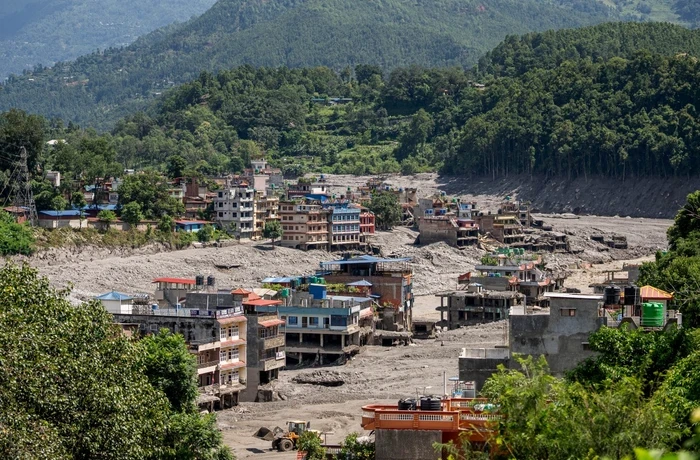
A village is devastated by floods, thick with mud and debris
Press release

Nearly 160,000 women and girls impacted by Nepal flash floods

28 August 2026
Nearly 160,000 women and girls impacted by Nepal flash floods

Footer menu-HQ

  • News and stories
  • Resources
  • What we do
  • How we work
  • Where we are
  • Partnerships
  • Employment
  • Procurement
  • Contact us
  • Executive Board
  • Commission on the Status of Women

Donate button menu [Footer tablet]

  • Donate

Donate button menu [Footer]

  • Donate

Social media menu

  • Facebook
  • Twitter
  • LinkedIn
  • Flickr
  • YouTube
  • Instagram
UN Women - For all women and girls

Footer bottom [Menu]

  • Copyright
  • Information security
  • Privacy notice
  • Report wrongdoing
  • Terms of use
Share this page
  • Share to Facebook
  • Share to Twitter
  • Share to LinkedIn
  • Share to E-mail

Or copy link