
Universal menu

  • Global
  • Regions
    • Africa
    • Americas and the Caribbean
    • Arab States
    • Asia and the Pacific
    • Europe and Central Asia
  • Knowledge
  • Data
  • Training
  • Transparency
UN Women - For all women and girls

Main Navigation-HQ

  • Who we are
    • About us
      • About UN Women
      • Business model
      • Guiding documents
      • Worldwide presence
    • Leadership
      • Governance structure
      • Executive leadership
      • Executive Board
      • Accountability
    • Work with us
      • Employment
      • Procurement
      • Calls for proposals
      • Contact us
      • UN Women Strategic Plan 2026–2029
      • UN Women Strategic Plan 2026–2029 - social media image
        UN Women Strategic Plan 2026–2029
  • What we do
    • Focus areas
      • Ending violence against women
      • Peace and security
      • Humanitarian action
      • Leadership and governance
      • Economic empowerment
      • Innovation and technology
      • Women with disabilities
      • Youth
      • HIV and AIDS
    • How we work
      • 2030 Agenda for Sustainable Development
      • Commission on the Status of Women
      • Gender parity in the UN system
      • Intergovernmental support
      • Partnerships
      • Research and data
      • Training Centre
      • Trust funds
      • UN system coordination
      • Gender Equality Accelerators
      • Gender Equality Accelerators artwork
        Gender Equality Accelerators
  • News and stories
    • Latest
      • News
      • Articles and explainers
      • In focus
    • Media center
      • Press materials
      • Media contacts
      • Explainer: Why are women so exhausted? Care work and the mental load
      • Two adults stand at a table changing diapers on baby dolls, with laundry hanging on a clothesline behind them in a home setting.
        Explainer: Why are women so exhausted? Care work and the mental load
      • Press release: Aid cuts dismantle women’s organizations working in humanitarian crises
      • A young Ugandan woman sits with another local woman to talk
        Press release: Aid cuts dismantle women’s organizations working in humanitarian crises
  • Digital library
    • Resources
      • Publications
      • Annual reports
      • Gender snapshot
      • Progress of the world’s women
      • World survey on the role of women in development
    • GenderTerm
      • GenderTerm
      • Reprint permissions
      • UN Women Highlights 2025–2026
      • A smiling woman.
        UN Women Highlights 2025–2026
      • Gender snapshot 2026
      • A diverse group of people represented as simplified silhouettes, arranged against a dark blue background.
        Gender snapshot 2026
  • Get involved
    • How to get involved
      • For ALL Women and Girls
      • International Women's Day
      • 16 Days of Activism to End Violence against Women and Girls
      • UNiTE! Campaign to End Violence against Women
      • Generation Equality
      • He for She
Ask AI
https://84e5cfacd5c7e99f9825edf344450c.1b.environment.api.powerplatform.com/powervirtualagents/botsbyschema/crad4_websiteQA/directline/token?api-version=2022-03-01-preview
1
-
Ask your question here
AI website assistant

Hello, how can I assist you?

AI chatbot responses may be incorrect. Always verify important information.

Donate button menu

Donate

Breadcrumb

  1. Home
  2. News and stories
  3. News

Website survey

We want to know how we can improve your experience on this website. Completing this survey takes less than 5 minutes.

TAKE THE SURVEY
Feature

Collecting data and analysis on how the war in Ukraine is impacting women and girls

13 April 2022
  • Share to Facebook
  • Share to Twitter
  • Share to LinkedIn
  • Share to E-mail

Originally published on UN Women's regional website for Europe and Central Asia

Despite the myriad challenges of collecting data in conflict, UN Women has been working tirelessly with partners to gather, analyse and disseminate data to illustrate the differential and disproportionate impacts of Russia’s invasion of Ukraine on women and girls. At least five publications have been produced so far, revealing the grim reality of war and its evolution, particularly for the most vulnerable women and girls.

Image
A young girl looks sits with luggage alongside a crowd of refugees at the Mayaki-Udobnoe Border crossing in southeastern Moldova.
The Palanca – Mayaki-Udobnoe Border crossing in southeastern Moldova where thousands of refugees arrive every day to escape the war in Ukraine. Photo: UN Women/Aurel Obreja

The most recent is a rapid gender analysis conducted between 14 and 22 March 2022 based on data, both from before and after the recent invasion. It suggests that the war is exacerbating pre-existing inequalities, particularly for older women and single mothers who comprise the majority of Ukraine’s poor. The analysis also quantifies the gendered flow of migrants, with 3.7 million refugees having fled the country (90% of whom are women and children as men aged 18–60 cannot leave) and the number of internally displaced people reaching 6.5 million. It outlines emerging protection concerns around sexual and gender-based violence and the unequal access to services and resources for those left behind. It also includes recommendations for humanitarian leaders, actors and donors to ensure consideration of the gendered dimensions of risk, vulnerability and capabilities in response to this crisis. Recommendations include the need to ensure that data, evidence and women’s voices inform humanitarian responses and are reflected in budgeting, programming and service-delivery, among many others.

In partnership with the International Organization for Migration (IOM), ongoing surveys on the displacement patterns, needs and intentions of Ukrainian refugees and third-country nationals have been produced, the first based on 1,777 interviews conducted with Ukrainians crossing into the Republic of Moldova from 9–17 March 2022. An updated report was published in early April, based on 4,384 interviews conducted between 9–27 March at four Moldovan border crossing points and three transit locations, with extended questionnaires delivered in temporary placement centres and private accommodations. The surveys detail their place of origin, intended destinations and main needs at entry points and centres. They reveal that women account for 81% of all refugees surveyed; that 83% of refugee women are travelling with at least one child; and that 87% are travelling with a group. However, with 1 in 10 women travelling alone (mostly aged 18–30 or 60+), young and elderly women are more exposed to harassment, gender-based violence and human trafficking.

In close cooperation with the Border Police of the Republic of Moldova, UN Women produced a factsheet in mid-March with data on the demographic profiles of Ukrainian refugees hosted by the Republic of Moldova – the first in a series that will examine the changing gender dimensions of the current humanitarian crisis as new data become available. It reveals that there are 77 children under 11 years for every 100 women, indicating that women are bearing an immense childcare burden over and above the need for shelter, lack of access to basic services and the emotional and psychological distress brought on by displacement.

And to better understand the situation for women’s CSOs, between 4–10 March, UN Women conducted an online rapid assessment survey with 67 women’s civil society organizations (CSOs) across Ukraine, 42% of which rely entirely on volunteers. It also includes findings from group consultations organized between UN Women and women CSOs with participation of Ukraine’s national gender machinery. The report aims to help inform the decision-making of national and international stakeholders, and advocate for greater support for CSOs during the war. The survey identifies seven key areas for concern for women and girls: immediate safety threats; a lack of basic necessities; the loss of livelihoods; the psychological impact of war and constant fear; sexual and gender-based violence in public and private spaces; a lack of communication, information and social services; and women face exclusion from planning and decision-making at all levels. Notably, 85% of CSOs reported the need for additional funds in the coming months and the report includes a call to action to prioritize funding for women’s CSOs and their meaningful participation in humanitarian response coordination.

More data analysis is forthcoming. Together with CARE, UN Women will also produce a new RGA based on survey data with internally displaced populations within Ukraine, and issue a report on surveys of refugees in Moldova undertaken with the IOM, both expected in mid-April.

Through these varied gender data collection and analyses, UN Women seeks to inform the humanitarian response and advocate for the priorities of all women and girls, including those from the most vulnerable groups.

Topics

  • Migration
  • Gender data production and collection
  • Peace and security
  • Conflict, war
  • Europe and Central Asia
  • Ukraine
  • Moldova, Republic of

Related content

Image
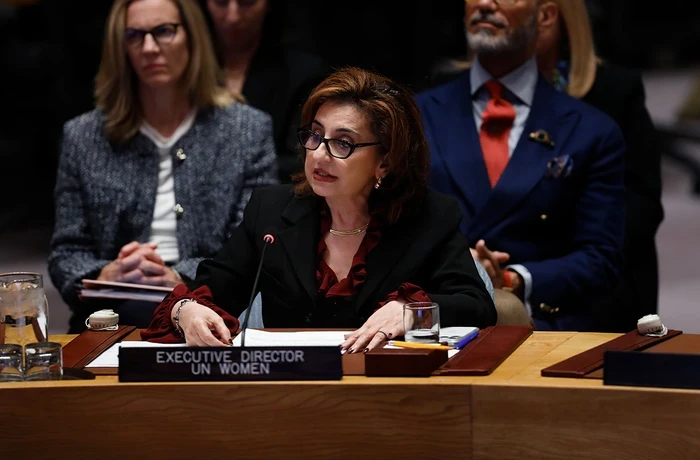
UN Under-Secretary-General and UN Women Executive Director Sima Bahous delivers remarks to the Security Council open debate on women and peace and security, UN headquarters, 27 October 2026. Photo: UN Women/Ryan Brown.
Speech

Speech: Do we have the courage to share power, the resolve to invest in women’s leadership, and the political will to turn our commitments into action?

27 October 2026
Speech: Do we have the courage to share power, the resolve to invest in women’s leadership, and the political will to turn our commitments into action?
Image
UNWomen_Placeholder
Press release

Women and girls’ death toll in armed conflict doubles since 2021

26 October 2026
Women and girls’ death toll in armed conflict doubles since 2021
Image
UNWomen_Placeholder
Press briefing

The UN Secretary General’s report on Women, Peace, and Security

26 October 2026
The UN Secretary General’s report on Women, Peace, and Security

Footer menu-HQ

  • News and stories
  • Resources
  • What we do
  • How we work
  • Where we are
  • Partnerships
  • Employment
  • Procurement
  • Contact us
  • Executive Board
  • Commission on the Status of Women

Donate button menu [Footer tablet]

  • Donate

Donate button menu [Footer]

  • Donate

Social media menu

  • Facebook
  • Twitter
  • LinkedIn
  • Flickr
  • YouTube
  • Instagram
UN Women - For all women and girls

Footer bottom [Menu]

  • Copyright
  • Information security
  • Privacy notice
  • Report wrongdoing
  • Terms of use
Share this page
  • Share to Facebook
  • Share to Twitter
  • Share to LinkedIn
  • Share to E-mail

Or copy link