
Universal menu

  • Global
  • Regions
    • Africa
    • Americas and the Caribbean
    • Arab States
    • Asia and the Pacific
    • Europe and Central Asia
  • Knowledge
  • Data
  • Training
  • Transparency
UN Women - For all women and girls

Main Navigation-HQ

  • Who we are
    • About us
      • About UN Women
      • Business model
      • Guiding documents
      • Worldwide presence
    • Leadership
      • Governance structure
      • Executive leadership
      • Executive Board
      • Accountability
    • Work with us
      • Employment
      • Procurement
      • Calls for proposals
      • Contact us
      • UN Women Strategic Plan 2026–2029
      • UN Women Strategic Plan 2026–2029 - social media image
        UN Women Strategic Plan 2026–2029
  • What we do
    • Focus areas
      • Ending violence against women
      • Peace and security
      • Humanitarian action
      • Leadership and governance
      • Economic empowerment
      • Innovation and technology
      • Women with disabilities
      • Youth
      • HIV and AIDS
    • How we work
      • 2030 Agenda for Sustainable Development
      • Commission on the Status of Women
      • Gender parity in the UN system
      • Intergovernmental support
      • Partnerships
      • Research and data
      • Training Centre
      • Trust funds
      • UN system coordination
      • Gender Equality Accelerators
      • Gender Equality Accelerators artwork
        Gender Equality Accelerators
  • News and stories
    • Latest
      • News
      • Articles and explainers
      • In focus
    • Media center
      • Press materials
      • Media contacts
      • Explainer: Why are women so exhausted? Care work and the mental load
      • Two adults stand at a table changing diapers on baby dolls, with laundry hanging on a clothesline behind them in a home setting.
        Explainer: Why are women so exhausted? Care work and the mental load
      • Press release: Aid cuts dismantle women’s organizations working in humanitarian crises
      • A young Ugandan woman sits with another local woman to talk
        Press release: Aid cuts dismantle women’s organizations working in humanitarian crises
  • Digital library
    • Resources
      • Publications
      • Annual reports
      • Gender snapshot
      • Progress of the world’s women
      • World survey on the role of women in development
    • GenderTerm
      • GenderTerm
      • Reprint permissions
      • UN Women Highlights 2025–2026
      • A smiling woman.
        UN Women Highlights 2025–2026
      • Gender snapshot 2026
      • A diverse group of people represented as simplified silhouettes, arranged against a dark blue background.
        Gender snapshot 2026
  • Get involved
    • How to get involved
      • For ALL Women and Girls
      • International Women's Day
      • 16 Days of Activism to End Violence against Women and Girls
      • UNiTE! Campaign to End Violence against Women
      • Generation Equality
      • He for She
Ask AI
https://84e5cfacd5c7e99f9825edf344450c.1b.environment.api.powerplatform.com/powervirtualagents/botsbyschema/crad4_websiteQA/directline/token?api-version=2022-03-01-preview
1
-
Ask your question here
AI website assistant

Hello, how can I assist you?

AI chatbot responses may be incorrect. Always verify important information.

Donate button menu

Donate

Breadcrumb

  1. Home
  2. News and stories
  3. From where I stand

Website survey

We want to know how we can improve your experience on this website. Completing this survey takes less than 5 minutes.

TAKE THE SURVEY
From where I stand

From where I stand: “Our territories are our futures.”

15 November 2021
  • Share to Facebook
  • Share to Twitter
  • Share to LinkedIn
  • Share to E-mail

Celia Umenza Velasco is a leader of the largest Indigenous group in Colombia, the Nasa People, from the northern Cauca region of Colombia, one of the zones most affected by the armed conflict. Umenza Velasco briefed the United Nations Security Council at the recent Open Debate on Women, Peace and Security.

Image
Celia Umenza Velasco, Legal Coordinator for the Indigenous Reservation of Tacueyó and Member of Association of Indigenous Cabildos of the North of Cauca (ACIN), addresses briefs the Security Council meeting on women and peace and security. Photo: UN Photo/Eskinder Debebe
Celia Umenza Velasco, Legal Coordinator for the Indigenous Reservation of Tacueyó and Member of Association of Indigenous Cabildos of the North of Cauca (ACIN), addresses briefs the Security Council meeting on women and peace and security.
Photo: UN Photo/Eskinder Debebe
Celia Umenza Velasco, Legal Coordinator for the Indigenous Reservation of Tacueyó and Member of Association of Indigenous Cabildos of the North of Cauca (ACIN), addresses briefs the Security Council meeting on women and peace and security. Photo: UN Photo/Eskinder Debebe

I have been a defender of human rights and the environment since I can remember, since I was young.

As Indigenous people, we face a variety of problems relating to the environment and the land. The main ones are state policy, drug trafficking, paramilitarism, and armed actors. Indigenous peoples have experienced historical persecution, including displacements, massacres, and assassinations. There are mining concessions within our territories [1].

We have fought to survive and fought for our culture not to come to an end. I believe that our territories are our future.

Insecurity is the biggest barrier that we face as women and as an organization in Indigenous, Afro-descendant, and campesino territories. Because of my activism, I have experienced retaliation. I have been blocked from doing my work, I’ve been shot at. The first time that I received threats for my activism was in 2005, and the most recent time was in January 2019.

The COVID-19 pandemic affected us because it restricted all movement within the territory and outside of it. Despite the fact that we were locked within the territories, the violence against us did not stop. Women lost children and partners. Today, they are carrying the whole family’s burden.

Women experienced gender-based violence during the pandemic. The armed actors were strengthened during the pandemic and women experienced displacement and assassinations.

Indigenous women, Afro-descendant women, and campesinas have big roles in their cultures and families. We say that women are the symbol of the land because we are life, and the land is life.

To end violence against women and girls, we must give space to “territorial women” [2] so that they can implement peace. To protect and defend land and environmental resources in Colombia, we rely on the cultural aspect of our worldview. It is a fundamental pillar for the protection of the territory and for the protection of human rights defenders. The Indigenous Guard [3] is also very important to defend our land and resources. Indigenous women and Indigenous boys and girls are represented by the Indigenous Guard.

Our culture must be strengthened, and the Indigenous Guard must be strengthened as a body for peace and as defenders of human rights, land rights, and the environment.

For us, a peaceful Colombia is when we live in peace, in tranquility, and with the harmony that we have always hoped for.”

SDG 16: Peace, justice and strong institutions

Celia Umenza Velasco, 53, is the Legal Coordinator for the Indigenous Reservation of Tacueyó and member of the Association of Indigenous Councils of North Cauca (ACIN). She is a member of Cxhab Wala Kiwe, which means “Great People’s Territory” in the Nasa Yuwe language.

Notes

[1] An Indigenous territory refers to land reserved for use of the Indigenous peoples of Colombia. The Colombian Constitution of 1991 grants Indigenous communities inalienable and inviolable control of reserve lands in perpetuity.

[2] Meaning, women from Indigenous, Afro-Colombian, and campesino territories.

[3] The Indigenous Guard of Cauca is a community protection network made up of women, men, and children who defend their territories without weapons. In 2020, the Indigenous Guard of Cauca won the Front Line Defenders Regional Award of the Americas for human rights defenders at risk.

Topics

  • Rural women
  • Ending violence against women and girls
  • Indigenous women
  • Peace and security
  • Latin America and the Caribbean
  • Colombia

Related content

Image
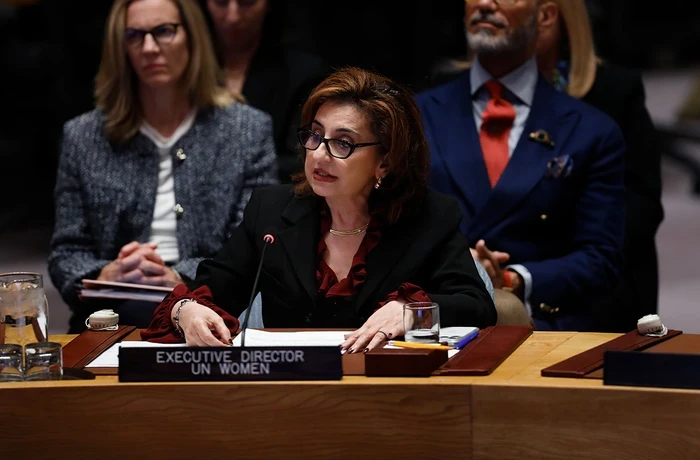
UN Under-Secretary-General and UN Women Executive Director Sima Bahous delivers remarks to the Security Council open debate on women and peace and security, UN headquarters, 27 October 2026. Photo: UN Women/Ryan Brown.
Speech

Speech: Do we have the courage to share power, the resolve to invest in women’s leadership, and the political will to turn our commitments into action?

27 October 2026
Speech: Do we have the courage to share power, the resolve to invest in women’s leadership, and the political will to turn our commitments into action?
Image
UNWomen_Placeholder
Press briefing

The UN Secretary General’s report on Women, Peace, and Security

26 October 2026
The UN Secretary General’s report on Women, Peace, and Security
Image
UNWomen_Placeholder
Press release

Women and girls’ death toll in armed conflict doubles since 2021

26 October 2026
Women and girls’ death toll in armed conflict doubles since 2021

Footer menu-HQ

  • News and stories
  • Resources
  • What we do
  • How we work
  • Where we are
  • Partnerships
  • Employment
  • Procurement
  • Contact us
  • Executive Board
  • Commission on the Status of Women

Donate button menu [Footer tablet]

  • Donate

Donate button menu [Footer]

  • Donate

Social media menu

  • Facebook
  • Twitter
  • LinkedIn
  • Flickr
  • YouTube
  • Instagram
UN Women - For all women and girls

Footer bottom [Menu]

  • Copyright
  • Information security
  • Privacy notice
  • Report wrongdoing
  • Terms of use
Share this page
  • Share to Facebook
  • Share to Twitter
  • Share to LinkedIn
  • Share to E-mail

Or copy link