
Universal menu

  • Global
  • Regions
    • Africa
    • Americas and the Caribbean
    • Arab States
    • Asia and the Pacific
    • Europe and Central Asia
  • Knowledge
  • Data
  • Training
  • Transparency
UN Women - For all women and girls

Main Navigation-HQ

  • Who we are
    • About us
      • About UN Women
      • Business model
      • Guiding documents
      • Worldwide presence
    • Leadership
      • Governance structure
      • Executive leadership
      • Executive Board
      • Accountability
    • Work with us
      • Employment
      • Procurement
      • Calls for proposals
      • Contact us
      • UN Women Strategic Plan 2026–2029
      • UN Women Strategic Plan 2026–2029 - social media image
        UN Women Strategic Plan 2026–2029
  • What we do
    • Focus areas
      • Ending violence against women
      • Peace and security
      • Humanitarian action
      • Leadership and governance
      • Economic empowerment
      • Innovation and technology
      • Women with disabilities
      • Youth
      • HIV and AIDS
    • How we work
      • 2030 Agenda for Sustainable Development
      • Commission on the Status of Women
      • Gender parity in the UN system
      • Intergovernmental support
      • Partnerships
      • Research and data
      • Training Centre
      • Trust funds
      • UN system coordination
      • Gender Equality Accelerators
      • Gender Equality Accelerators artwork
        Gender Equality Accelerators
  • News and stories
    • Latest
      • News
      • Articles and explainers
      • In focus
    • Media center
      • Press materials
      • Media contacts
      • Explainer: Why are women so exhausted? Care work and the mental load
      • Two adults stand at a table changing diapers on baby dolls, with laundry hanging on a clothesline behind them in a home setting.
        Explainer: Why are women so exhausted? Care work and the mental load
      • Press release: Aid cuts dismantle women’s organizations working in humanitarian crises
      • A young Ugandan woman sits with another local woman to talk
        Press release: Aid cuts dismantle women’s organizations working in humanitarian crises
  • Digital library
    • Resources
      • Publications
      • Annual reports
      • Gender snapshot
      • Progress of the world’s women
      • World survey on the role of women in development
    • GenderTerm
      • GenderTerm
      • Reprint permissions
      • UN Women Highlights 2025–2026
      • A smiling woman.
        UN Women Highlights 2025–2026
      • Gender snapshot 2026
      • A diverse group of people represented as simplified silhouettes, arranged against a dark blue background.
        Gender snapshot 2026
  • Get involved
    • How to get involved
      • For ALL Women and Girls
      • International Women's Day
      • 16 Days of Activism to End Violence against Women and Girls
      • UNiTE! Campaign to End Violence against Women
      • Generation Equality
      • He for She
Ask AI
https://84e5cfacd5c7e99f9825edf344450c.1b.environment.api.powerplatform.com/powervirtualagents/botsbyschema/crad4_websiteQA/directline/token?api-version=2022-03-01-preview
1
-
Ask your question here
AI website assistant

Hello, how can I assist you?

AI chatbot responses may be incorrect. Always verify important information.

Donate button menu

Donate

Breadcrumb

  1. Home
  2. News and stories
  3. Feature story

Website survey

We want to know how we can improve your experience on this website. Completing this survey takes less than 5 minutes.

TAKE THE SURVEY
Feature

‘No time for grief or tears’ - The conflict in Lebanon, through the eyes of four women

21 November 2024
  • Share to Facebook
  • Share to Twitter
  • Share to LinkedIn
  • Share to E-mail

“I want to send a message of love and peace to all women,” says Fadia Jomaa, a journalist and an environmental activist from the southern Lebanese city of Tyre.

“I want them to know that when this war ends, they will look back and see how strong they were, and how their strength kept their families and communities going.”

When Israeli attacks on Lebanon escalated in late September 2024 after almost a year of relatively limited fighting, Jomaa awoke to the sound of intense airstrikes in Tyre. She gathered her children and fled to stay with relatives in Saida.

“The situation has been, and remains, catastrophic,” she said, describing how, even after reaching the relative safety of Saida, several of her relatives were killed in a strike.

Image
Photos (left to right) of Reem Haj Ali, Josephine Zgheib, Afaf Shoaib, and Fadia Jomaa.
Photos (left to right) of Reem Haj Ali, Josephine Zgheib, Afaf Shoaib, and Fadia Jomaa. Photo of Shoaib by UN Women/Rawad Al Feghali. Other photos courtesy of the subjects.

Providing aid to displaced women and girls

“Despite this tragedy, I quickly pulled myself together and returned to my volunteer work immediately,” she said. “There is no time for grief or tears.”

Jomaa works as a mediator with UN Women, working to prevent and resolve conflicts through advocacy for policy change and community-level action. Even through the conflict’s escalation, Jomaa has continued this difficult, vital work—she developed an emotional support programme for displaced children and their caregivers in the Tyre area and has facilitated counseling sessions with women and their families.

In the northern Lebanese city of Tripoli, Reem Haj Ali is also working to provide aid to those in need.

The Ruwwad Al Tanmeya non-governmental organization, a UN Women partner, where Haj Ali works as a programme manager, has mobilized to address the country’s displacement crisis.

“At the start, people only had the clothes on their backs. Nothing else,” she said. “Some people might think that the needs of so many people are too high. But even small actions can provide relief and restore some sense of safety, which reaffirms our commitment to this work.”

Haj Ali described how access to food, sanitation, water, and education affect all displaced people—and how women and girls can face unique challenges in shelters.

“There are gender-specific concerns revolving around women’s safety, health, and economic security,” she said. “Many women may face increased risks of gender-based violence, lack access to showers, safe spaces, maternal care, and so on, which exacerbates their vulnerabilities.”

Women are shouldering huge responsibilities during the crisis. But they are also essential to Lebanon’s response and recovery.

“Women play a vital role in protecting other women. Women understand the challenges we all face, which helps us connect and support each other,” Haj Ali said. “We need to make sure to include women in decision-making so we can respond to crises in a more inclusive and effective way.”

Image
Southern suburbs of Beirut, Lebanon, are seen following airstrikes during first three days of October 2024.
Southern suburbs of Beirut, Lebanon, are seen following airstrikes during first three days of October 2024. Photo: UNICEF/UNI655537/Dar al Mussawir-Ramzi Haidar

Ensuring safety and dignity in shelters

The conflict “has had wide repercussions. People’s lives were turned upside down,” said Josephine Zgheib, an activist and member of the Municipal Council of Kfardebian, an area north of Beirut. Zgheib is also a candidate for the Lebanese Parliament, and president of the Beity Association, a non-governmental organization that focuses on public accountability for local governance.

Zgheib said that she has worked with municipal authorities to support people arriving in Kfardebian, seeking safety.

“After the initial humanitarian response and meeting people’s urgent need for shelter and food in the first week, we sought to preserve the dignity of the displaced,” she said. “We focused on this by trying to provide each family with their own bathroom, to guarantee more privacy and comfort.”

She also highlighted the gender-specific elements of the crisis.

“The needs of everyone, and especially of women and girls, are exacerbated,” she said. “Women now find themselves in charge of most, if not all, day-to-day activities, from cooking to cleaning to doing laundry to caring for children and helping them with their studies. So, women are tired, both physically and mentally.”

Afaf Shoaib, a 29-year-old mother of two, who was forced to flee her home in Baalbek, northeastern Lebanon, arrived with her husband and children at Auberge Beity, a facility run by Zgheib’s Beity Association in Kfardebian, in the dead of night.

Shoaib was previously displaced during the war in 2006, when her family took temporary refuge Syria. She said she developed certain coping mechanisms, “but no matter how many times you are displaced, it never becomes easier.”

Shoaib’s husband was forced to leave his job when they were displaced—Shoaib has been able to continue her work for a local non-governmental organization and is now her family’s main breadwinner.

“Our financial situation is very challenging, but my work saved our family,” she said. “In times like these, you realize just how important it is for a woman to have a role, a job, and an income. My family values my work now more than ever.”

Shoaib said that she sees women’s roles as central in the response to the current crisis, and beyond.

“Lebanon’s recovery and the rebuilding of society after the war must be led by women,” she said. “I intend to focus on women’s economic empowerment after the war, as women are the best peacebuilders and community leaders.”

Topics

  • Peace and security
  • Conflict, war
  • Arab States/North Africa
  • Lebanon

Related content

Image
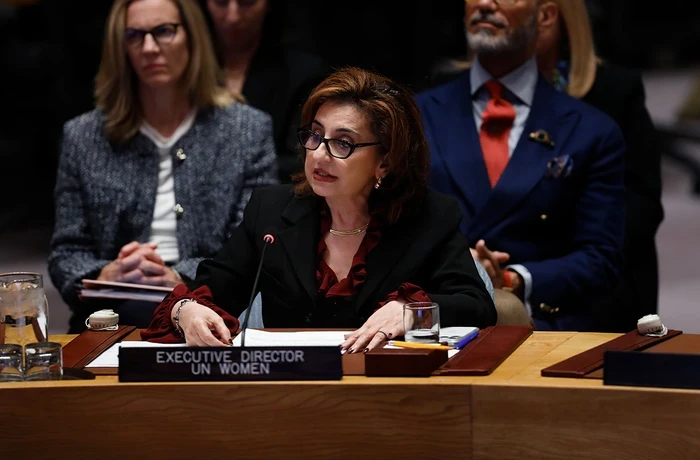
UN Under-Secretary-General and UN Women Executive Director Sima Bahous delivers remarks to the Security Council open debate on women and peace and security, UN headquarters, 27 October 2026. Photo: UN Women/Ryan Brown.
Speech

Speech: Do we have the courage to share power, the resolve to invest in women’s leadership, and the political will to turn our commitments into action?

27 October 2026
Speech: Do we have the courage to share power, the resolve to invest in women’s leadership, and the political will to turn our commitments into action?
Image
UNWomen_Placeholder
Press briefing

The UN Secretary General’s report on Women, Peace, and Security

26 October 2026
The UN Secretary General’s report on Women, Peace, and Security
Image
UNWomen_Placeholder
Press release

Women and girls’ death toll in armed conflict doubles since 2021

26 October 2026
Women and girls’ death toll in armed conflict doubles since 2021

Footer menu-HQ

  • News and stories
  • Resources
  • What we do
  • How we work
  • Where we are
  • Partnerships
  • Employment
  • Procurement
  • Contact us
  • Executive Board
  • Commission on the Status of Women

Donate button menu [Footer tablet]

  • Donate

Donate button menu [Footer]

  • Donate

Social media menu

  • Facebook
  • Twitter
  • LinkedIn
  • Flickr
  • YouTube
  • Instagram
UN Women - For all women and girls

Footer bottom [Menu]

  • Copyright
  • Information security
  • Privacy notice
  • Report wrongdoing
  • Terms of use
Share this page
  • Share to Facebook
  • Share to Twitter
  • Share to LinkedIn
  • Share to E-mail

Or copy link