
Universal menu

  • Global
  • Regions
    • Africa
    • Americas and the Caribbean
    • Arab States
    • Asia and the Pacific
    • Europe and Central Asia
  • Knowledge
  • Data
  • Training
  • Transparency
UN Women - For all women and girls

Main Navigation-HQ

  • Who we are
    • About us
      • About UN Women
      • Business model
      • Guiding documents
      • Worldwide presence
    • Leadership
      • Governance structure
      • Executive leadership
      • Executive Board
      • Accountability
    • Work with us
      • Employment
      • Procurement
      • Calls for proposals
      • Contact us
      • UN Women Strategic Plan 2026–2029
      • UN Women Strategic Plan 2026–2029 - social media image
        UN Women Strategic Plan 2026–2029
  • What we do
    • Focus areas
      • Ending violence against women
      • Peace and security
      • Humanitarian action
      • Leadership and governance
      • Economic empowerment
      • Innovation and technology
      • Women with disabilities
      • Youth
      • HIV and AIDS
    • How we work
      • 2030 Agenda for Sustainable Development
      • Commission on the Status of Women
      • Gender parity in the UN system
      • Intergovernmental support
      • Partnerships
      • Research and data
      • Training Centre
      • Trust funds
      • UN system coordination
      • Gender Equality Accelerators
      • Gender Equality Accelerators artwork
        Gender Equality Accelerators
  • News and stories
    • Latest
      • News
      • Articles and explainers
      • In focus
    • Media center
      • Press materials
      • Media contacts
      • Explainer: Why are women so exhausted? Care work and the mental load
      • Two adults stand at a table changing diapers on baby dolls, with laundry hanging on a clothesline behind them in a home setting.
        Explainer: Why are women so exhausted? Care work and the mental load
      • Press release: Aid cuts dismantle women’s organizations working in humanitarian crises
      • A young Ugandan woman sits with another local woman to talk
        Press release: Aid cuts dismantle women’s organizations working in humanitarian crises
  • Digital library
    • Resources
      • Publications
      • Annual reports
      • Gender snapshot
      • Progress of the world’s women
      • World survey on the role of women in development
    • GenderTerm
      • GenderTerm
      • Reprint permissions
      • UN Women Highlights 2025–2026
      • A smiling woman.
        UN Women Highlights 2025–2026
      • Gender snapshot 2026
      • A diverse group of people represented as simplified silhouettes, arranged against a dark blue background.
        Gender snapshot 2026
  • Get involved
    • How to get involved
      • For ALL Women and Girls
      • International Women's Day
      • 16 Days of Activism to End Violence against Women and Girls
      • UNiTE! Campaign to End Violence against Women
      • Generation Equality
      • He for She
Ask AI
https://84e5cfacd5c7e99f9825edf344450c.1b.environment.api.powerplatform.com/powervirtualagents/botsbyschema/crad4_websiteQA/directline/token?api-version=2022-03-01-preview
1
-
Ask your question here
AI website assistant

Hello, how can I assist you?

AI chatbot responses may be incorrect. Always verify important information.

Donate button menu

Donate

Breadcrumb

  1. Home
  2. News and stories
  3. Feature story

Website survey

We want to know how we can improve your experience on this website. Completing this survey takes less than 5 minutes.

TAKE THE SURVEY
Feature

Women share stories of crisis and displacement in Lebanon

3 October 2024
  • Share to Facebook
  • Share to Twitter
  • Share to LinkedIn
  • Share to E-mail

“The bombing is very close by, so horror is dominating,” said Zeinab Qabalan Salamieh, a 45-year-old divorced mother of two, living in the Rashidieh Palestine refugee camp on Lebanon’s southern coast.

The Rashidieh camp, which held more than 36,000 people, and other Palestine refugee camps, including Ein al-Hilweh, have come under fire since Israeli forces escalated their attacks on Lebanon in late September. Many have fled to other parts of the country; but Salamieh said she could not afford to leave.

“We are alone here now and can’t relocate because of our financial situation,” she said. “I am unable to buy bread; my children didn’t eat breakfast, and we have no place to go.”

Intensified hostilities began in October 2023 and have escalated since 23 September 2024, disrupting women’s livelihoods in Lebanon and increasing their needs for protection, shelter, food, and health and cash assistance, according to a recent Gender Alert by UN Women.

As of early October, an estimated 520,000 women and girls are displaced and in desperate need of shelter and safety. UN Women estimates that 12,000 displaced families are headed by women.

Image
On 29 September 2024 a woman in Beirut, Lebanon walks among the debris of buildings destroyed by airstrikes.
On 29 September 2024 a woman in Beirut, Lebanon walks among the debris of buildings destroyed by airstrikes, which targeted the Haret Hreik neighborhood in Beirut's southern suburbs. Photo: UNICEF/UNI652760/Dar al Mussawir - Ramzi Haidar

Journeys of displacement and loss

“I left the camp feeling scared and terrified, crying the whole way because I could hear warplanes and drone sounds,” said Abir Abd Al Karim Houssein, a 46-year-old widow who fled the Rashidieh camp when it came under fire.

“I was overwhelmed with panic and shock,” she said. When she finally made it to Saida, south of Beirut, Houssein said she “saw people sleeping on the streets because they had no shelter, and I felt deep sorrow and sadness. I arrived at a house unfit for living.”

Even in Saida, however, women are not out of danger. Huda Farhat, a 32-year-old who fled from the Rashidieh camp on 29 September, said that Saida was also under fire, thrusting her family back into peril.

“My sister-in-law is in her early stage of pregnancy. She hasn’t been able to do a routine check, and my 2-year-old niece is crying for her father all night,” Farhat said. “My urgent needs now are safety, a safe place for my family, a shelter, health care, and the continuous availability of food—and, of course, for my niece not to grow up without her father.”

Image
Thousands of families left their homes following the airstrikes on the southern suburbs of Beirut on 27 September and have no place to go.
Thousands of families left their homes following the airstrikes on the southern suburbs of Beirut on 27 September and have no place to go. Many are on the streets with no shelter or basic supplies. Photos (L-R): UNICEF/UNI652314/Choufany and UNICEF/UNI652316/Choufany

There are an estimated 11,600 pregnant women in Lebanon, around 4,000 of whom are expected to deliver in the next three months. They have urgent and unique nutritional and health needs, as well as intensified needs for safety, protection, and psychosocial support.

“My little daughter needs milk and diapers, and I am pregnant,” says Ghadir*, a 23-year-old mother who fled the southern city of Kfar Roummane for Borjein, further north.

“The doctor’s consultation fee and the medications are very expensive,” she said. “It is very difficult and stressful, and I worry a lot about delivering my baby. Will I be able to go to a hospital?”

The crisis has also led to soaring prices, adding a further challenge for displaced women seeking safety.

“We had no choice but to leave with a bag containing only our personal documents,” said 33-year-old Hanan*, who fled the city of Baalbeck, in the Bekaa Valley in eastern Lebanon, after three days of shelling.

“It was one of the most difficult, life-changing decisions I have ever made,” she said, adding, “I live in constant fear that my home will be destroyed, and I worry about my family members who stayed behind.”

But when Hanan and her family arrived in the relative safety of the town of Saadnayel, they were met with skyrocketing rents and prices at local markets.

“Accepting the idea that I am now a displaced person is difficult for me,” she said. “My emotions are a mixture of sadness, anger, and anxiety.”

She added, “I try to be strong in front of my family and siblings, to support them and stand by them, but in the end, I won’t lie to myself — deep inside, I feel suffocated.”

Many women may not have homes to return to, even if the crisis subsides. R.H.*, a 48-year-old mother of four, was forced to flee from her village of Tarayya on 23 September, after airstrikes reduced her family’s home to rubble.

“I don’t know what to do,” she said. “How can I rebuild when everything I had is gone?”

R.H. said that the destruction of her home threw her children’s future into turmoil—but that she could not despair, as she needed to stay strong for her four daughters, who were no longer sleeping or eating well.

“I have to keep going, even if I don’t know what tomorrow will bring,” she said.

Image
Smoke rises from the site of an airstrike in the Lebanese city of Baalbeck, located in the Bekaa Valley, on 28 September 2024.
Smoke rises from the site of an airstrike in the Lebanese city of Baalbeck, located in the Bekaa Valley, on 28 September 2024. Photo: UNICEF/UNI653860/Dar al-Mussawir - Ramzi Haidar

UN Women’s response

UN Women is working to provide life-saving assistance and services, aligned with its mandate, to women and girls affected by the conflict. UN Women is working directly with women and girls in need, and is partnering with local women-led and women’s rights organizations to ensure that humanitarian assistance meets the needs and priorities of women, girls, and their families equitably.

This assistance includes emergency cash transfers, gender-based violence protective services, psychosocial and legal support, and assistance that is tailored to the needs of women and girls in marginalized communities, such as women heads of households, widows, migrant domestic workers, and women with disabilities. UN Women’s six-month plan aims to reach more than 200,000 internally displaced women and many women-led organizations.

Throughout the crisis, UN Women will also work to ensure women’s active participation in decision-making processes related to humanitarian response planning, implementation, and monitoring.

*R.H. asked to be identified only by her initials, and Ghadir and Hanan asked that their last names not be identified in this article.

Topics

  • Peace and security
  • Conflict, war
  • Arab States/North Africa
  • Lebanon

Related content

Image
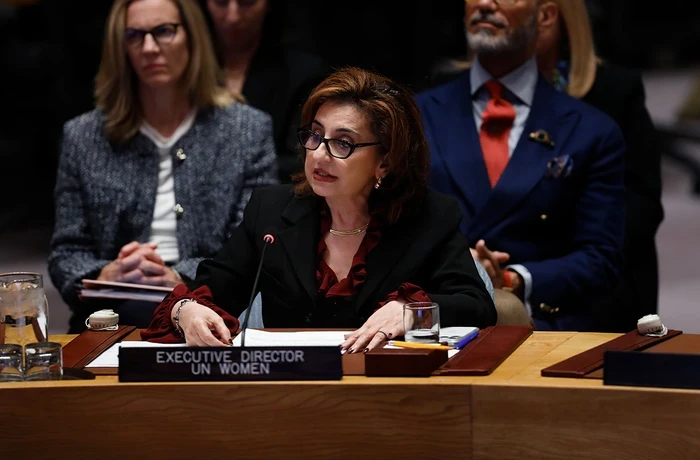
UN Under-Secretary-General and UN Women Executive Director Sima Bahous delivers remarks to the Security Council open debate on women and peace and security, UN headquarters, 27 October 2026. Photo: UN Women/Ryan Brown.
Speech

Speech: Do we have the courage to share power, the resolve to invest in women’s leadership, and the political will to turn our commitments into action?

27 October 2026
Speech: Do we have the courage to share power, the resolve to invest in women’s leadership, and the political will to turn our commitments into action?
Image
UNWomen_Placeholder
Press briefing

The UN Secretary General’s report on Women, Peace, and Security

26 October 2026
The UN Secretary General’s report on Women, Peace, and Security
Image
UNWomen_Placeholder
Press release

Women and girls’ death toll in armed conflict doubles since 2021

26 October 2026
Women and girls’ death toll in armed conflict doubles since 2021

Footer menu-HQ

  • News and stories
  • Resources
  • What we do
  • How we work
  • Where we are
  • Partnerships
  • Employment
  • Procurement
  • Contact us
  • Executive Board
  • Commission on the Status of Women

Donate button menu [Footer tablet]

  • Donate

Donate button menu [Footer]

  • Donate

Social media menu

  • Facebook
  • Twitter
  • LinkedIn
  • Flickr
  • YouTube
  • Instagram
UN Women - For all women and girls

Footer bottom [Menu]

  • Copyright
  • Information security
  • Privacy notice
  • Report wrongdoing
  • Terms of use
Share this page
  • Share to Facebook
  • Share to Twitter
  • Share to LinkedIn
  • Share to E-mail

Or copy link