
Universal menu

  • Global
  • Regions
    • Africa
    • Americas and the Caribbean
    • Arab States
    • Asia and the Pacific
    • Europe and Central Asia
  • Knowledge
  • Data
  • Training
  • Transparency
UN Women - For all women and girls

Main Navigation-HQ

  • Who we are
    • About us
      • About UN Women
      • Business model
      • Guiding documents
      • Worldwide presence
    • Leadership
      • Governance structure
      • Executive leadership
      • Executive Board
      • Accountability
    • Work with us
      • Employment
      • Procurement
      • Calls for proposals
      • Contact us
      • UN Women Strategic Plan 2026–2029
      • UN Women Strategic Plan 2026–2029 - social media image
        UN Women Strategic Plan 2026–2029
  • What we do
    • Focus areas
      • Ending violence against women
      • Peace and security
      • Humanitarian action
      • Leadership and governance
      • Economic empowerment
      • Innovation and technology
      • Women with disabilities
      • Youth
      • HIV and AIDS
    • How we work
      • 2030 Agenda for Sustainable Development
      • Commission on the Status of Women
      • Gender parity in the UN system
      • Intergovernmental support
      • Partnerships
      • Research and data
      • Training Centre
      • Trust funds
      • UN system coordination
      • Gender Equality Accelerators
      • Gender Equality Accelerators artwork
        Gender Equality Accelerators
  • News and stories
    • Latest
      • News
      • Articles and explainers
      • In focus
    • Media center
      • Press materials
      • Media contacts
      • Explainer: Why are women so exhausted? Care work and the mental load
      • Two adults stand at a table changing diapers on baby dolls, with laundry hanging on a clothesline behind them in a home setting.
        Explainer: Why are women so exhausted? Care work and the mental load
      • Press release: Aid cuts dismantle women’s organizations working in humanitarian crises
      • A young Ugandan woman sits with another local woman to talk
        Press release: Aid cuts dismantle women’s organizations working in humanitarian crises
  • Digital library
    • Resources
      • Publications
      • Annual reports
      • Gender snapshot
      • Progress of the world’s women
      • World survey on the role of women in development
    • GenderTerm
      • GenderTerm
      • Reprint permissions
      • UN Women Highlights 2025–2026
      • A smiling woman.
        UN Women Highlights 2025–2026
      • Gender snapshot 2026
      • A diverse group of people represented as simplified silhouettes, arranged against a dark blue background.
        Gender snapshot 2026
  • Get involved
    • How to get involved
      • For ALL Women and Girls
      • International Women's Day
      • 16 Days of Activism to End Violence against Women and Girls
      • UNiTE! Campaign to End Violence against Women
      • Generation Equality
      • He for She
Ask AI
https://84e5cfacd5c7e99f9825edf344450c.1b.environment.api.powerplatform.com/powervirtualagents/botsbyschema/crad4_websiteQA/directline/token?api-version=2022-03-01-preview
1
-
Ask your question here
AI website assistant

Hello, how can I assist you?

AI chatbot responses may be incorrect. Always verify important information.

Donate button menu

Donate

Breadcrumb

  1. Home
  2. News and stories
  3. Feature story

Website survey

We want to know how we can improve your experience on this website. Completing this survey takes less than 5 minutes.

TAKE THE SURVEY
Feature

Women’s groups in Niger push for justice amid coup and economic crisis

25 October 2023
  • Share to Facebook
  • Share to Twitter
  • Share to LinkedIn
  • Share to E-mail

An estimated 4.3 million people in Niger are in need of humanitarian assistance, including about 370,000 internally displaced people and 255,000 refugees. Of the 3.3 million facing food insecurity, a majority are women and children. Women are a critical priority, both as recipients of aid for their families and as vital players in mediation and peacebuilding.

Since the country’s coup on 26 July, the women of Niger have been mobilizing as part of efforts towards a peaceful resolution to the country’s political and economic crises.

Image
Niger Women Girls Peace

“This crisis threatens to ruin my business and drive me into food and financial insecurity”, said a woman identified as Hadiza, who makes a living importing clothes from Nigeria and spoke on a podcast aired as part of the women’s rights digital campaign “NigerFemmesFillesPaix” (NigerWomenGirlsPeace).

The campaign was launched on 5 September with the support of more than 50 local women’s civil society groups as well as more than 30 young girl influencers under the banner of "Girls4peace". As of 20 October, the campaign had received more than 2.9 million social media impressions through videos, podcasts, and other web content.

Throughout the campaign, participants have highlighted the urgent need to protect women and girls from gender-based violence, to preserve gains in women’s rights, and to continue the provision of essential services, ranging from maternal and reproductive health care to water and electricity.

“As a direct victim of this crisis, we appeal to the parties involved […] to take our rights into account”, Hadiza said.

Organizations connected with the African Women Leaders Network (AWLN) have also voiced their support for the women of Niger and have lobbied West African authorities to reduce the suffering of women and children due to previous sanctions. Advocacy missions have been initiated with this objective, with the support of the FEMWISE network.

As part of the women’s initiative to participate in the transition processes and peace building in Niger, from 20 to 22 September 2023, the organization Femmes, Action et Développement (FAD) organised a Feminine diaologue, where more than 30 women’s organizations from Niger’s eight regions and more than 100 participants came together under the banner of Movement for the Respect of Women’s Rights in Niger (MRDFN). 

The activists called for regional parties as well as local political, traditional, and religious leaders, as well as the de facto authorities, to continue to safeguard the rights of women and children, and to facilitate meaningful inclusion of women in all political processes.

Before the coup, women’s participation in parliament was 30.72 per cent. With the National Assembly and state institutions now dissolved, the implementation of progressive provisions such as the quota law that improved women’s representation in parliament is uncertain.

“Since the coup d’état, I have noticed a certain deterioration of my rights as a woman”, said a young activist identified as Rachida, who spoke on a podcast organized as part of Niger Femmes Filles Paix.

“Women must be put at the forefront of any question that concerns peace, dialogue, and social cohesion, because they are an important pillar of society”, she said.
Topics

  • Peace and security
  • Peace processes
  • Peacebuilding
  • Africa
  • Niger

Related content

Image
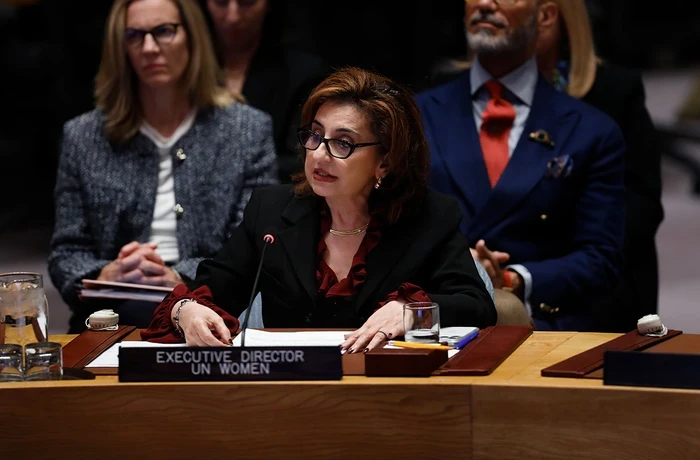
UN Under-Secretary-General and UN Women Executive Director Sima Bahous delivers remarks to the Security Council open debate on women and peace and security, UN headquarters, 27 October 2026. Photo: UN Women/Ryan Brown.
Speech

Speech: Do we have the courage to share power, the resolve to invest in women’s leadership, and the political will to turn our commitments into action?

27 October 2026
Speech: Do we have the courage to share power, the resolve to invest in women’s leadership, and the political will to turn our commitments into action?
Image
UNWomen_Placeholder
Press release

Women and girls’ death toll in armed conflict doubles since 2021

26 October 2026
Women and girls’ death toll in armed conflict doubles since 2021
Image
UNWomen_Placeholder
Press briefing

The UN Secretary General’s report on Women, Peace, and Security

26 October 2026
The UN Secretary General’s report on Women, Peace, and Security

Footer menu-HQ

  • News and stories
  • Resources
  • What we do
  • How we work
  • Where we are
  • Partnerships
  • Employment
  • Procurement
  • Contact us
  • Executive Board
  • Commission on the Status of Women

Donate button menu [Footer tablet]

  • Donate

Donate button menu [Footer]

  • Donate

Social media menu

  • Facebook
  • Twitter
  • LinkedIn
  • Flickr
  • YouTube
  • Instagram
UN Women - For all women and girls

Footer bottom [Menu]

  • Copyright
  • Information security
  • Privacy notice
  • Report wrongdoing
  • Terms of use
Share this page
  • Share to Facebook
  • Share to Twitter
  • Share to LinkedIn
  • Share to E-mail

Or copy link