
Universal menu

  • Global
  • Regions
    • Africa
    • Americas and the Caribbean
    • Arab States
    • Asia and the Pacific
    • Europe and Central Asia
  • Knowledge
  • Data
  • Training
  • Transparency
UN Women - For all women and girls

Main Navigation-HQ

  • Who we are
    • About us
      • About UN Women
      • Business model
      • Guiding documents
      • Worldwide presence
    • Leadership
      • Governance structure
      • Executive leadership
      • Executive Board
      • Accountability
    • Work with us
      • Employment
      • Procurement
      • Calls for proposals
      • Contact us
      • UN Women Strategic Plan 2026–2029
      • UN Women Strategic Plan 2026–2029 - social media image
        UN Women Strategic Plan 2026–2029
  • What we do
    • Focus areas
      • Ending violence against women
      • Peace and security
      • Humanitarian action
      • Leadership and governance
      • Economic empowerment
      • Innovation and technology
      • Women with disabilities
      • Youth
      • HIV and AIDS
    • How we work
      • 2030 Agenda for Sustainable Development
      • Commission on the Status of Women
      • Gender parity in the UN system
      • Intergovernmental support
      • Partnerships
      • Research and data
      • Training Centre
      • Trust funds
      • UN system coordination
      • Gender Equality Accelerators
      • Gender Equality Accelerators artwork
        Gender Equality Accelerators
  • News and stories
    • Latest
      • News
      • Articles and explainers
      • In focus
    • Media center
      • Press materials
      • Media contacts
      • Explainer: Why are women so exhausted? Care work and the mental load
      • Two adults stand at a table changing diapers on baby dolls, with laundry hanging on a clothesline behind them in a home setting.
        Explainer: Why are women so exhausted? Care work and the mental load
      • Press release: Aid cuts dismantle women’s organizations working in humanitarian crises
      • A young Ugandan woman sits with another local woman to talk
        Press release: Aid cuts dismantle women’s organizations working in humanitarian crises
  • Digital library
    • Resources
      • Publications
      • Annual reports
      • Gender snapshot
      • Progress of the world’s women
      • World survey on the role of women in development
    • GenderTerm
      • GenderTerm
      • Reprint permissions
      • UN Women Highlights 2025–2026
      • A smiling woman.
        UN Women Highlights 2025–2026
      • Gender snapshot 2026
      • A diverse group of people represented as simplified silhouettes, arranged against a dark blue background.
        Gender snapshot 2026
  • Get involved
    • How to get involved
      • For ALL Women and Girls
      • International Women's Day
      • 16 Days of Activism to End Violence against Women and Girls
      • UNiTE! Campaign to End Violence against Women
      • Generation Equality
      • He for She
Ask AI
https://84e5cfacd5c7e99f9825edf344450c.1b.environment.api.powerplatform.com/powervirtualagents/botsbyschema/crad4_websiteQA/directline/token?api-version=2022-03-01-preview
1
-
Ask your question here
AI website assistant

Hello, how can I assist you?

AI chatbot responses may be incorrect. Always verify important information.

Donate button menu

Donate

Breadcrumb

  1. Home
  2. News and stories
  3. Feature story

Website survey

We want to know how we can improve your experience on this website. Completing this survey takes less than 5 minutes.

TAKE THE SURVEY
Feature

Women flee Ukraine, but hope for peace so they can return to their homes

13 April 2022
  • Share to Facebook
  • Share to Twitter
  • Share to LinkedIn
  • Share to E-mail

Originally published on UN Women's regional website for Europe and Central Asia

Since the start of the war in Ukraine, Moldova and Poland have received the highest number of refugees. As of 12 April, about 96 thousand Ukrainian refugees are residing across the different regions of Moldova. UN Women has been working with partners to gather, analyse and disseminate data to illustrate the differential and disproportionate impacts of Russia’s invasion of Ukraine on women and girls. Together with the Border Police of Moldova, UN Women produced a factsheet in mid-March with data on the demographic profiles of Ukrainian refugees hosted in the country. Together with the International Organization for Migration, a displacement survey was conducted and quantitative data was collected. To gather qualitative data for the assessment, UN Women has been talking to women refugees living in temporary placement centers. This is their story.

Image
23-year-old Anna, from Mariupol, discussing with UN Women team at the temporary placement center in Vatici, Orhei district, Moldova.
23-year-old Anna, from Mariupol, discussing with UN Women team at the temporary placement center in Vatici, Orhei district, Moldova. Photo: Maxime Fossat/UN Women

23-year-old Anna, from Mariupol, left her hometown alone on the first day of the war. For the past three weeks, the young woman has been living in a temporary placement center 40 km north of Kyiv, in Vatici, Orhei. “I try to do sports every day. I go jogging. It helps me distract myself from bad thoughts,” she says.
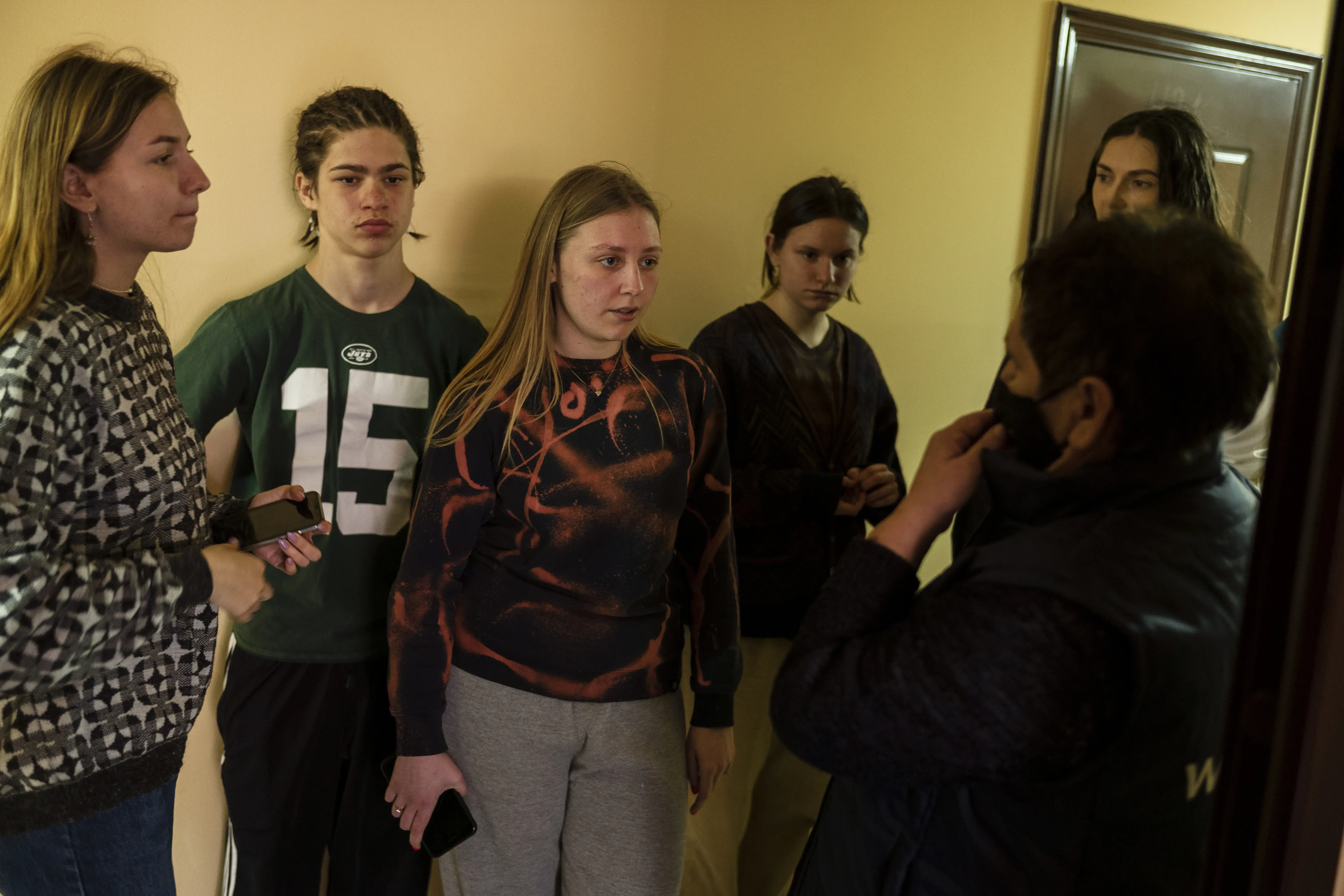
23-year-old Anna, from Mariupol, discussing with UN Women team at the temporary placement center in Vatici, Orhei district, Moldova.
23-year-old Anna, from Mariupol, discussing with UN Women team at the temporary placement center in Vatici, Orhei district, Moldova. Photo: Maxime Fossat/UN Women

In Ukraine, Anna worked as an English teacher. Now, in order not to lose her only source of income while in Moldova, she teaches lessons online. “To be honest, I don’t even know if my colleagues and students are alive or not. There is no connection with the city. I can only hope,” she adds. Anna admits that in Moldova she has everything she needs: a roof over her head, delicious food, and access to medical care and Internet. The only thing missing is her relatives and friends who remained in Ukraine.

Image
Marina, nail-artist from Odessa, at her work station in the temporary placement center in Vatici, Orhei district, Moldova.
Marina, nail-artist from Odessa, at her work station in the temporary placement center in Vatici, Orhei district, Moldova. Photo: Maxime Fossat/UN Women

Marina, from Odessa, is a nail artist who lives in the same temporary placement center as Anna. In the center, she is a local celebrity who is sought after by other refugees for manicures. For Marina, the work allows her to momentarily forget about the war. “Manicure is now a kind of therapy. I always talk to the women and girls I work with; sometimes I give them advice. Now, in this difficult time, communication helps us all,” she shares.

When the war started, Marina was hesitant about leaving—she was hoping that everything would work out. But psychologically, things became difficult. “The sounds of the sirens depressed me so much that I couldn’t find a place for myself. In order not to hear them, I was turning on the music loud,” she recounts. She left Odessa alone in a hurry, and after several days at the center in Moldova, she began missing her work. She showed the other women her portfolio of nail art and when she realized she would be able to lighten the mood by painting their nails, she returned to Odessa with a friend who had a car to pick up her work supplies. Soon, she began painting women's nails, thus creating a small sense of normalcy for all.

At the same time, Marina worries about her parents who stayed in Odessa, especially her father who is seriously ill. “We are ok here, but home is better,” Marina says. This sentiment is echoed by the other women staying in the Vatici center, who comprise 90 per cent of the 70 refugees there, and none of whom intend to stay long in Moldova—they hope for peace so that they can return home. In Straseni district, in central Moldova, UN Women visited another temporary placement center for refugees, which was formerly a recreation center for children and youth. It is now hosting nearly 60 people, most of whom are women and children.

Image
Snejana, 41, from Odessa, together with her son David, 11, at a temporary placement center in Scoreni, Straseni district, Moldova.
Snejana, 41, from Odessa, together with her son David, 11, at a temporary placement center in Scoreni, Straseni district, Moldova. Photo: Maxime Fossat/UN Women

Before the war, Snejana, 41, enjoyed a happy and peaceful life by the sea. She was a self-employed hair colorist in Odessa and couldn’t imagine that in one day her life would dramatically change. “Because of the bombing, my children couldn’t sleep and we were all exhausted,” she recounts. “I understood there was no other option for our safety than fleeing Ukraine.”
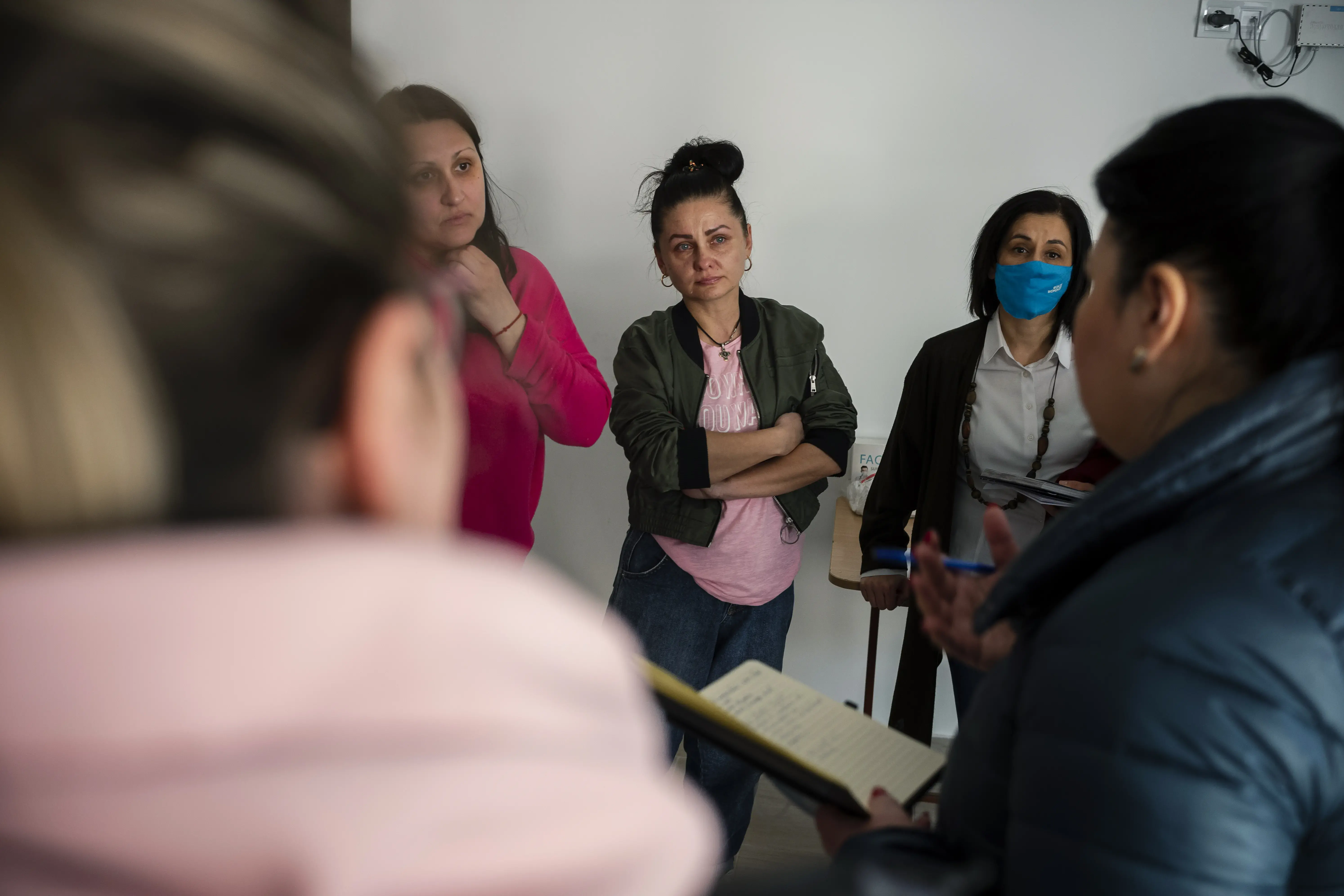
Snejana, 41, from Odessa, discussing with UN Women team at a temporary placement center in Scoreni, Straseni district, Moldova.
Snejana, 41, from Odessa, discussing with UN Women team at a temporary placement center in Scoreni, Straseni district, Moldova. Photo: Maxime Fossat/UN Women

Until they reached the border, Snejana drove with open windows to make sure it was visible that there were children in the vehicle. ”I could only breath easily once we got to the other side of the border. I had nowhere to go, but thanks to the kind and loving people of Moldova, my children and I have everything we need now,” she says.

UN Women and the International Organization for Migration conducted a displacement survey and interviewed around 3,000 refugees at entry and exit border crossings, transit locations, reception centers and private accommodations. According to the survey, women comprise the majority of refugees fleeing Ukraine and account for 81 per cent of all refugees interviewed. The average age of women is 40 years, and 60 per cent of women are aged 30-49 years. Women are shouldering an immense child-care responsibility compounded by family separation and limited financial resources. Some 83 per cent of women were travelling with at least one child below the age of 18, with the majority having one child (44 per cent) or two (34 per cent).

”Integrating gender equality measures as well as age and diversity dimensions into cross-sectoral refugee response efforts is critical to ensuring that women, girls, boys, and men—particularly those at most heightened risk and those who are marginalized—have equitable access to and can benefit from relief, services, and information,” explains Dominika Stojanoska, UN Women Country Representative in Moldova.

Topics

  • Migration
  • Peace and security
  • Conflict, war
  • Europe and Central Asia
  • Ukraine
  • Moldova, Republic of

Related content

Image
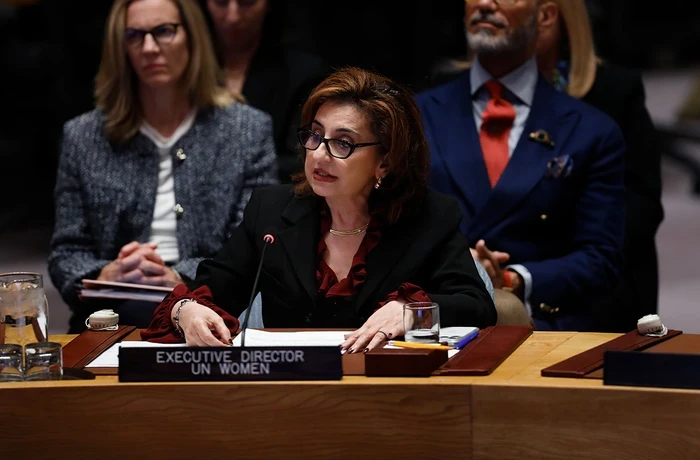
UN Under-Secretary-General and UN Women Executive Director Sima Bahous delivers remarks to the Security Council open debate on women and peace and security, UN headquarters, 27 October 2026. Photo: UN Women/Ryan Brown.
Speech

Speech: Do we have the courage to share power, the resolve to invest in women’s leadership, and the political will to turn our commitments into action?

27 October 2026
Speech: Do we have the courage to share power, the resolve to invest in women’s leadership, and the political will to turn our commitments into action?
Image
UNWomen_Placeholder
Press release

Women and girls’ death toll in armed conflict doubles since 2021

26 October 2026
Women and girls’ death toll in armed conflict doubles since 2021
Image
UNWomen_Placeholder
Press briefing

The UN Secretary General’s report on Women, Peace, and Security

26 October 2026
The UN Secretary General’s report on Women, Peace, and Security

Footer menu-HQ

  • News and stories
  • Resources
  • What we do
  • How we work
  • Where we are
  • Partnerships
  • Employment
  • Procurement
  • Contact us
  • Executive Board
  • Commission on the Status of Women

Donate button menu [Footer tablet]

  • Donate

Donate button menu [Footer]

  • Donate

Social media menu

  • Facebook
  • Twitter
  • LinkedIn
  • Flickr
  • YouTube
  • Instagram
UN Women - For all women and girls

Footer bottom [Menu]

  • Copyright
  • Information security
  • Privacy notice
  • Report wrongdoing
  • Terms of use
Share this page
  • Share to Facebook
  • Share to Twitter
  • Share to LinkedIn
  • Share to E-mail

Or copy link