
Universal menu

  • Global
  • Regions
    • Africa
    • Americas and the Caribbean
    • Arab States
    • Asia and the Pacific
    • Europe and Central Asia
  • Knowledge
  • Data
  • Training
  • Transparency
UN Women - For all women and girls

Main Navigation-HQ

  • Who we are
    • About us
      • About UN Women
      • Business model
      • Guiding documents
      • Worldwide presence
    • Leadership
      • Governance structure
      • Executive leadership
      • Executive Board
      • Accountability
    • Work with us
      • Employment
      • Procurement
      • Calls for proposals
      • Contact us
      • UN Women Strategic Plan 2026–2029
      • UN Women Strategic Plan 2026–2029 - social media image
        UN Women Strategic Plan 2026–2029
  • What we do
    • Focus areas
      • Ending violence against women
      • Peace and security
      • Humanitarian action
      • Leadership and governance
      • Economic empowerment
      • Innovation and technology
      • Women with disabilities
      • Youth
      • HIV and AIDS
    • How we work
      • 2030 Agenda for Sustainable Development
      • Commission on the Status of Women
      • Gender parity in the UN system
      • Intergovernmental support
      • Partnerships
      • Research and data
      • Training Centre
      • Trust funds
      • UN system coordination
      • Gender Equality Accelerators
      • Gender Equality Accelerators artwork
        Gender Equality Accelerators
  • News and stories
    • Latest
      • News
      • Articles and explainers
      • In focus
    • Media center
      • Press materials
      • Media contacts
      • Explainer: Why are women so exhausted? Care work and the mental load
      • Two adults stand at a table changing diapers on baby dolls, with laundry hanging on a clothesline behind them in a home setting.
        Explainer: Why are women so exhausted? Care work and the mental load
      • Press release: Aid cuts dismantle women’s organizations working in humanitarian crises
      • A young Ugandan woman sits with another local woman to talk
        Press release: Aid cuts dismantle women’s organizations working in humanitarian crises
  • Digital library
    • Resources
      • Publications
      • Annual reports
      • Gender snapshot
      • Progress of the world’s women
      • World survey on the role of women in development
    • GenderTerm
      • GenderTerm
      • Reprint permissions
      • UN Women Highlights 2025–2026
      • A smiling woman.
        UN Women Highlights 2025–2026
      • Gender snapshot 2026
      • A diverse group of people represented as simplified silhouettes, arranged against a dark blue background.
        Gender snapshot 2026
  • Get involved
    • How to get involved
      • For ALL Women and Girls
      • International Women's Day
      • 16 Days of Activism to End Violence against Women and Girls
      • UNiTE! Campaign to End Violence against Women
      • Generation Equality
      • He for She
Ask AI
https://84e5cfacd5c7e99f9825edf344450c.1b.environment.api.powerplatform.com/powervirtualagents/botsbyschema/crad4_websiteQA/directline/token?api-version=2022-03-01-preview
1
-
Ask your question here
AI website assistant

Hello, how can I assist you?

AI chatbot responses may be incorrect. Always verify important information.

Donate button menu

Donate

Breadcrumb

  1. Home
  2. News and stories
  3. Feature story

Website survey

We want to know how we can improve your experience on this website. Completing this survey takes less than 5 minutes.

TAKE THE SURVEY
Feature

In Pakistan, artists and peace activists empower women and girls to address violent extremism
20 January 2022
  • Share to Facebook
  • Share to Twitter
  • Share to LinkedIn
  • Share to E-mail
Image
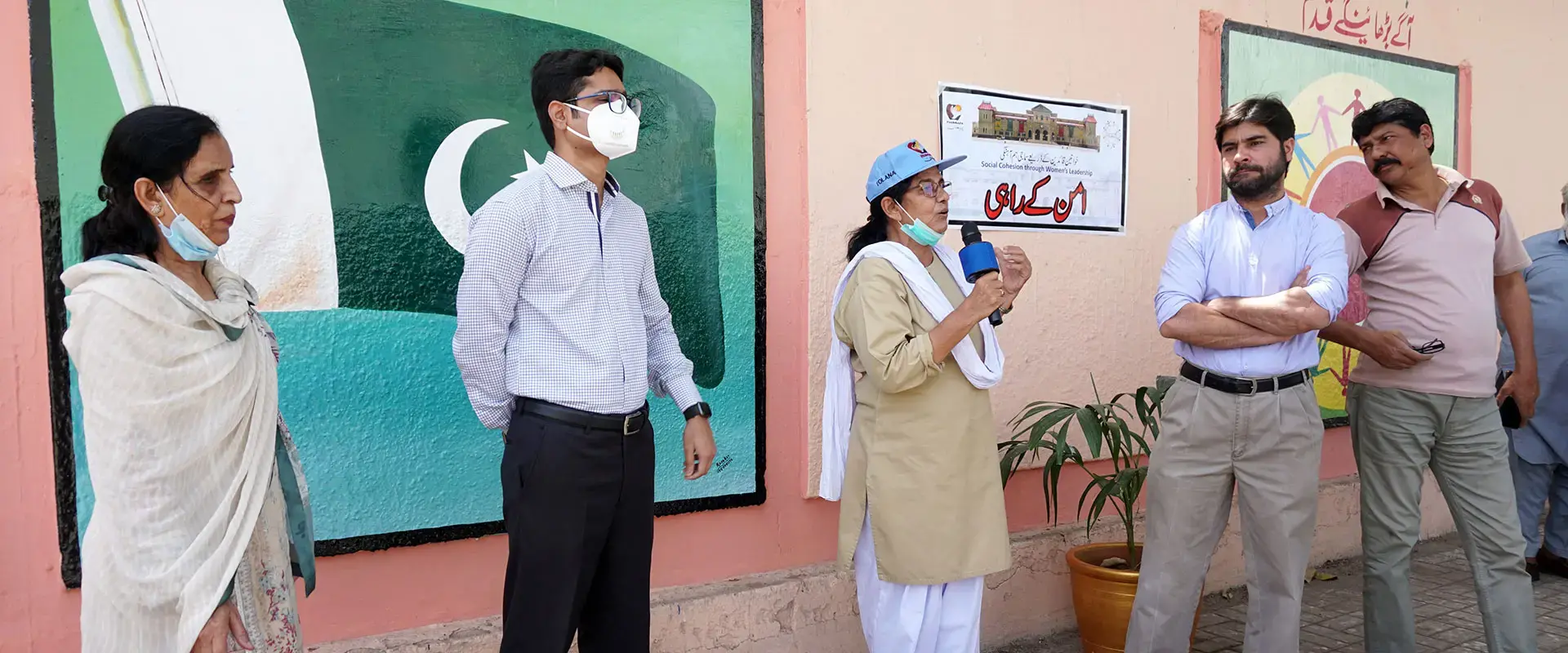
Shamim Awan, an artist from Karachi speaks in front of the murals she helped design, depicting a more tolerant, peaceful society.  Photo: PAIMAN
Shamim Awan, an artist from Karachi, speaks in front of the murals she helped design, depicting a more tolerant, peaceful society. Photo: PAIMAN

In Pakistan, as in many parts of the world, women and girls play a critical role in preventing the spread of extremist ideologies and keeping peace within their communities. Increasingly, they are also at risk of being recruited by extremist groups.

Since early 2020, UN Women has been supporting a social cohesion programme in Sindh province, with support from the European Union. The programme is implemented by PAIMAN, a non-profit organization that trains Pakistani women and youth to address divisive narratives and reduce their vulnerability to violent extremism, while helping them become change-agents.
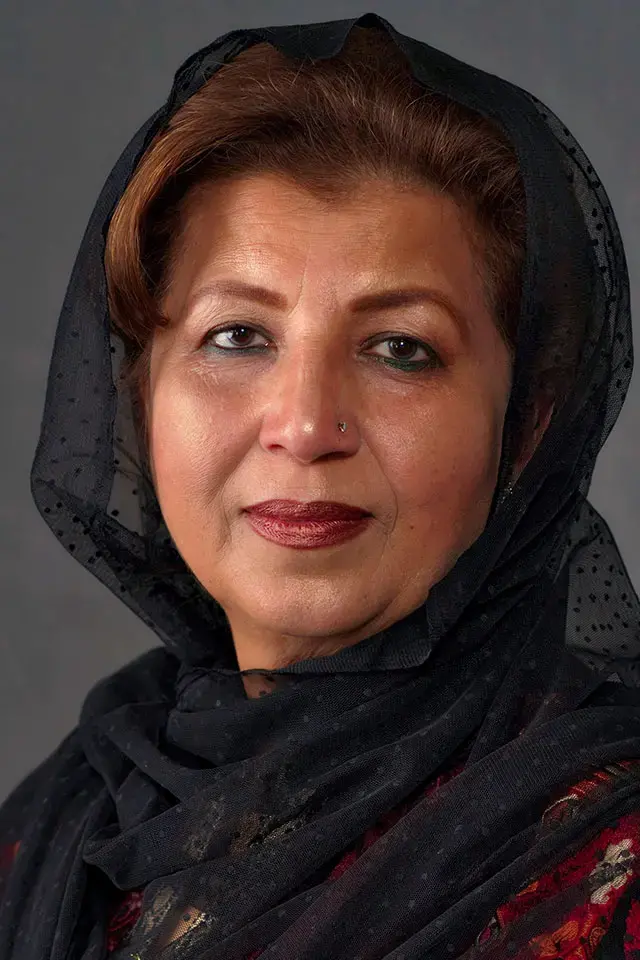
Mossarat Qadeem is the co-founder of Pakistan-based non-profit organization PAIMAN Trust.  Photo courtesy of Mossarat Qadeem.
Mossarat Qadeem is the co-founder of Pakistan-based non-profit organization PAIMAN Trust. Photo courtesy of Mossarat Qadeem.
Mossarat Qadeem is the co-founder of Pakistan-based non-profit organization PAIMAN Trust. Photo Courtesy of Mossarat Qadeem 

“I believe women’s voices are the communities’ voices,” says Mossarat Qadeem, the co-founder of PAIMAN. “If they’re given the right opportunities, women can consistently bridge divides, build understanding within communities, promote dialogue and build trust. Whether they are preventing violent extremism, contributing to interfaith harmony or responding to emergencies like COVID-19, women tend to adopt an inclusive approach. That’s why at PAIMAN, we always push for integrating their views and leadership when developing strategies to address violent extremism.”

In 2020, Qadeem was among the participants in the UN Women-convened online consultation, “Voices and perspectives of civil society on the gendered dimensions of violent extremism and counterterrorism responses.”

While supporting women’s inclusion and participation in promoting social cohesion, PAIMAN is also working to eradicate the barriers that keep women away from the public and political sphere.

“We must tackle existing prejudices at the social and cultural level, which want women relegated to private spaces and away from public life,” says Qadeem. “Only by doing this can we empower women to become leaders and change-makers. We must be given the opportunity to participate in peace processes, as well as in national and international forums, as experts – only then will the purpose of UNSCR 1325 be fully realized.”

In 2020, PAIMAN initiated a collaboration with visual artists from Karachi, Shamim Awan, Amina Bano and Hira Sultan, to foster social cohesion and women’s leadership through art under the UN Women programme. The artists came together to create colourful murals on the walls of the Karachi Cantonment railway station. Their art work depicted that a more tolerant, peaceful society is possible and that women’s empowerment is a powerful tool to prevent violent extremism.

Image
A closer look at on of the murals on the walls of the Karachi Cantonment railway station. Photo PAIMAN.
A closer look at on of the murals on the walls of the Karachi Cantonment railway station. Photo PAIMAN. It reads “Every citizen of this nation is worthy of respect". Photo: PAIMAN.

Awan says: “Women’s access to public spaces in Pakistan is limited, and women’s participation in creating public art even more so. That’s why our proposition to do art on the walls of the Karachi station was received with some perplexity. Still, we believe that in conflict-affected societies art provides an avenue for marginalized groups to voice their opinions and bring about change.”

The choice of the venue was also intentional. “A railway station is a perfect example of a microcosm of society,” says Bano. “Every day, people from different backgrounds, faiths and ethnicities pass through it. By creating wall paintings that promote peace and cohesion, we hoped to establish a connection with the travellers and initiate a discourse around conflict and tolerance.”

The finished artwork is a powerful reminder that Pakistani women are critical allies and leaders to foster cohesion and prevent violent extremism.  Several government institutions have since reached out to PAIMAN for similar collaborations.

"It has been very encouraging to see women taking ownership through this programme and pave the way to build social cohesion and trust within communities in some of the most sensitive areas of Pakistan,” says Fareeha Ummar, Portfolio Manager at UN Women Pakistan. “We were able to build and connect a strong community of women who challenged social norms and demonstrated that their voices and experiences are crucial in sustaining peace." 

These efforts have been made under the programme, Preventing Violent Extremism: Integrating Gender Perspectives, run by UN Women in partnership with the European Union. Launched in February 2019, the programme is being implemented at the global level and piloted in Pakistan and Jordan. It has engaged more than 9,700 beneficiaries in the areas of Sindh and Khyber Pakhtunkhwa in Pakistan.

Topics

  • Peace and security
  • Violent extremism and terrorism
  • Asia and the Pacific
  • European Union
  • Pakistan

Related content

Image
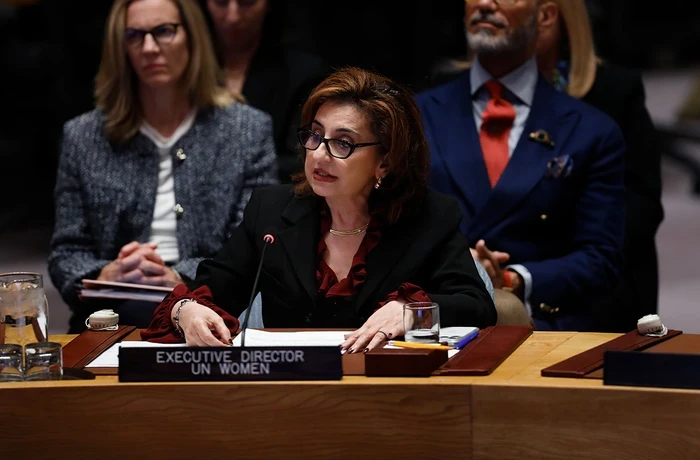
UN Under-Secretary-General and UN Women Executive Director Sima Bahous delivers remarks to the Security Council open debate on women and peace and security, UN headquarters, 27 October 2026. Photo: UN Women/Ryan Brown.
Speech

Speech: Do we have the courage to share power, the resolve to invest in women’s leadership, and the political will to turn our commitments into action?

27 October 2026
Speech: Do we have the courage to share power, the resolve to invest in women’s leadership, and the political will to turn our commitments into action?
Image
UNWomen_Placeholder
Press release

Women and girls’ death toll in armed conflict doubles since 2021

26 October 2026
Women and girls’ death toll in armed conflict doubles since 2021
Image
UNWomen_Placeholder
Press briefing

The UN Secretary General’s report on Women, Peace, and Security

26 October 2026
The UN Secretary General’s report on Women, Peace, and Security

Footer menu-HQ

  • News and stories
  • Resources
  • What we do
  • How we work
  • Where we are
  • Partnerships
  • Employment
  • Procurement
  • Contact us
  • Executive Board
  • Commission on the Status of Women

Donate button menu [Footer tablet]

  • Donate

Donate button menu [Footer]

  • Donate

Social media menu

  • Facebook
  • Twitter
  • LinkedIn
  • Flickr
  • YouTube
  • Instagram
UN Women - For all women and girls

Footer bottom [Menu]

  • Copyright
  • Information security
  • Privacy notice
  • Report wrongdoing
  • Terms of use
Share this page
  • Share to Facebook
  • Share to Twitter
  • Share to LinkedIn
  • Share to E-mail

Or copy link